THE ADVENTURE COLLECTIVE® · Independent discovery and booking for outdoor travel

Glide through mangrove channels and open water on a three-hour river safari from Colombo. Spot kingfishers, monitors, and lakeside villages while learning about the lake’s ecology and local livelihoods.
Glide through mangrove channels and open water on a three-hour river safari from Colombo. Spot kingfishers, monitors, and lakeside villages while learning about the lake’s ecology and local livelihoods.
The boat slips away from the wooden jetty and the city’s edge falls behind; reeds and mangroves lean in as if to inspect you. Bolgoda Lake’s wide shoulders open into narrow creek channels where sunlight skitters across black water and kingfishers flash like punctuation.
Verified experiences and guided adventures in the surrounding area.
The boat slips away from the wooden jetty and the city’s edge falls behind; reeds and mangroves lean in as if to inspect you. Bolgoda Lake’s wide shoulders open into narrow creek channels where sunlight skitters across black water and kingfishers flash like punctuation.
This lake system is one of Sri Lanka’s largest natural freshwater bodies, fed by small rivers and tidal creeks that trace a landscape shaped by coastal sediments and low-lying alluvium. For generations local communities have fished these waters and built simple boatyards along the shore; on a river safari you see both living culture and natural processes in motion—fishermen casting nets, herons standing patient, and small wooden temples perched at the waterline.
Expect a three-hour cruise that balances slow wildlife watching with stretches of open water. Guides steer into sheltered mangrove arms where water monitors sun themselves on roots and waterbirds hunt shallow edges; currents here can nudge the boat, so the captain reads the tide as carefully as a trail guide reads a map.
Practicalities matter: morning trips offer the calmest light and best bird activity, bring sun protection and a refillable bottle, and choose a local operator that runs quiet, low-wake vessels. Wear sturdy shoes for the short boarding step and keep cameras ready with a mid-zoom lens for birds and shoreline life. On the water the landscape is active—mangroves reaching, currents pushing, and a patchwork of human use reminding you this is both a wild place and a working waterway.
The standard cruise lasts about three hours and typically includes open-lake passages and quieter mangrove channels.
Yes—most operators welcome families; children should be supervised during boarding and while leaning over the rail.
Common sightings include kingfishers, cormorants, herons, and Sri Lankan water monitors; sightings vary by season and time of day.
Operators may reschedule or cancel during heavy rain and rough conditions; always confirm weather policies when booking.
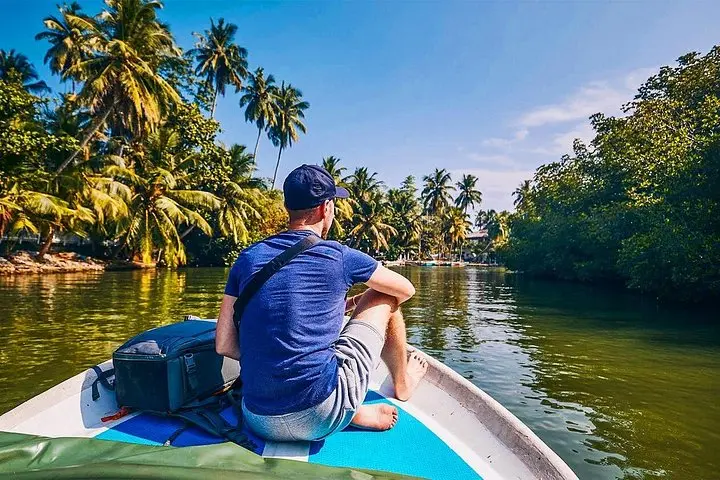
The boat slips away from the wooden jetty and the city’s edge falls behind; reeds and mangroves lean in as if to inspect you. Bolgoda Lake’s wide shoulders open into narrow creek channels where sunlight skitters across black water and kingfishers flash like punctuation.
The boat slips away from the wooden jetty and the city’s edge falls behind; reeds and mangroves lean in as if to inspect you. Bolgoda Lake’s wide shoulders open into narrow creek channels where sunlight skitters across black water and kingfishers flash like punctuation.
This lake system is one of Sri Lanka’s largest natural freshwater bodies, fed by small rivers and tidal creeks that trace a landscape shaped by coastal sediments and low-lying alluvium. For generations local communities have fished these waters and built simple boatyards along the shore; on a river safari you see both living culture and natural processes in motion—fishermen casting nets, herons standing patient, and small wooden temples perched at the waterline.
Expect a three-hour cruise that balances slow wildlife watching with stretches of open water. Guides steer into sheltered mangrove arms where water monitors sun themselves on roots and waterbirds hunt shallow edges; currents here can nudge the boat, so the captain reads the tide as carefully as a trail guide reads a map.
Practicalities matter: morning trips offer the calmest light and best bird activity, bring sun protection and a refillable bottle, and choose a local operator that runs quiet, low-wake vessels. Wear sturdy shoes for the short boarding step and keep cameras ready with a mid-zoom lens for birds and shoreline life. On the water the landscape is active—mangroves reaching, currents pushing, and a patchwork of human use reminding you this is both a wild place and a working waterway.