THE ADVENTURE COLLECTIVE® · Independent discovery and booking for outdoor travel

Experience Kenya’s cultural diversity in one afternoon: rhythmic dance performances, replica villages, and artisan displays at Bomas of Kenya. This accessible day tour pairs live music with hands-on cultural context.
Experience Kenya’s cultural diversity in one afternoon: rhythmic dance performances, replica villages, and artisan displays at Bomas of Kenya. This accessible day tour pairs live music with hands-on cultural context.
You step from Nairobi traffic into a wide, open compound where drums set the day’s pulse and painted gates mark each traditional homestead. Bright skirts and beaded collars move across a circular stage; the auditorium hums and the air carries dust and song. The Bomas complex greets you like a living museum — not frozen, but rehearsed for story and welcome.
Verified experiences and guided adventures in the surrounding area.
Operated by MOSHEL TOURS AND TRAVEL · Nairobi, Nairobi County
You step from Nairobi traffic into a wide, open compound where drums set the day’s pulse and painted gates mark each traditional homestead. Bright skirts and beaded collars move across a circular stage; the auditorium hums and the air carries dust and song. The Bomas complex greets you like a living museum — not frozen, but rehearsed for story and welcome.
Bomas of Kenya was developed in the late 20th century to preserve and present the nation’s ethnic homesteads and performance traditions. The exhibition arranges replicas of dwellings from communities across the country; the grounds sit on low, grassy plains carved from Nairobi’s suburban fringe, where short grasses and acacia outline the skyline. Culture here is tactile: wooden stools, woven mats, polished instruments and rhythms that will invite you onto the floor.
Expect a two-hour dance performance featuring distinct tribal rhythms and costume changes, followed by a guided walk through the model villages and an exhibition of crafts. Guides explain construction techniques, social roles and the significance of motifs on roofs and doors. Meeting local performers and craft vendors is part of the exchange; bring small cash for artisan purchases.
Practical tips: plan for a four-hour visit including pickup and drop-off; arrive mid-morning to avoid the hottest hours and catch the full show. Wear comfortable shoes for uneven earthen paths and a hat for open-sky sections. If you want photos of performances, ask permission and be ready for dynamic, low-light scenes. The site is family-friendly and wheelchair-accessible, but uneven surfaces make a compact wheelchair easier to navigate than a heavy model.
The full experience including pickup, a two-hour performance, village tour and round-trip transport is scheduled for about four hours.
Yes—Bomas of Kenya and the provided transport options are listed as wheelchair accessible, though some unpaved paths may be uneven for larger wheelchairs.
Guests are often invited to participate during portions of the performance; follow the guides’ cues and ask before stepping on stage.
Bottled water is typically provided on tour; there are also small on-site vendors and kiosks for light snacks.
MOSHEL TOURS AND TRAVEL operates guided outdoor trips and adventures with an emphasis on safety, stewardship, and memorable experiences.


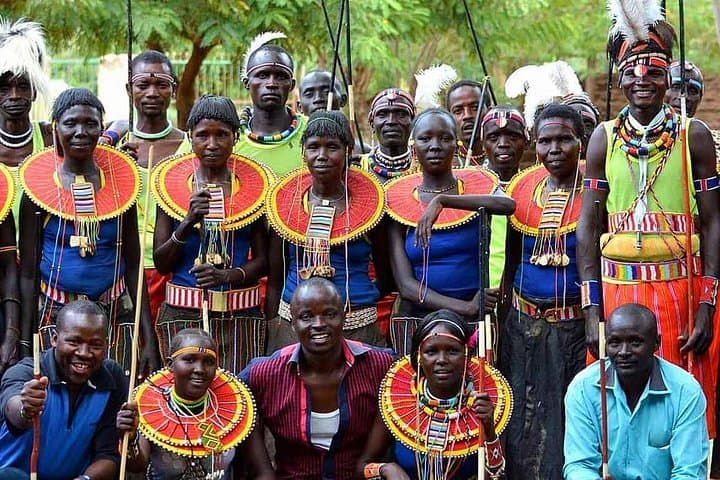

You step from Nairobi traffic into a wide, open compound where drums set the day’s pulse and painted gates mark each traditional homestead. Bright skirts and beaded collars move across a circular stage; the auditorium hums and the air carries dust and song. The Bomas complex greets you like a living museum — not frozen, but rehearsed for story and welcome.
You step from Nairobi traffic into a wide, open compound where drums set the day’s pulse and painted gates mark each traditional homestead. Bright skirts and beaded collars move across a circular stage; the auditorium hums and the air carries dust and song. The Bomas complex greets you like a living museum — not frozen, but rehearsed for story and welcome.
Bomas of Kenya was developed in the late 20th century to preserve and present the nation’s ethnic homesteads and performance traditions. The exhibition arranges replicas of dwellings from communities across the country; the grounds sit on low, grassy plains carved from Nairobi’s suburban fringe, where short grasses and acacia outline the skyline. Culture here is tactile: wooden stools, woven mats, polished instruments and rhythms that will invite you onto the floor.
Expect a two-hour dance performance featuring distinct tribal rhythms and costume changes, followed by a guided walk through the model villages and an exhibition of crafts. Guides explain construction techniques, social roles and the significance of motifs on roofs and doors. Meeting local performers and craft vendors is part of the exchange; bring small cash for artisan purchases.
Practical tips: plan for a four-hour visit including pickup and drop-off; arrive mid-morning to avoid the hottest hours and catch the full show. Wear comfortable shoes for uneven earthen paths and a hat for open-sky sections. If you want photos of performances, ask permission and be ready for dynamic, low-light scenes. The site is family-friendly and wheelchair-accessible, but uneven surfaces make a compact wheelchair easier to navigate than a heavy model.