THE ADVENTURE COLLECTIVE® · Independent discovery and booking for outdoor travel

A focused 90–120 minute walking tour that traces the Baedeker raids on Bath in April 1942. Explore bomb sites, archival photos, and the city's wartime response with a guide who balances historical detail and local context.
A focused 90–120 minute walking tour that traces the Baedeker raids on Bath in April 1942. Explore bomb sites, archival photos, and the city's wartime response with a guide who balances historical detail and local context.
You begin at a low winter light falling across honey-coloured stone, the streets still holding traces of a city that kept moving after the sirens stopped. The guide leads you from one patched façade to another, each scar a measured punctuation in a narrative of three April days in 1942 when Bath was struck by the Baedeker raids.
Verified experiences and guided adventures in the surrounding area.
Operated by PAUL ELLIOTT · Bath, Somerset
You begin at a low winter light falling across honey-coloured stone, the streets still holding traces of a city that kept moving after the sirens stopped. The guide leads you from one patched façade to another, each scar a measured punctuation in a narrative of three April days in 1942 when Bath was struck by the Baedeker raids.
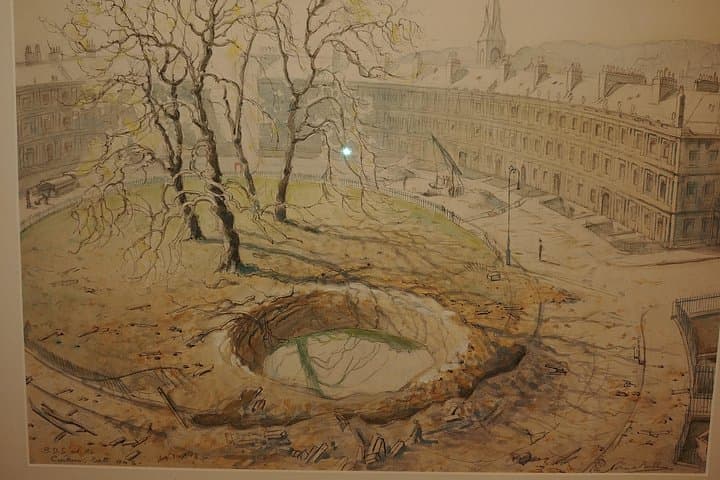
The tour stitches eyewitness accounts to military context: how Luftwaffe targeting tied into cultural retaliation, the role of the MoD and RAF in wartime defence, and how postwar reconstruction reshaped the Georgian city. Bath’s geology—its warm Bath Stone—made damage visible and lasting; the same stone that built crescents and terraces also absorbed blast and smoke. Cultural details emerge too: how reverence for heritage and the practical demands of repair competed in the city’s recovery, and why some streets show modern insertions while others retain Georgian proportions.
Expect a compact urban walk of roughly 1.5–2 hours on paved streets with frequent stops. The narrative is photo-led at points where archival images align with current views, and the guide keeps the tone measured and documentary. Practical notes: wear comfortable walking shoes, bring a weather layer, and allow time afterward for museum visits or a quiet moment at a memorial plaque. Photography is allowed but treat residential areas and memorials with respect. This is a focused, reflective walk—it presents devastation without sensationalism and leaves you with a clearer sense of how wartime choices shaped a living city.
The tour runs approximately 90–120 minutes and covers multiple central sites on paved streets with frequent stops.
Yes—it's rated easy physically, but it is a serious historical subject; parents should consider age-appropriate discussion topics.
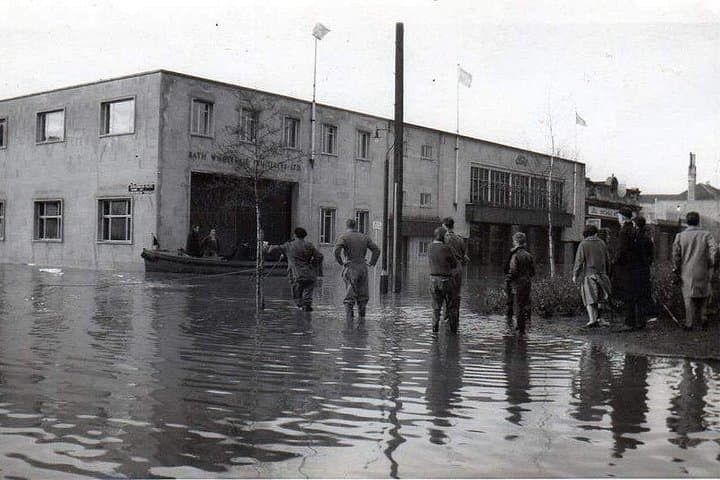
Yes, the guide uses historical photographs at relevant locations to compare wartime damage with the present day.
For a full refund, cancel at least 24 hours before the scheduled departure time; cancellations within 24 hours are non-refundable.
PAUL ELLIOTT operates guided outdoor trips and adventures with an emphasis on safety, stewardship, and memorable experiences.
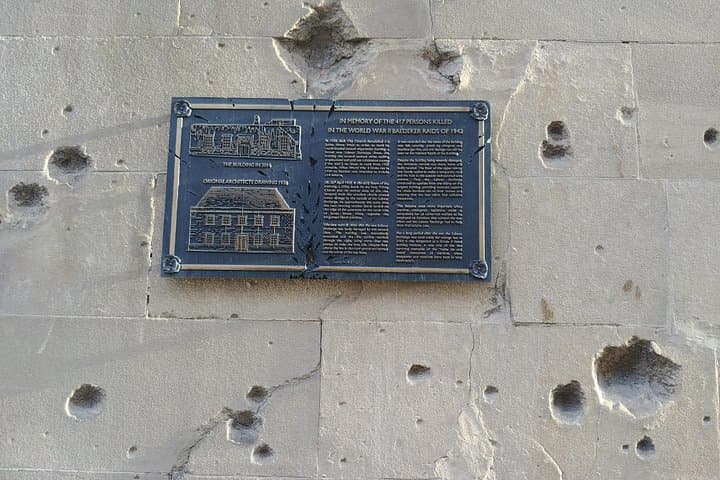
You begin at a low winter light falling across honey-coloured stone, the streets still holding traces of a city that kept moving after the sirens stopped. The guide leads you from one patched façade to another, each scar a measured punctuation in a narrative of three April days in 1942 when Bath was struck by the Baedeker raids.
You begin at a low winter light falling across honey-coloured stone, the streets still holding traces of a city that kept moving after the sirens stopped. The guide leads you from one patched façade to another, each scar a measured punctuation in a narrative of three April days in 1942 when Bath was struck by the Baedeker raids.
The tour stitches eyewitness accounts to military context: how Luftwaffe targeting tied into cultural retaliation, the role of the MoD and RAF in wartime defence, and how postwar reconstruction reshaped the Georgian city. Bath’s geology—its warm Bath Stone—made damage visible and lasting; the same stone that built crescents and terraces also absorbed blast and smoke. Cultural details emerge too: how reverence for heritage and the practical demands of repair competed in the city’s recovery, and why some streets show modern insertions while others retain Georgian proportions.
Expect a compact urban walk of roughly 1.5–2 hours on paved streets with frequent stops. The narrative is photo-led at points where archival images align with current views, and the guide keeps the tone measured and documentary. Practical notes: wear comfortable walking shoes, bring a weather layer, and allow time afterward for museum visits or a quiet moment at a memorial plaque. Photography is allowed but treat residential areas and memorials with respect. This is a focused, reflective walk—it presents devastation without sensationalism and leaves you with a clearer sense of how wartime choices shaped a living city.