THE ADVENTURE COLLECTIVE® · Independent discovery and booking for outdoor travel

A one-hour harbour cruise from Stokes Hill Wharf that traces the WWII Bombing of Darwin from the water, combining live commentary with close views of wartime sites and modern maritime operations. Perfect for history-minded travelers and anyone curious about Darwin’s coastal landscape.
A one-hour harbour cruise from Stokes Hill Wharf that traces the WWII Bombing of Darwin from the water, combining live commentary with close views of wartime sites and modern maritime operations. Perfect for history-minded travelers and anyone curious about Darwin’s coastal landscape.
You step onto the planked wharf at Stokes Hill and the harbour opens ahead—salt on the air, a seagull cutting the skyline, the city’s low profile giving way to wide water. The cruise eases out, and the shoreline begins to read like a map of conflict and continuity: warehouses, coastal batteries and a harbour that felt the shock of the 1942 air raids.
Verified experiences and guided adventures in the surrounding area.
Operated by Sea Darwin-Sea Tiwi · Darwin, Northern Territory
You step onto the planked wharf at Stokes Hill and the harbour opens ahead—salt on the air, a seagull cutting the skyline, the city’s low profile giving way to wide water. The cruise eases out, and the shoreline begins to read like a map of conflict and continuity: warehouses, coastal batteries and a harbour that felt the shock of the 1942 air raids.
The Bombing of Darwin was the largest single attack on Australian soil during WWII, and the harbour still bears the layers of that history: sun-corroded shipwrecks, navy facilities, and shorelines once watched by coastal defenders. Geology here is immediate—tide-swept mudflats, mangrove fringes and a shallow estuarine harbour carved by cycles of wet and dry. Larrakia Country frames the human story; local guides often acknowledge Traditional Owners and point to sites of ongoing cultural importance.
Onboard commentary ties wartime narrative to modern maritime life—supply vessels, patrol boats and the logistics that keep a tropical port running. The hour-long loop is compact but rich: you’ll pass locations where vessels were lost, see markers and memorials, and hear accounts that place footage and artifacts into context.
Practicalities: departures from Stokes Hill Wharf at 11:00, roughly 60 minutes aboard, and room for about 22 passengers. Expect sun, wind off the water and steady narration—bring a hat, sunscreen and binoculars. The cruise is accessible to most travelers but not recommended for people with serious spinal or heart conditions. Weather or low bookings can cancel departures; check ahead and arrive 20 minutes early to board calmly.
The cruise departs from Stokes Hill Wharf and runs for approximately 60 minutes with live commentary.
Children are welcome but must be accompanied by an adult; infants are required to sit on an adult’s lap.
Tours may be cancelled in poor weather for safety; check the operator’s notifications and cancellation policy for refunds.
The cruise is generally accessible to most travelers, but those with severe spinal or heart conditions are advised not to participate—contact the operator with specific accessibility needs.
Sea Darwin-Sea Tiwi operates guided outdoor trips and adventures with an emphasis on safety, stewardship, and memorable experiences.
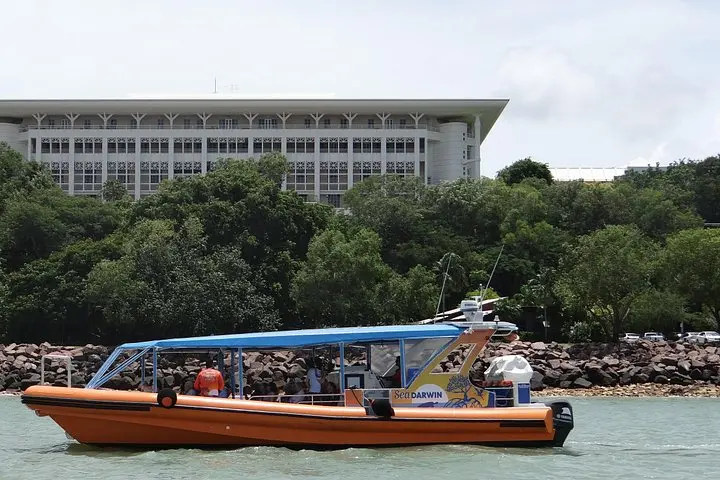
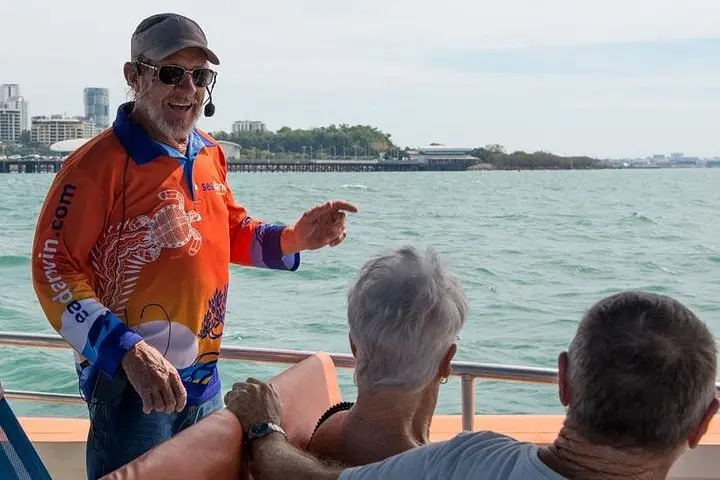
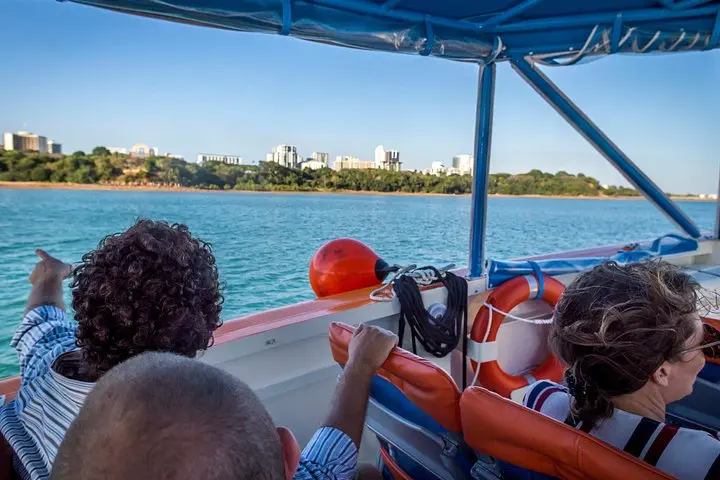
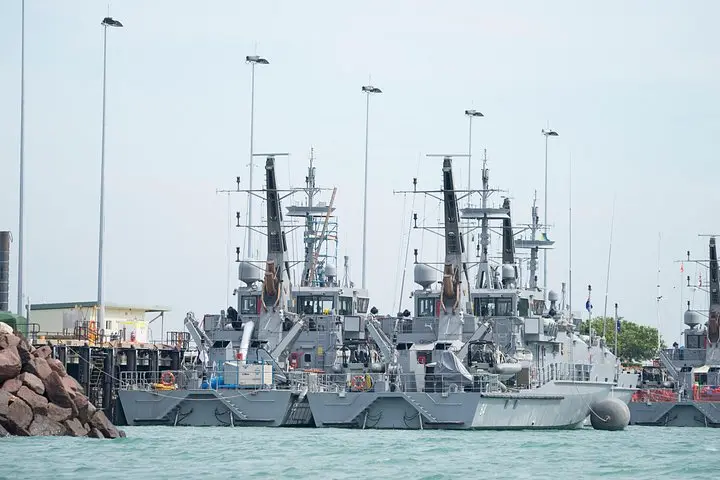
You step onto the planked wharf at Stokes Hill and the harbour opens ahead—salt on the air, a seagull cutting the skyline, the city’s low profile giving way to wide water. The cruise eases out, and the shoreline begins to read like a map of conflict and continuity: warehouses, coastal batteries and a harbour that felt the shock of the 1942 air raids.
You step onto the planked wharf at Stokes Hill and the harbour opens ahead—salt on the air, a seagull cutting the skyline, the city’s low profile giving way to wide water. The cruise eases out, and the shoreline begins to read like a map of conflict and continuity: warehouses, coastal batteries and a harbour that felt the shock of the 1942 air raids.
The Bombing of Darwin was the largest single attack on Australian soil during WWII, and the harbour still bears the layers of that history: sun-corroded shipwrecks, navy facilities, and shorelines once watched by coastal defenders. Geology here is immediate—tide-swept mudflats, mangrove fringes and a shallow estuarine harbour carved by cycles of wet and dry. Larrakia Country frames the human story; local guides often acknowledge Traditional Owners and point to sites of ongoing cultural importance.
Onboard commentary ties wartime narrative to modern maritime life—supply vessels, patrol boats and the logistics that keep a tropical port running. The hour-long loop is compact but rich: you’ll pass locations where vessels were lost, see markers and memorials, and hear accounts that place footage and artifacts into context.
Practicalities: departures from Stokes Hill Wharf at 11:00, roughly 60 minutes aboard, and room for about 22 passengers. Expect sun, wind off the water and steady narration—bring a hat, sunscreen and binoculars. The cruise is accessible to most travelers but not recommended for people with serious spinal or heart conditions. Weather or low bookings can cancel departures; check ahead and arrive 20 minutes early to board calmly.