THE ADVENTURE COLLECTIVE® · Independent discovery and booking for outdoor travel

Spend eight hours off Bonaire chasing mahi mahi, tuna and wahoo aboard a private charter that mixes trolling, bottom fishing and sight-casting. Departing Nautico Marina, the trip includes live bait, top tackle, lunch and fillet service—ideal for anglers seeking a full-day offshore experience.
Spend eight hours off Bonaire chasing mahi mahi, tuna and wahoo aboard a private charter that mixes trolling, bottom fishing and sight-casting. Departing Nautico Marina, the trip includes live bait, top tackle, lunch and fillet service—ideal for anglers seeking a full-day offshore experience.
Morning begins at Nautico Marina in downtown Kralendijk, where the harbor smells faintly of diesel and fried plantains and the Flying Fish sits quietly at the dock. The deckhand hauls a bucket of live bait aboard and the captain checks lines with a practiced calm—the kind born of hundreds of days on a Caribbean horizon. Within minutes the engines cut and the island’s low limestone edge slides away; the sea opens into deep, Pacific-blue water that seems to dare you to cast farther.
Verified experiences and guided adventures in the surrounding area.
Operated by Flying Fish Charters · Kralendijk, Bonaire
Morning begins at Nautico Marina in downtown Kralendijk, where the harbor smells faintly of diesel and fried plantains and the Flying Fish sits quietly at the dock. The deckhand hauls a bucket of live bait aboard and the captain checks lines with a practiced calm—the kind born of hundreds of days on a Caribbean horizon. Within minutes the engines cut and the island’s low limestone edge slides away; the sea opens into deep, Pacific-blue water that seems to dare you to cast farther.
Bonaire’s offshore grounds are an extension of the same coral shelf that makes the island famous for diving. The island itself is a raised carbonate platform carved by wind and time, and its surrounding reefs are protected by the Bonaire National Marine Park, one of the first marine reserves established in the Caribbean in 1979. Fishing here sits at the intersection of that conservation legacy and a working seafaring culture—locals long balanced subsistence fishing and salt production with a growing tourism economy.
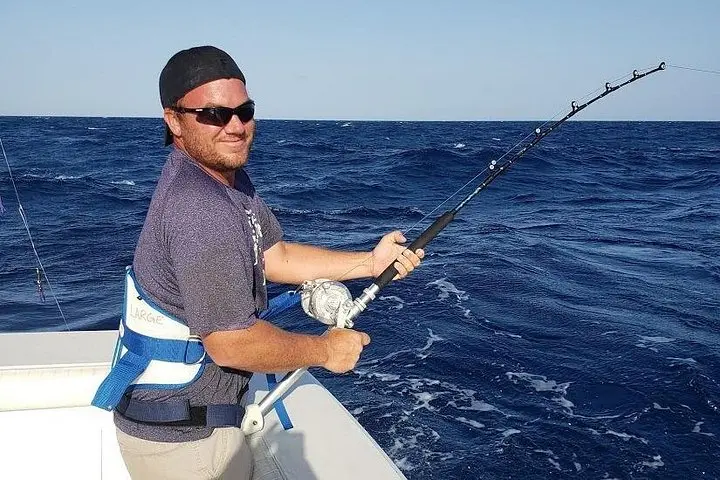
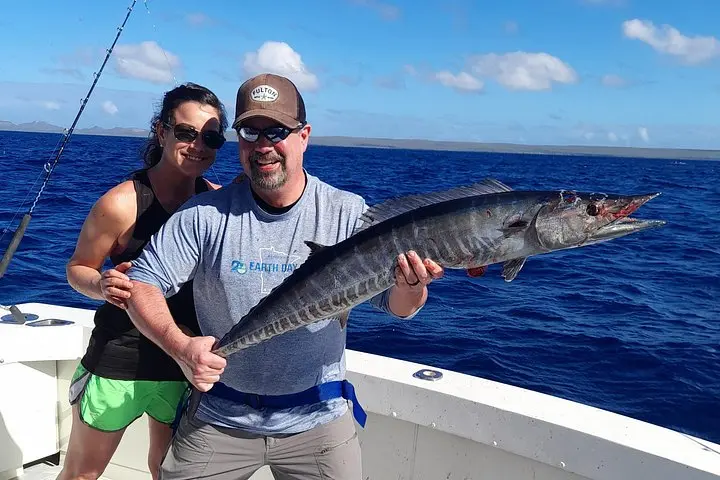
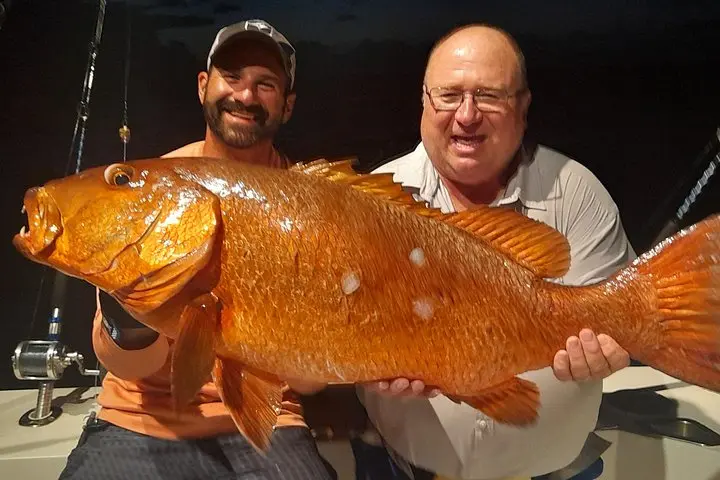
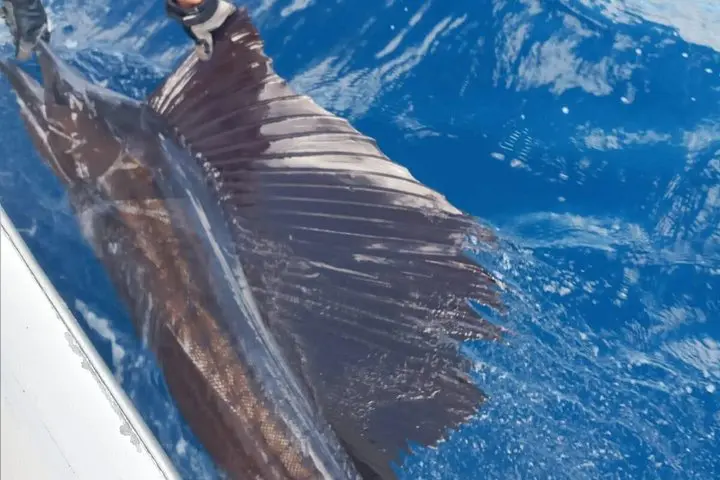
On an eight-hour charter the day is pragmatic and flexible: most runs between productive grounds are short—5 to 45 minutes—so you spend the bulk of time fishing rather than transit. Expect a mix of trolling, bottom fishing and sight-casting; fly anglers will find opportunities to cast big flies at mahi mahi, tuna, and wahoo when conditions permit. The operator provides top-quality tackle, live bait, lunch, snacks and bottled water, and when the boat returns every kept fish is bled, iced and filleted by the crew.
Wildlife is a running companion: pods of dolphins often investigate the wake, solitary turtles surface with dignity, and flying fish punctuate the horizon. On longer trips there’s a chance of a whale sighting; even when the bite is slow, the ocean offers spectacle.
Practical planning matters. Bring motion-sickness medication and try to eat lightly before departure; eight hours of rolling can be taxing. Sun protection is essential—broad-brim hat, long-sleeve UV shirt, reef-safe sunscreen—and polarized sunglasses will make species identification and hook setting easier. Non-marking deck shoes and a light waterproof jacket for spray complete the kit.
Logistics are straightforward: departures and returns are at Nautico Marina, with flexible pickup from most island hotels and ports. The trip suits anglers of varying skill—captains tailor the experience for families, intermediate anglers and serious fly fishermen. If you want your catch cleaned and packed, the crew will prepare fillets at the dock.
An offshore day on Bonaire is a balance of skill and patience; the island’s protective policies and the crew’s know-how make it a reliable place to chase hard-fighting Caribbean pelagics while still respecting the reefs that make this stretch of sea special.
Trips depart from Nautico Marina in downtown Kralendijk; the dock is in front of It Rains Fishes restaurant.
Yes—top-quality tackle and live bait are included; specialists for fly fishing are accommodated when arranged.
Yes—kept fish are bled, iced and filleted at return; the crew bags fillets for transport.
Families are welcome, but the trip requires a moderate level of mobility; inform the operator of ages when booking.
The charter operator handles necessary permits for guided trips—confirm at booking if you plan to fish independently afterward.
Trips canceled for bad weather are fully refundable if canceled at least 24 hours before departure per the standard policy.
Flying Fish Charters operates guided outdoor trips and adventures with an emphasis on safety, stewardship, and memorable experiences.
Morning begins at Nautico Marina in downtown Kralendijk, where the harbor smells faintly of diesel and fried plantains and the Flying Fish sits quietly at the dock. The deckhand hauls a bucket of live bait aboard and the captain checks lines with a practiced calm—the kind born of hundreds of days on a Caribbean horizon. Within minutes the engines cut and the island’s low limestone edge slides away; the sea opens into deep, Pacific-blue water that seems to dare you to cast farther.
Morning begins at Nautico Marina in downtown Kralendijk, where the harbor smells faintly of diesel and fried plantains and the Flying Fish sits quietly at the dock. The deckhand hauls a bucket of live bait aboard and the captain checks lines with a practiced calm—the kind born of hundreds of days on a Caribbean horizon. Within minutes the engines cut and the island’s low limestone edge slides away; the sea opens into deep, Pacific-blue water that seems to dare you to cast farther.
Bonaire’s offshore grounds are an extension of the same coral shelf that makes the island famous for diving. The island itself is a raised carbonate platform carved by wind and time, and its surrounding reefs are protected by the Bonaire National Marine Park, one of the first marine reserves established in the Caribbean in 1979. Fishing here sits at the intersection of that conservation legacy and a working seafaring culture—locals long balanced subsistence fishing and salt production with a growing tourism economy.
On an eight-hour charter the day is pragmatic and flexible: most runs between productive grounds are short—5 to 45 minutes—so you spend the bulk of time fishing rather than transit. Expect a mix of trolling, bottom fishing and sight-casting; fly anglers will find opportunities to cast big flies at mahi mahi, tuna, and wahoo when conditions permit. The operator provides top-quality tackle, live bait, lunch, snacks and bottled water, and when the boat returns every kept fish is bled, iced and filleted by the crew.
Wildlife is a running companion: pods of dolphins often investigate the wake, solitary turtles surface with dignity, and flying fish punctuate the horizon. On longer trips there’s a chance of a whale sighting; even when the bite is slow, the ocean offers spectacle.
Practical planning matters. Bring motion-sickness medication and try to eat lightly before departure; eight hours of rolling can be taxing. Sun protection is essential—broad-brim hat, long-sleeve UV shirt, reef-safe sunscreen—and polarized sunglasses will make species identification and hook setting easier. Non-marking deck shoes and a light waterproof jacket for spray complete the kit.
Logistics are straightforward: departures and returns are at Nautico Marina, with flexible pickup from most island hotels and ports. The trip suits anglers of varying skill—captains tailor the experience for families, intermediate anglers and serious fly fishermen. If you want your catch cleaned and packed, the crew will prepare fillets at the dock.
An offshore day on Bonaire is a balance of skill and patience; the island’s protective policies and the crew’s know-how make it a reliable place to chase hard-fighting Caribbean pelagics while still respecting the reefs that make this stretch of sea special.