THE ADVENTURE COLLECTIVE® · Independent discovery and booking for outdoor travel

Head offshore from Bora Bora to track migrating humpback whales aboard a 26-foot inflatable. Hydrophones deliver whale song and, when conditions allow, guided swims put you in the water alongside these giants.
Head offshore from Bora Bora to track migrating humpback whales aboard a 26-foot inflatable. Hydrophones deliver whale song and, when conditions allow, guided swims put you in the water alongside these giants.
You push off from a small pier and the lagoon opens like a wide, breathing thing—turquoise shallows give way to deep indigo where a 26-foot inflatable cuts through the swell. The captain eases the throttle; the guide lifts a hydrophone and the ocean answers with a low, rolling song that vibrates through the hull. Expect moments of hushed awe when a spout or a trailing pectoral fin breaks the surface nearby.
Verified experiences and guided adventures in the surrounding area.
Operated by BORA OCEAN ADVENTURES · Vaitape, Bora Bora
You push off from a small pier and the lagoon opens like a wide, breathing thing—turquoise shallows give way to deep indigo where a 26-foot inflatable cuts through the swell. The captain eases the throttle; the guide lifts a hydrophone and the ocean answers with a low, rolling song that vibrates through the hull. Expect moments of hushed awe when a spout or a trailing pectoral fin breaks the surface nearby.
Bora Bora is an extinct volcanic caldera encircled by a living reef; its lagoon has long sustained Polynesian communities and now funnels migrating humpback whales (July–November) through the island’s southern approaches. Humpbacks return from Antarctic feeding grounds, and their songs—recorded by hydrophones—are both biological signals and a cultural spectacle for visitors. The guides follow strict local protocols: observe, listen, and only enter the water under the whale’s acceptance and the crew’s direction.
Practical guidance: trips run about 3.5 hours, with two crew aboard—one in the water to accompany swimmers and one keeping watch. Snorkel gear and bottled water are provided and light refreshments may be offered. The operator limits group size for safety and minimal disturbance; weather or whale behavior can cancel tours with full refund if called off 24 hours prior. Be prepared for open-ocean motion, strong sun, and rapid weather shifts. Reef-safe sunscreen, a snug mask, and a flotation device are sensible choices. Above all, follow the guide’s instructions: the best encounters come from patient positioning and respect for the animals’ space.
No—the crew attempts to approach whales respectfully. Swimming with whales only proceeds if the whales show acceptance and conditions are safe; sightings are more reliable than guaranteed swims.
Children can join but must be competent swimmers and follow the guide’s safety brief; operators often set age recommendations—check with the provider when booking.
Tours may be canceled for safety or if whale behavior is unsuitable; the cancellation policy typically allows a full refund if called off 24 hours before departure.
Guides follow local and international approach guidelines—boats keep distance and minimize engine noise; entry into the water is always controlled and supervised.
BORA OCEAN ADVENTURES operates guided outdoor trips and adventures with an emphasis on safety, stewardship, and memorable experiences.

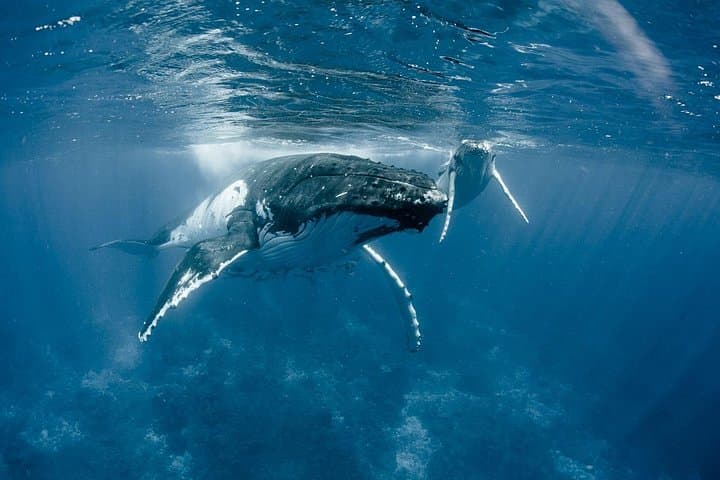


You push off from a small pier and the lagoon opens like a wide, breathing thing—turquoise shallows give way to deep indigo where a 26-foot inflatable cuts through the swell. The captain eases the throttle; the guide lifts a hydrophone and the ocean answers with a low, rolling song that vibrates through the hull. Expect moments of hushed awe when a spout or a trailing pectoral fin breaks the surface nearby.
You push off from a small pier and the lagoon opens like a wide, breathing thing—turquoise shallows give way to deep indigo where a 26-foot inflatable cuts through the swell. The captain eases the throttle; the guide lifts a hydrophone and the ocean answers with a low, rolling song that vibrates through the hull. Expect moments of hushed awe when a spout or a trailing pectoral fin breaks the surface nearby.
Bora Bora is an extinct volcanic caldera encircled by a living reef; its lagoon has long sustained Polynesian communities and now funnels migrating humpback whales (July–November) through the island’s southern approaches. Humpbacks return from Antarctic feeding grounds, and their songs—recorded by hydrophones—are both biological signals and a cultural spectacle for visitors. The guides follow strict local protocols: observe, listen, and only enter the water under the whale’s acceptance and the crew’s direction.
Practical guidance: trips run about 3.5 hours, with two crew aboard—one in the water to accompany swimmers and one keeping watch. Snorkel gear and bottled water are provided and light refreshments may be offered. The operator limits group size for safety and minimal disturbance; weather or whale behavior can cancel tours with full refund if called off 24 hours prior. Be prepared for open-ocean motion, strong sun, and rapid weather shifts. Reef-safe sunscreen, a snug mask, and a flotation device are sensible choices. Above all, follow the guide’s instructions: the best encounters come from patient positioning and respect for the animals’ space.