THE ADVENTURE COLLECTIVE® · Independent discovery and booking for outdoor travel

A full-day loop from Yogyakarta that pairs Borobudur’s layered stupas with Prambanan’s soaring Hindu spires. Expect early starts, plentiful steps, and a deep dive into 9th-century Javanese stonework.
A full-day loop from Yogyakarta that pairs Borobudur’s layered stupas with Prambanan’s soaring Hindu spires. Expect early starts, plentiful steps, and a deep dive into 9th-century Javanese stonework.
You step out before dawn in Yogyakarta and the road narrows into rice fields, the air carrying a wet-earth scent that seems to wake the stone itself. By the time the first terraces of Borobudur appear, the morning mist pulls back to reveal tiers of stupas rolling towards the sky; there’s a steady rhythm to climbing each level, relief panels punctuating the ascent and guiding the eye outward to volcanic ridgelines.
Verified experiences and guided adventures in the surrounding area.
Operated by Menoreh Tour · Yogyakarta, Special Region of Yogyakarta
You step out before dawn in Yogyakarta and the road narrows into rice fields, the air carrying a wet-earth scent that seems to wake the stone itself. By the time the first terraces of Borobudur appear, the morning mist pulls back to reveal tiers of stupas rolling towards the sky; there’s a steady rhythm to climbing each level, relief panels punctuating the ascent and guiding the eye outward to volcanic ridgelines.
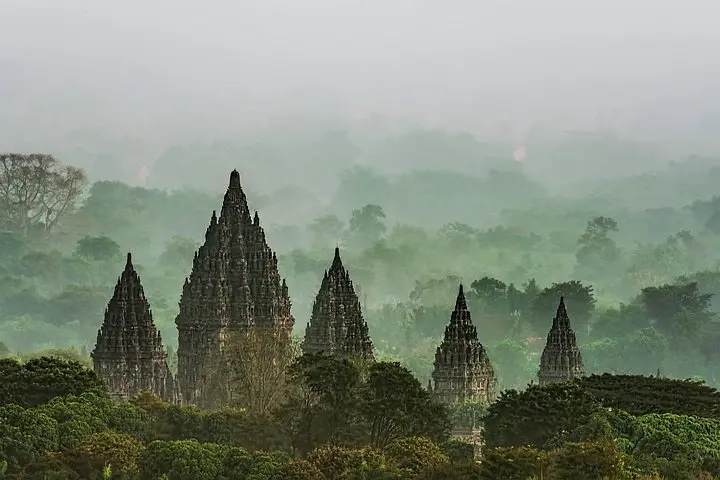
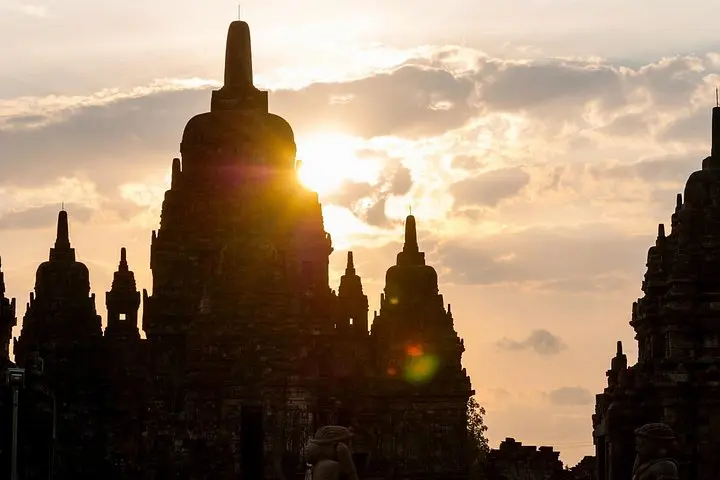
Borobudur (9th century) and Prambanan (mid-9th century) are mirror chapters of Java’s religious history — Buddhist narrative friezes carved in low relief, Hindu temples dedicated to the Trimurti with spires that challenge gravity. Geologically, both sites sit on a plain shaped by nearby volcanoes (Merapi looms to the north), which supplied the andesite used in construction and continues to influence local agriculture and weather.
Culturally, the complexes are active places: rituals, temple festivals, and local guides stitch contemporary Javanese life to ancient stones. Expect marketplaces nearby selling sugarcane juice and batik; vendors are part of the day’s rhythm rather than an interruption.
Practical guidance: start early to avoid mid-day heat and crowds, wear closed shoes for uneven steps, and allow at least 4–5 hours on site between both temples plus driving. Carry water and modest clothing for temple entry; photo tripods and drones may be restricted. Transport is typically an air-conditioned private vehicle with entrance fees included.
This is a full-day cultural loop that rewards steady pacing—move deliberately between panels and courtyards and let the carved stories set the tempo of your visit.
Plan for a full day—typically 8–10 hours including driving, time at each temple, and a lunch break in between.
Many organized tours include entrance fees and private transport; confirm with your provider before booking.
Yes; Borobudur is about 40–60 minutes from Yogyakarta and Prambanan about 30 minutes in a different direction, making a combined day feasible.
Modest clothing covering shoulders and knees is recommended at both sites, especially inside active temple areas and during ceremonies.
Menoreh Tour operates guided outdoor trips and adventures with an emphasis on safety, stewardship, and memorable experiences.
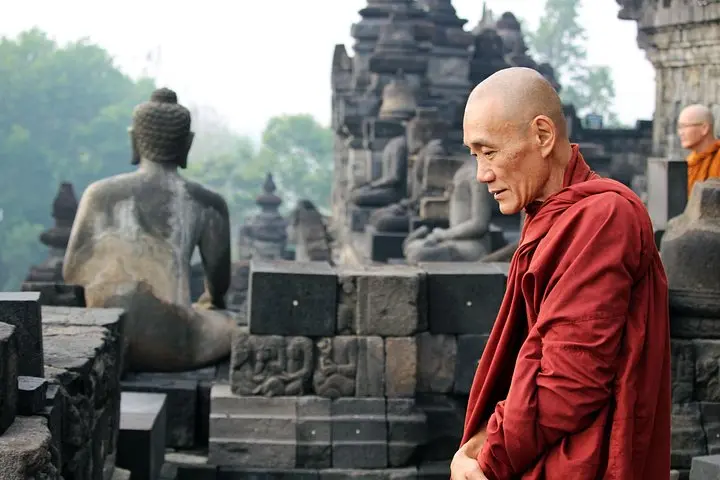
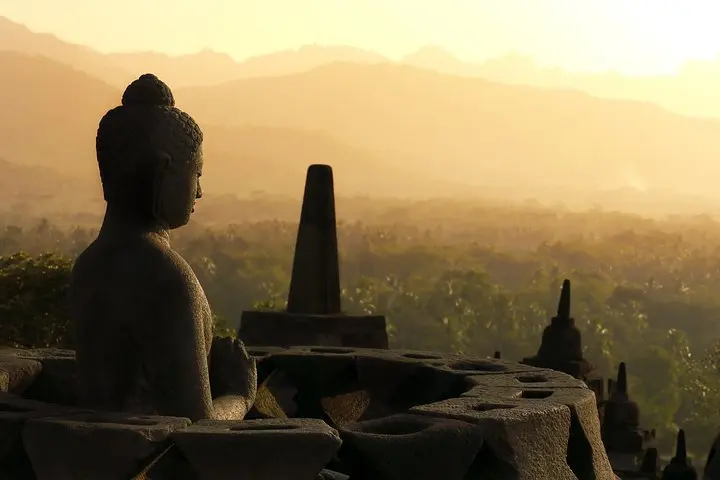
You step out before dawn in Yogyakarta and the road narrows into rice fields, the air carrying a wet-earth scent that seems to wake the stone itself. By the time the first terraces of Borobudur appear, the morning mist pulls back to reveal tiers of stupas rolling towards the sky; there’s a steady rhythm to climbing each level, relief panels punctuating the ascent and guiding the eye outward to volcanic ridgelines.
You step out before dawn in Yogyakarta and the road narrows into rice fields, the air carrying a wet-earth scent that seems to wake the stone itself. By the time the first terraces of Borobudur appear, the morning mist pulls back to reveal tiers of stupas rolling towards the sky; there’s a steady rhythm to climbing each level, relief panels punctuating the ascent and guiding the eye outward to volcanic ridgelines.
Borobudur (9th century) and Prambanan (mid-9th century) are mirror chapters of Java’s religious history — Buddhist narrative friezes carved in low relief, Hindu temples dedicated to the Trimurti with spires that challenge gravity. Geologically, both sites sit on a plain shaped by nearby volcanoes (Merapi looms to the north), which supplied the andesite used in construction and continues to influence local agriculture and weather.
Culturally, the complexes are active places: rituals, temple festivals, and local guides stitch contemporary Javanese life to ancient stones. Expect marketplaces nearby selling sugarcane juice and batik; vendors are part of the day’s rhythm rather than an interruption.
Practical guidance: start early to avoid mid-day heat and crowds, wear closed shoes for uneven steps, and allow at least 4–5 hours on site between both temples plus driving. Carry water and modest clothing for temple entry; photo tripods and drones may be restricted. Transport is typically an air-conditioned private vehicle with entrance fees included.
This is a full-day cultural loop that rewards steady pacing—move deliberately between panels and courtyards and let the carved stories set the tempo of your visit.