THE ADVENTURE COLLECTIVE® · Independent discovery and booking for outdoor travel

Visit Borobudur at first light on a guided pilgrimage that combines skip-the-line access, cultural context, and a private guide. Expect steep stone steps, carved reliefs tracing Buddhist stories, and panoramic views over Central Java’s volcanic plain.
Visit Borobudur at first light on a guided pilgrimage that combines skip-the-line access, cultural context, and a private guide. Expect steep stone steps, carved reliefs tracing Buddhist stories, and panoramic views over Central Java’s volcanic plain.
You ascend before dawn, when the plain yawns under a slow, cooling light and the stone stupas of Borobudur silhouette against a sky that brightens like a lantern. The stairs feel alive beneath your palms; the temple’s carved reliefs press history and devotion into the air as early birds call from the trees.
Verified experiences and guided adventures in the surrounding area.
Operated by JogjaTravels & Group · Borobudur, Central Java
You ascend before dawn, when the plain yawns under a slow, cooling light and the stone stupas of Borobudur silhouette against a sky that brightens like a lantern. The stairs feel alive beneath your palms; the temple’s carved reliefs press history and devotion into the air as early birds call from the trees.
Built in the 8th–9th centuries by the Sailendra dynasty, Borobudur sits on an ancient volcanic plain shaped by Mount Merapi’s eruptions. The monument’s stepped terraces and concentric galleries are both a guidebook to Mahayana Buddhist cosmology and a record of Java’s stone-working craft. Nearby Mendut and Pawon temples add context: quiet shrines that hint at former royal rites and cremation customs. Locals still perform offerings at dawn, and coffee stalls outside the park hum with practical conversation rather than tourist fanfare.
Practically, this tour bundles admission, skip-the-line access and a private guide; plan for five to eight hours on-site including travel. Expect uneven stone, many steps to the summit, and early-morning chill that gives way to rapid humidity as the sun rises. Dress modestly (shoulders and knees covered) and wear stable shoes that are easy to remove for certain prayer areas. Bring water, a small towel, and a lightweight rain shell in wet months.
Timing matters: sunrise delivers the clearest light and smaller crowds; late morning brings heat and busier paths. Respect restricted areas, follow your guide’s route, and leave offerings and trash where they belong—this is a living place of worship as much as an archaeological icon.
Many departures offer sunrise visits—confirm departure time at booking; sunrise options require very early pickup.
Photography for personal use is allowed around Borobudur, but drone use is restricted and often prohibited—check current park rules and guide instructions.
The complex has uneven stone and many steps to the summit; transport and some nearby areas may be accessible, but full access to the upper terraces is generally not possible for wheelchairs.
Yes—skip-the-line tickets and guided tours are recommended, especially for sunrise visits when visitor numbers are limited.
JogjaTravels & Group operates guided outdoor trips and adventures with an emphasis on safety, stewardship, and memorable experiences.


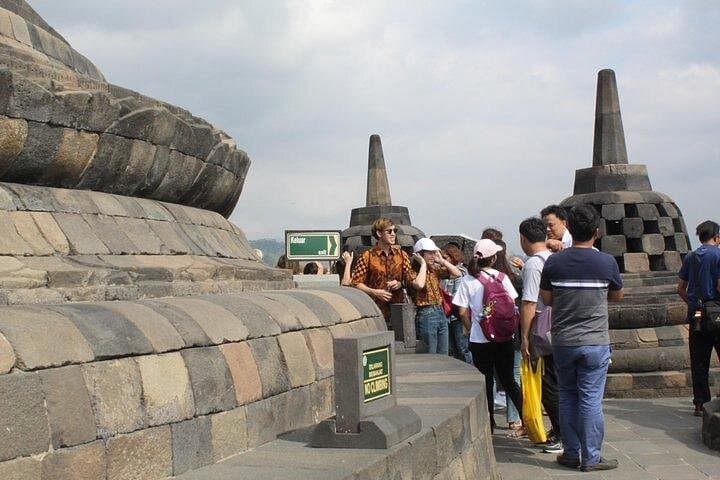
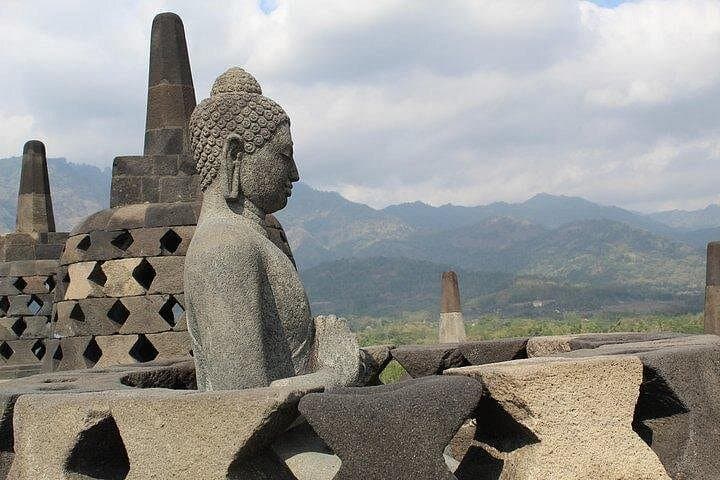
You ascend before dawn, when the plain yawns under a slow, cooling light and the stone stupas of Borobudur silhouette against a sky that brightens like a lantern. The stairs feel alive beneath your palms; the temple’s carved reliefs press history and devotion into the air as early birds call from the trees.
You ascend before dawn, when the plain yawns under a slow, cooling light and the stone stupas of Borobudur silhouette against a sky that brightens like a lantern. The stairs feel alive beneath your palms; the temple’s carved reliefs press history and devotion into the air as early birds call from the trees.
Built in the 8th–9th centuries by the Sailendra dynasty, Borobudur sits on an ancient volcanic plain shaped by Mount Merapi’s eruptions. The monument’s stepped terraces and concentric galleries are both a guidebook to Mahayana Buddhist cosmology and a record of Java’s stone-working craft. Nearby Mendut and Pawon temples add context: quiet shrines that hint at former royal rites and cremation customs. Locals still perform offerings at dawn, and coffee stalls outside the park hum with practical conversation rather than tourist fanfare.
Practically, this tour bundles admission, skip-the-line access and a private guide; plan for five to eight hours on-site including travel. Expect uneven stone, many steps to the summit, and early-morning chill that gives way to rapid humidity as the sun rises. Dress modestly (shoulders and knees covered) and wear stable shoes that are easy to remove for certain prayer areas. Bring water, a small towel, and a lightweight rain shell in wet months.
Timing matters: sunrise delivers the clearest light and smaller crowds; late morning brings heat and busier paths. Respect restricted areas, follow your guide’s route, and leave offerings and trash where they belong—this is a living place of worship as much as an archaeological icon.