THE ADVENTURE COLLECTIVE® · Independent discovery and booking for outdoor travel

Catch dawn over Borobudur from Setumbu Hill, then spend a full day visiting Borobudur, Mendut, Pawon and Prambanan temples. This private tour blends sunrise vistas, classical Javanese architecture and accessible walking at major heritage sites.
Catch dawn over Borobudur from Setumbu Hill, then spend a full day visiting Borobudur, Mendut, Pawon and Prambanan temples. This private tour blends sunrise vistas, classical Javanese architecture and accessible walking at major heritage sites.
You wake before dawn, the van humming toward Setumbu Hill as a thin blue mist settles over rice paddies and the silhouette of Borobudur emerges like a low-profile skyline.
Verified experiences and guided adventures in the surrounding area.
Operated by Izzati Jogjatour · Magelang, Central Java
You wake before dawn, the van humming toward Setumbu Hill as a thin blue mist settles over rice paddies and the silhouette of Borobudur emerges like a low-profile skyline.
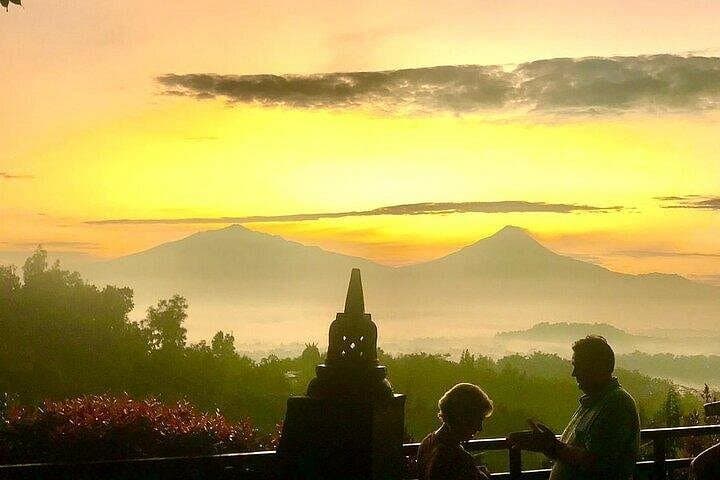
From Setumbu’s summit the sunrise pushes through layers of cloud and Menoreh hills, gilding the stupas and the distant volcanic ridgeline. The view is immediate and tactile: cold air, camera clicks, and the temple’s terraces stepping down into a patchwork of green.
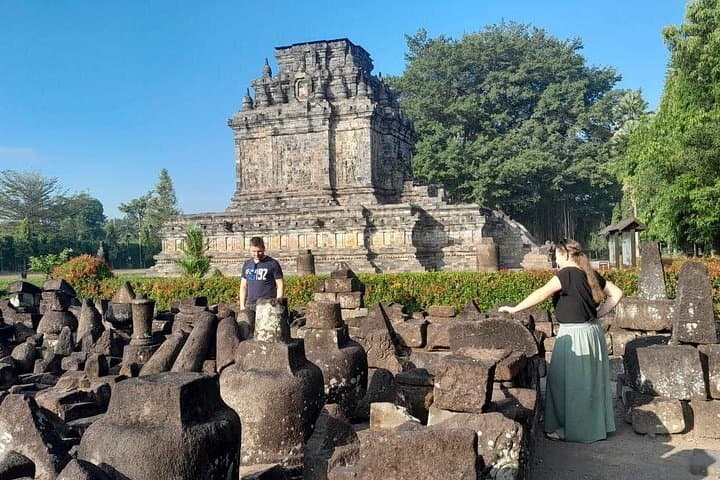
Borobudur is an 8th–9th century Mahayana Buddhist monument, carved from volcanic stone and layered in reliefs that chart belief and daily life from Java’s classical era. Nearby Mendut and Pawon are smaller Buddhist sites that echo the same period, while Prambanan—built later—stands as the region’s great Hindu complex, its towering spires carved with Ramayana scenes.
The day tour blends this geology, history and living Javanese culture: volcanic plains sculpt agricultural rhythms, and local guides translate iconography and ritual. Expect long but unhurried walking at each temple, plenty of photo stops, and a rhythm that favors early starts and late afternoon returns.
Practical edge: the trip runs 10–12 hours with private transport and bottled water provided; temple admissions are typically paid on-site, and modest dress is required inside sacred areas. Wear sturdy shoes for uneven stone terraces, bring a headlamp or flashlight for pre-dawn walking, and plan for changing weather—dry mornings can become humid by mid-morning. If you want quieter temples, request the earliest pickup and aim for weekdays outside national holidays.
Admission fees are typically not included in the tour price and are paid on-site—bring local currency for each temple.
Transport and some viewing areas are wheelchair accessible, but many temple terraces and stairs are uneven and may limit full access.
Expect a pre-dawn pickup to reach Setumbu Hill for sunrise; the total tour runs about 10–12 hours and returns in the evening.
Guides often offer commentary in several languages; confirm language preference when booking to ensure availability.
Izzati Jogjatour operates guided outdoor trips and adventures with an emphasis on safety, stewardship, and memorable experiences.


You wake before dawn, the van humming toward Setumbu Hill as a thin blue mist settles over rice paddies and the silhouette of Borobudur emerges like a low-profile skyline.
You wake before dawn, the van humming toward Setumbu Hill as a thin blue mist settles over rice paddies and the silhouette of Borobudur emerges like a low-profile skyline.
From Setumbu’s summit the sunrise pushes through layers of cloud and Menoreh hills, gilding the stupas and the distant volcanic ridgeline. The view is immediate and tactile: cold air, camera clicks, and the temple’s terraces stepping down into a patchwork of green.
Borobudur is an 8th–9th century Mahayana Buddhist monument, carved from volcanic stone and layered in reliefs that chart belief and daily life from Java’s classical era. Nearby Mendut and Pawon are smaller Buddhist sites that echo the same period, while Prambanan—built later—stands as the region’s great Hindu complex, its towering spires carved with Ramayana scenes.
The day tour blends this geology, history and living Javanese culture: volcanic plains sculpt agricultural rhythms, and local guides translate iconography and ritual. Expect long but unhurried walking at each temple, plenty of photo stops, and a rhythm that favors early starts and late afternoon returns.
Practical edge: the trip runs 10–12 hours with private transport and bottled water provided; temple admissions are typically paid on-site, and modest dress is required inside sacred areas. Wear sturdy shoes for uneven stone terraces, bring a headlamp or flashlight for pre-dawn walking, and plan for changing weather—dry mornings can become humid by mid-morning. If you want quieter temples, request the earliest pickup and aim for weekdays outside national holidays.