THE ADVENTURE COLLECTIVE® · Independent discovery and booking for outdoor travel

Move through Back Bay, the Public Garden and Beacon Hill on a focused two-hour walking tour that pairs architectural history with practical photo tips. Small groups and a local guide make this an efficient, image-rich introduction to central Boston.
Move through Back Bay, the Public Garden and Beacon Hill on a focused two-hour walking tour that pairs architectural history with practical photo tips. Small groups and a local guide make this an efficient, image-rich introduction to central Boston.
Step out onto Dartmouth Street and the city rearranges itself into frames: Copley Square's brick and glass, the careful curves of the Public Garden's pathways, and Beacon Hill's narrow, gas-lamp lined streets. Over two hours, a small group moves at an observant pace—stopping at carved lintels, a church facade, and the famous stretch of cobblestone that photographers chase.
Verified experiences and guided adventures in the surrounding area.
Operated by PhotoWalks · Boston, Massachusetts
Step out onto Dartmouth Street and the city rearranges itself into frames: Copley Square's brick and glass, the careful curves of the Public Garden's pathways, and Beacon Hill's narrow, gas-lamp lined streets. Over two hours, a small group moves at an observant pace—stopping at carved lintels, a church facade, and the famous stretch of cobblestone that photographers chase.
This route threads 19th-century urban engineering and civic ambition. Back Bay is built on filled tidelands from the mid-1800s, where brownstone rowhouses rose on granite foundations. The Public Garden, created as America's first public botanical garden, offers designed plantings and the ornamental lagoon; Beacon Hill preserves narrow Federal-style houses and ironwork that reflect a different era of Boston life.
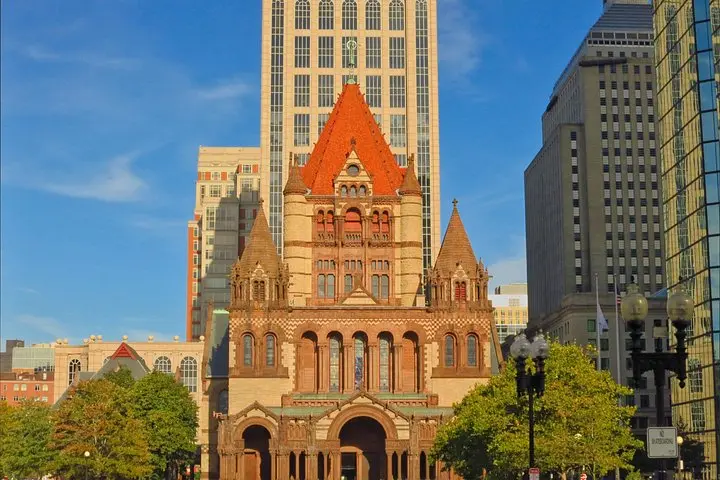
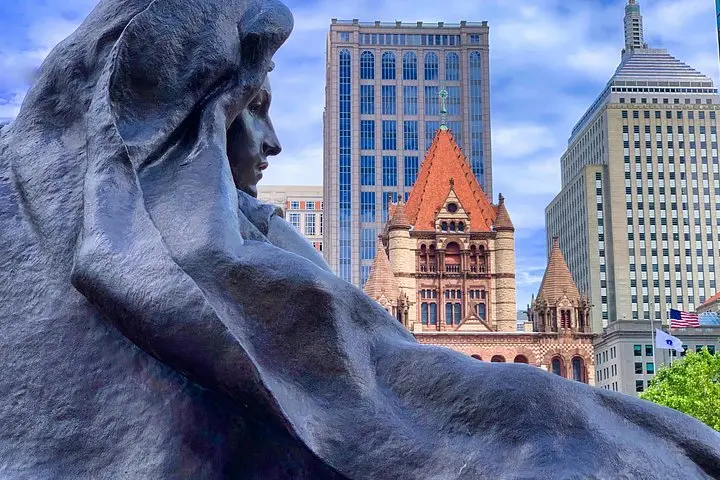
Architectural variety is the point: Richardsonian Romanesque at Trinity Church, sleek modernism in the Hancock tower, and period domestic façades in Back Bay. Guides pair historical context with practical photo advice—composition cues, light awareness, and smartphone framing—rather than technical camera instruction.
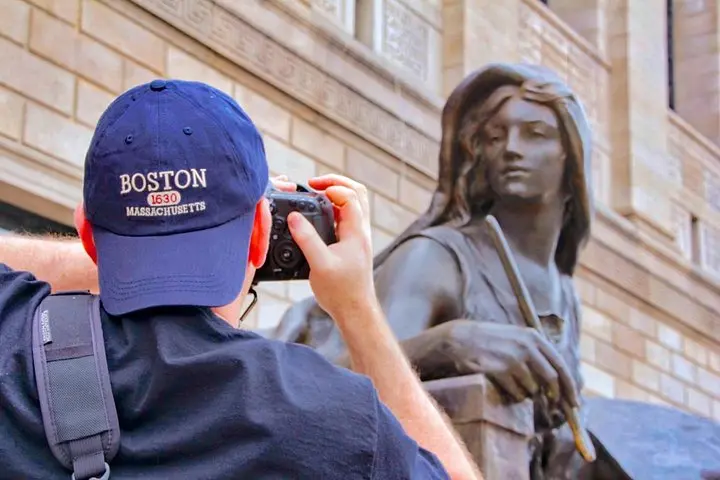
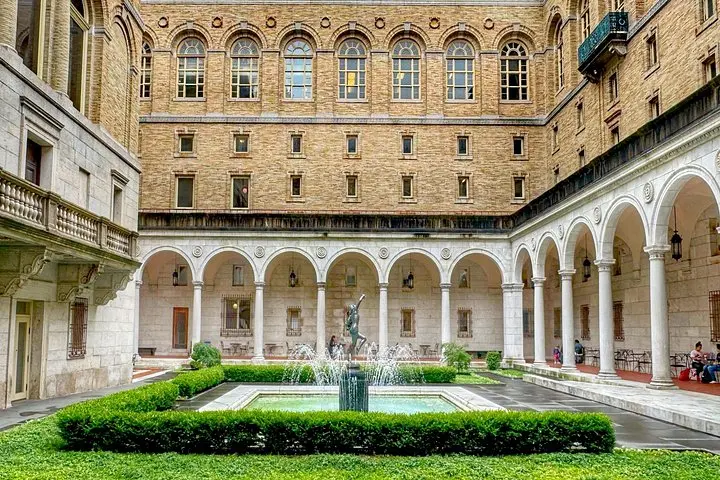
Expect paved sidewalks and short stretches of uneven brick or cobblestone; elevation change is negligible but bring steady footwear. Tours meet at the statue holding a ball outside the Boston Public Library on Dartmouth Street—confirm by text or email 24–48 hours ahead. Groups are intentionally small (typically under 10) so the experience feels conversational rather than rushed.
Practical rhythm matters: arrive early, charge your phone, and plan to walk about 1.5–2 miles with frequent stops. The city supplies motion and detail; the tour supplies context and the nudge to see it through the lens.
Meet outside the front entrance of the Boston Public Library on Dartmouth Street by the bronze statue holding a ball; not the Boylston Street entrance.
No—guides offer practical composition and smartphone/camera tips, but the tour is not a full technical photography class.
Most tours have fewer than 10 people; the maximum for shared tours is 15 during peak times.
Full refunds are available if you cancel at least 24 hours before the tour; confirm the operator's policy when booking.
PhotoWalks operates guided outdoor trips and adventures with an emphasis on safety, stewardship, and memorable experiences.
Step out onto Dartmouth Street and the city rearranges itself into frames: Copley Square's brick and glass, the careful curves of the Public Garden's pathways, and Beacon Hill's narrow, gas-lamp lined streets. Over two hours, a small group moves at an observant pace—stopping at carved lintels, a church facade, and the famous stretch of cobblestone that photographers chase.
Step out onto Dartmouth Street and the city rearranges itself into frames: Copley Square's brick and glass, the careful curves of the Public Garden's pathways, and Beacon Hill's narrow, gas-lamp lined streets. Over two hours, a small group moves at an observant pace—stopping at carved lintels, a church facade, and the famous stretch of cobblestone that photographers chase.
This route threads 19th-century urban engineering and civic ambition. Back Bay is built on filled tidelands from the mid-1800s, where brownstone rowhouses rose on granite foundations. The Public Garden, created as America's first public botanical garden, offers designed plantings and the ornamental lagoon; Beacon Hill preserves narrow Federal-style houses and ironwork that reflect a different era of Boston life.
Architectural variety is the point: Richardsonian Romanesque at Trinity Church, sleek modernism in the Hancock tower, and period domestic façades in Back Bay. Guides pair historical context with practical photo advice—composition cues, light awareness, and smartphone framing—rather than technical camera instruction.
Expect paved sidewalks and short stretches of uneven brick or cobblestone; elevation change is negligible but bring steady footwear. Tours meet at the statue holding a ball outside the Boston Public Library on Dartmouth Street—confirm by text or email 24–48 hours ahead. Groups are intentionally small (typically under 10) so the experience feels conversational rather than rushed.
Practical rhythm matters: arrive early, charge your phone, and plan to walk about 1.5–2 miles with frequent stops. The city supplies motion and detail; the tour supplies context and the nudge to see it through the lens.