THE ADVENTURE COLLECTIVE® · Independent discovery and booking for outdoor travel

Walk the route from Long Wharf to the Granary Burying Ground with a downloadable audio guide that reconstructs the events and forces behind the Boston Massacre. The self-guided tour pairs GPS-triggered storytelling with visible historic markers for a 90–120 minute urban history walk.
Walk the route from Long Wharf to the Granary Burying Ground with a downloadable audio guide that reconstructs the events and forces behind the Boston Massacre. The self-guided tour pairs GPS-triggered storytelling with visible historic markers for a 90–120 minute urban history walk.
Stand on Long Wharf with the harbor at your feet and the brisk Atlantic breeze nudging the city forward. The water dares you to look back at a town where maritime commerce and military occupation collided, and where tensions that smoldered through the 1760s ignited into violence on March 5, 1770.
Verified experiences and guided adventures in the surrounding area.
Operated by VoiceMap Audio Tours · Boston, Massachusetts
Stand on Long Wharf with the harbor at your feet and the brisk Atlantic breeze nudging the city forward. The water dares you to look back at a town where maritime commerce and military occupation collided, and where tensions that smoldered through the 1760s ignited into violence on March 5, 1770.
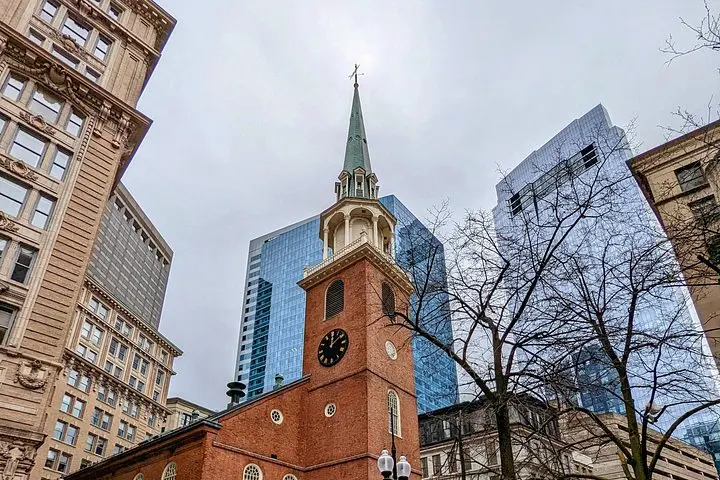
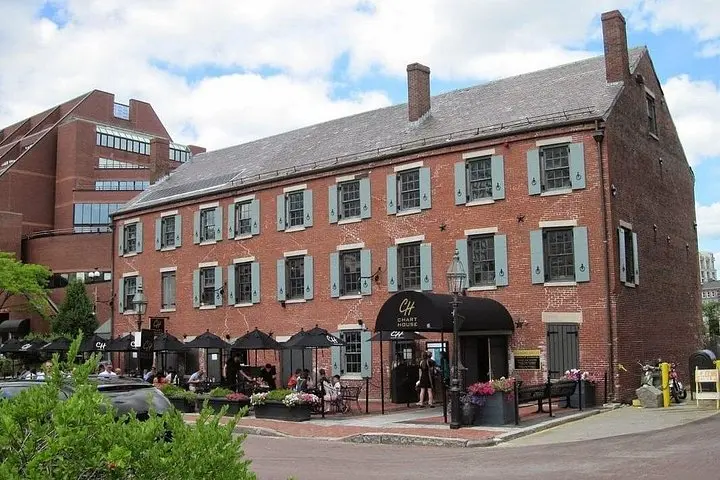
This self-guided audio route moves deliberately through downtown Boston—past the Chart House and Old State House—tracing the legal, economic, and political pressures that made an angry crowd and a nervous soldiery combustible. The story centers on the Boston Massacre, but it also maps the larger forces: the Quartering Act that put soldiers on local streets, taxation policies that strained livelihoods, and the legal dramas that followed, including the trial in which John Adams defended British soldiers.
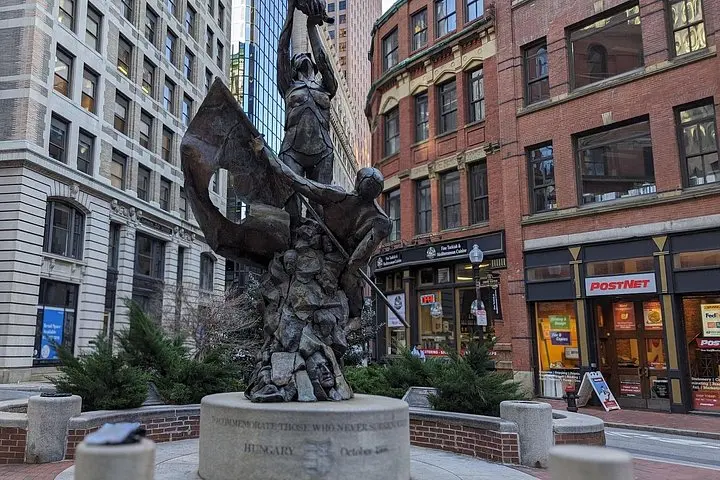
Boston’s compact streets record human history more than geology: you’ll crisscross reclaimed waterfront and fill areas that once met the tidal marsh. Culture here is civic and vocal—granite steps, bronze plaques, and the Granary Burying Ground where patriots lie—each stop a prompt to consider law, protest, and memory.
Practical guidance: download the VoiceMap file and bring headphones and a charged phone; the tour runs about 90–120 minutes and follows turn-by-turn prompts. Wear solid walking shoes, allow extra time for crowds at Quincy Market, and pause to read plaques—the audio pairs with visible markers. The route is flat and wheelchair-accessible, but busy streets require attention. Follow traffic signals, pack water, and treat the historic sites with care so the city can keep telling its story.
The tour starts on Long Wharf opposite the Chart House (60 Long Wharf) and ends at the Granary Burying Ground entrance.
No—download the tour in the VoiceMap app beforehand for offline playback of audio, maps, and geodata.
Yes—the route follows paved, largely flat streets and is listed as wheelchair accessible, though some sidewalks and crossings can be narrow or crowded.
Plan 90–120 minutes; the self-guided audio can be paused and resumed so you can explore at your own pace.
VoiceMap Audio Tours operates guided outdoor trips and adventures with an emphasis on safety, stewardship, and memorable experiences.

Stand on Long Wharf with the harbor at your feet and the brisk Atlantic breeze nudging the city forward. The water dares you to look back at a town where maritime commerce and military occupation collided, and where tensions that smoldered through the 1760s ignited into violence on March 5, 1770.
Stand on Long Wharf with the harbor at your feet and the brisk Atlantic breeze nudging the city forward. The water dares you to look back at a town where maritime commerce and military occupation collided, and where tensions that smoldered through the 1760s ignited into violence on March 5, 1770.
This self-guided audio route moves deliberately through downtown Boston—past the Chart House and Old State House—tracing the legal, economic, and political pressures that made an angry crowd and a nervous soldiery combustible. The story centers on the Boston Massacre, but it also maps the larger forces: the Quartering Act that put soldiers on local streets, taxation policies that strained livelihoods, and the legal dramas that followed, including the trial in which John Adams defended British soldiers.
Boston’s compact streets record human history more than geology: you’ll crisscross reclaimed waterfront and fill areas that once met the tidal marsh. Culture here is civic and vocal—granite steps, bronze plaques, and the Granary Burying Ground where patriots lie—each stop a prompt to consider law, protest, and memory.
Practical guidance: download the VoiceMap file and bring headphones and a charged phone; the tour runs about 90–120 minutes and follows turn-by-turn prompts. Wear solid walking shoes, allow extra time for crowds at Quincy Market, and pause to read plaques—the audio pairs with visible markers. The route is flat and wheelchair-accessible, but busy streets require attention. Follow traffic signals, pack water, and treat the historic sites with care so the city can keep telling its story.