THE ADVENTURE COLLECTIVE® · Independent discovery and booking for outdoor travel

A single-day loop from Accra that pairs the twin cascades of Boti Falls with Ghana’s cocoa heritage at Tetteh Quarshie Farm and the Ghana Cocoa Research Institute. Expect a mix of short hikes, a swim option, botanical gardens, and farm tours.
A single-day loop from Accra that pairs the twin cascades of Boti Falls with Ghana’s cocoa heritage at Tetteh Quarshie Farm and the Ghana Cocoa Research Institute. Expect a mix of short hikes, a swim option, botanical gardens, and farm tours.
You step out of the air-conditioned vehicle and the forest leans in—humidity pressing, leaves whispering toward the falls. Boti Falls appears as twin ribbons, called the male and female falls, spilling over dark, weathered rock; the pool below dares you to cool off after the drive from Accra.
Verified experiences and guided adventures in the surrounding area.
Operated by Tichama Tours · Boti, Eastern Region
You step out of the air-conditioned vehicle and the forest leans in—humidity pressing, leaves whispering toward the falls. Boti Falls appears as twin ribbons, called the male and female falls, spilling over dark, weathered rock; the pool below dares you to cool off after the drive from Accra.
The route threads history into landscape. Tetteh Quarshie’s small experimental plot marks where cocoa was introduced to Ghana in the 19th century; the Ghana Cocoa Research Institute that follows explains the crop’s science and global reach. Geologically the falls flow across resistant bedrock and rounded boulders, sculpted by seasonal rains into stepped cascades. Aburi Botanical Gardens crowns the return leg with mature rainforest specimens and a broad view back toward the coast.
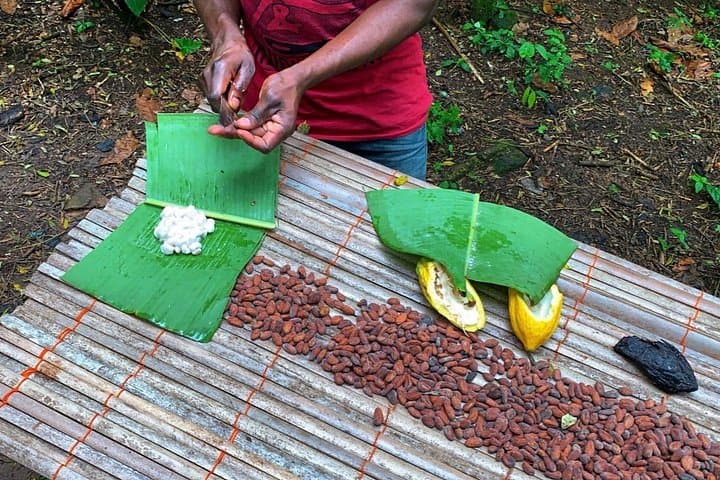
Culture arrives in taste and trade: fresh cocoa nibs, local farmstead stories, and the nearby Koforidua market where beadwork and crafts reflect Akan and Krobo artisanship.
Practical guidance: the full loop runs 9–12 hours door-to-door with roughly two hours’ driving each way and a one-hour uphill hike to Umbrella Rock if you choose it. Wear sturdy walking shoes for slick rock and forest trails, bring swimwear and a towel if you want to enter the pool, and pack insect repellent and a reusable water bottle. Expect uneven steps, short steep sections, and friendly local vendors.
Aim for the dry season to avoid heavy runoff; follow guides’ advice around swimming currents, and leave no trace—this landscape is resilient but busy.
The drive is roughly two hours from Accra depending on traffic; the falls lie about 17 km northeast of Koforidua.
Swimming is possible in calm conditions but always check with your guide—currents change with rainfall and some pools can be hazardous after heavy rain.
Yes—museum-style exhibits and farm demonstrations are family-friendly, but supervise children around farm equipment and forested areas.
There are basic facilities and local vendors at key stops, but bring snacks and water for the hike; facilities may be simple.
Tichama Tours operates guided outdoor trips and adventures with an emphasis on safety, stewardship, and memorable experiences.


You step out of the air-conditioned vehicle and the forest leans in—humidity pressing, leaves whispering toward the falls. Boti Falls appears as twin ribbons, called the male and female falls, spilling over dark, weathered rock; the pool below dares you to cool off after the drive from Accra.
You step out of the air-conditioned vehicle and the forest leans in—humidity pressing, leaves whispering toward the falls. Boti Falls appears as twin ribbons, called the male and female falls, spilling over dark, weathered rock; the pool below dares you to cool off after the drive from Accra.
The route threads history into landscape. Tetteh Quarshie’s small experimental plot marks where cocoa was introduced to Ghana in the 19th century; the Ghana Cocoa Research Institute that follows explains the crop’s science and global reach. Geologically the falls flow across resistant bedrock and rounded boulders, sculpted by seasonal rains into stepped cascades. Aburi Botanical Gardens crowns the return leg with mature rainforest specimens and a broad view back toward the coast.
Culture arrives in taste and trade: fresh cocoa nibs, local farmstead stories, and the nearby Koforidua market where beadwork and crafts reflect Akan and Krobo artisanship.
Practical guidance: the full loop runs 9–12 hours door-to-door with roughly two hours’ driving each way and a one-hour uphill hike to Umbrella Rock if you choose it. Wear sturdy walking shoes for slick rock and forest trails, bring swimwear and a towel if you want to enter the pool, and pack insect repellent and a reusable water bottle. Expect uneven steps, short steep sections, and friendly local vendors.
Aim for the dry season to avoid heavy runoff; follow guides’ advice around swimming currents, and leave no trace—this landscape is resilient but busy.