THE ADVENTURE COLLECTIVE® · Independent discovery and booking for outdoor travel

Glide upstream on a 12-seater Voyageur-style canoe through Banff’s Bow River with guides who weave natural history and local lore into a 90‑minute family-friendly paddle. No experience needed — just steady teamwork and an eye for wildlife.
Glide upstream on a 12-seater Voyageur-style canoe through Banff’s Bow River with guides who weave natural history and local lore into a 90‑minute family-friendly paddle. No experience needed — just steady teamwork and an eye for wildlife.
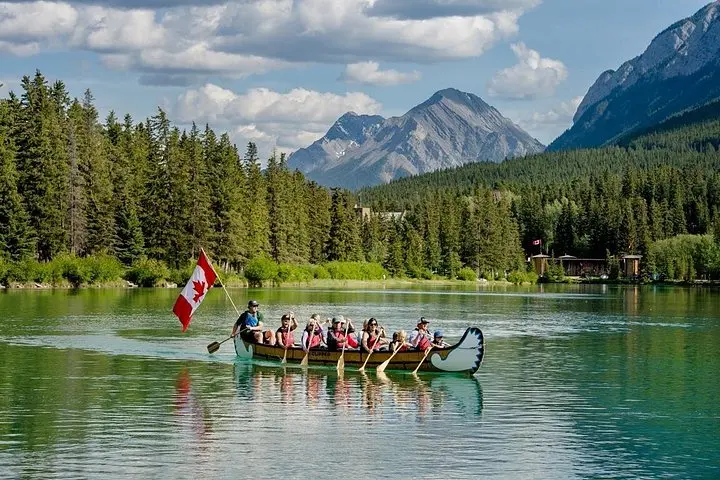
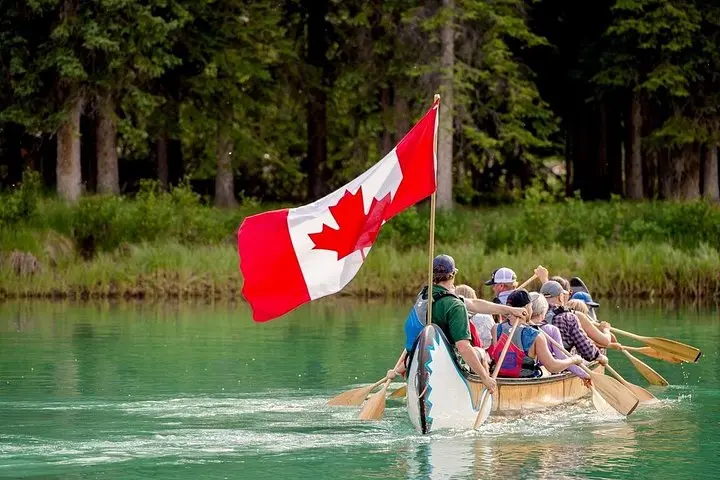
The canoe tilts as a dozen paddles dip in unison, and for a moment the town noise of Banff feels like a distant memory. You're seated in a wide, cedar-sided 12-seater — the kind of big canoe voyageurs once used to move goods and people across western waterways — and the Bow River slides past in a calm, steady current that seems to be daring you to look up and keep your eyes open.
Verified experiences and guided adventures in the surrounding area.
Operated by Hydra River Guides · Banff, Alberta
The canoe tilts as a dozen paddles dip in unison, and for a moment the town noise of Banff feels like a distant memory. You're seated in a wide, cedar-sided 12-seater — the kind of big canoe voyageurs once used to move goods and people across western waterways — and the Bow River slides past in a calm, steady current that seems to be daring you to look up and keep your eyes open.
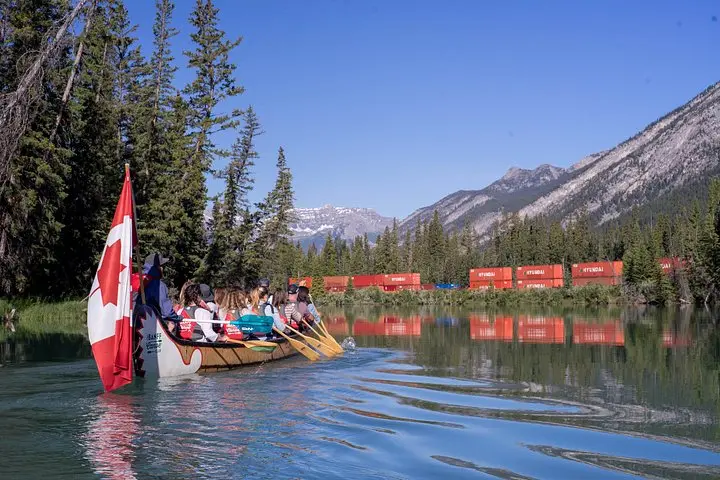
A local guide calls cadence and story in even tones: the river’s name comes from the reed beds once used by Indigenous peoples for bows; the route follows glacial melt carved from the Canadian Rockies. As the canoe moves upstream, cliffs and lodgepole pines frame the water, and the guide points out natural history — braided channels at low flow, lynx-friendly riparian cover, and the slate-and-quartz scars in bedrock that tell of ancient compressions and ice-shorn valleys.
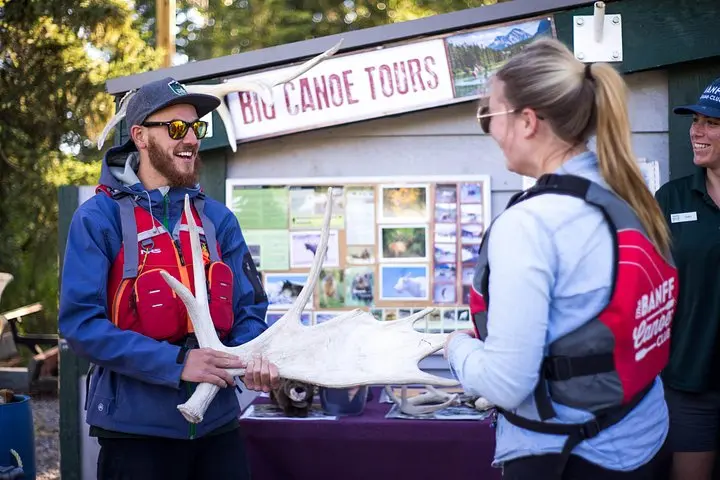
Banff’s waters carry a layered history. Long before park designation in 1885, the Bow River was a highway — first for Stoney Nakoda and other Indigenous nations, later for fur traders and missionaries, and more recently a corridor for summer recreation. The canoe tour echoes that lineage while keeping the emphasis on accessibility: everyone gets a life jacket, basic paddling instruction, and a place in the boat. The 90-minute River Explorer itinerary starts at the Banff Canoe Club on the corner of Bow Avenue and Wolf Street, a five-minute walk from downtown, and typically covers a gentle upstream stretch where elevation change is negligible but the scenery is ever-shifting.
Practicalities are simple: tours run in most warm months, minimum numbers apply and weather can cancel, and a light refreshment awaits at the end. Wildlife sightings are common — beavers and eagles often make cameo appearances — but guides insist on respectful distance to reduce disturbance. The Big Canoe format means kids can ride with adults and no prior experience is required, making this a solid option for families wanting a river perspective of Banff National Park without technical demands.
If you go, wear layered clothing for rapidly changing mountain sun and shade, bring sunscreen and a water bottle, and choose shoes that can get wet. Have your camera ready for low, reflective angles along the river and keep your movements slow when wildlife appears; the river responds to quiet the way a good audience does to a storyteller. This is not a whitewater run but a measured conversation with the Bow — paddles set to rhythm, a guide’s local knowledge, and a relaxed upstream glide through one of Canada’s most photographed wild places.
No — guides provide paddling instruction and coordinate the group; this tour is designed for beginners and families.
All tours meet at the Banff Canoe Club on the corner of Bow Avenue and Wolf Street, a five-minute walk from downtown Banff.
Trips can be cancelled for safety or low participant numbers; you’ll be offered an alternative date or full refund if that occurs.
Yes — life jackets are supplied and fitted by guides for every participant regardless of swimming ability.
Yes — the Big Canoe format accommodates kids, and staff will advise on seating and safety for young passengers.
Wildlife sightings are common but not guaranteed; beavers, bald eagles, and river birds are often spotted along the banks.
Hydra River Guides operates guided outdoor trips and adventures with an emphasis on safety, stewardship, and memorable experiences.
The canoe tilts as a dozen paddles dip in unison, and for a moment the town noise of Banff feels like a distant memory. You're seated in a wide, cedar-sided 12-seater — the kind of big canoe voyageurs once used to move goods and people across western waterways — and the Bow River slides past in a calm, steady current that seems to be daring you to look up and keep your eyes open.
The canoe tilts as a dozen paddles dip in unison, and for a moment the town noise of Banff feels like a distant memory. You're seated in a wide, cedar-sided 12-seater — the kind of big canoe voyageurs once used to move goods and people across western waterways — and the Bow River slides past in a calm, steady current that seems to be daring you to look up and keep your eyes open.
A local guide calls cadence and story in even tones: the river’s name comes from the reed beds once used by Indigenous peoples for bows; the route follows glacial melt carved from the Canadian Rockies. As the canoe moves upstream, cliffs and lodgepole pines frame the water, and the guide points out natural history — braided channels at low flow, lynx-friendly riparian cover, and the slate-and-quartz scars in bedrock that tell of ancient compressions and ice-shorn valleys.
Banff’s waters carry a layered history. Long before park designation in 1885, the Bow River was a highway — first for Stoney Nakoda and other Indigenous nations, later for fur traders and missionaries, and more recently a corridor for summer recreation. The canoe tour echoes that lineage while keeping the emphasis on accessibility: everyone gets a life jacket, basic paddling instruction, and a place in the boat. The 90-minute River Explorer itinerary starts at the Banff Canoe Club on the corner of Bow Avenue and Wolf Street, a five-minute walk from downtown, and typically covers a gentle upstream stretch where elevation change is negligible but the scenery is ever-shifting.
Practicalities are simple: tours run in most warm months, minimum numbers apply and weather can cancel, and a light refreshment awaits at the end. Wildlife sightings are common — beavers and eagles often make cameo appearances — but guides insist on respectful distance to reduce disturbance. The Big Canoe format means kids can ride with adults and no prior experience is required, making this a solid option for families wanting a river perspective of Banff National Park without technical demands.
If you go, wear layered clothing for rapidly changing mountain sun and shade, bring sunscreen and a water bottle, and choose shoes that can get wet. Have your camera ready for low, reflective angles along the river and keep your movements slow when wildlife appears; the river responds to quiet the way a good audience does to a storyteller. This is not a whitewater run but a measured conversation with the Bow — paddles set to rhythm, a guide’s local knowledge, and a relaxed upstream glide through one of Canada’s most photographed wild places.