THE ADVENTURE COLLECTIVE® · Independent discovery and booking for outdoor travel

Three days from Yogyakarta takes you across East Java’s volcanic spine: a pre-dawn sunrise at Mount Bromo and a night climb into Kawah Ijen’s crater to see blue flames and the turquoise lake. This guided trip combines jeep transfers, local guides, and essential gear for active exploration.
Three days from Yogyakarta takes you across East Java’s volcanic spine: a pre-dawn sunrise at Mount Bromo and a night climb into Kawah Ijen’s crater to see blue flames and the turquoise lake. This guided trip combines jeep transfers, local guides, and essential gear for active exploration.
Dawn arrives cold and thin at Cemoro Lawang, the wind at 2,300 m cutting across the Sea of Sand as a line of jeeps rattles toward Mount Bromo’s rim. Travelers climb 250 dusty steps to stand where steam and sulfur leak from an active crater; the first light paints Batok and Semeru in stark relief. Two days later a different darkness awaits: a night ascent to Kawah Ijen, where the crater’s blue flames flare under a starry sky and the turquoise acid lake waits at sunrise.
Verified experiences and guided adventures in the surrounding area.
Operated by Indotravelteam · Probolinggo, East Java
Dawn arrives cold and thin at Cemoro Lawang, the wind at 2,300 m cutting across the Sea of Sand as a line of jeeps rattles toward Mount Bromo’s rim. Travelers climb 250 dusty steps to stand where steam and sulfur leak from an active crater; the first light paints Batok and Semeru in stark relief. Two days later a different darkness awaits: a night ascent to Kawah Ijen, where the crater’s blue flames flare under a starry sky and the turquoise acid lake waits at sunrise.
These two volcanoes tell Java’s geological story: Bromo sits in a vast caldera shaped by massive eruptions and long-term wind-driven erosion, while Ijen exposes active sulfur chemistry and live mining traditions. The Tengger people around Bromo maintain Hindu rituals tied to the massif, and at Ijen visitors meet sulfur porters whose work links to local livelihoods.
Expect uneven volcanic sand, short steep stairways, and narrow crater paths; the Ijen descent is steep and can be slippery. Guides provide respirators, headlamps, and local context—bring a light pack, layered clothing, and respect for miners and sacred sites.
Practical notes: start very early for Bromo sunrise; schedule the Ijen climb around 1:00 AM to reach the crater before dawn. Hydrate, wear ankle-supporting boots, and budget time for train and road transfers. Both parks are fragile—pack out waste, stay on trails, and follow ranger instructions to reduce impact while experiencing two of East Java’s most dramatic volcanic landscapes.
Both hikes are short but steep—Bromo involves climbing steps to the crater rim, Ijen is a 1.5–2 hour night ascent with a steep crater descent; moderate fitness is recommended.
Blue flames are a chemical combustion of sulfur gases and are best seen on clear nights; visibility can be affected by wind, rain, and volcanic activity, so sightings are not guaranteed.
Yes—professional guides typically provide masks/respirators and lamps, but bringing your own higher-quality respirator is advisable if you have sensitivities.
Families can join if children are comfortable with pre-dawn starts, night hiking, and moderate exertion; the operator advises good cardiovascular health for all participants.
Indotravelteam operates guided outdoor trips and adventures with an emphasis on safety, stewardship, and memorable experiences.

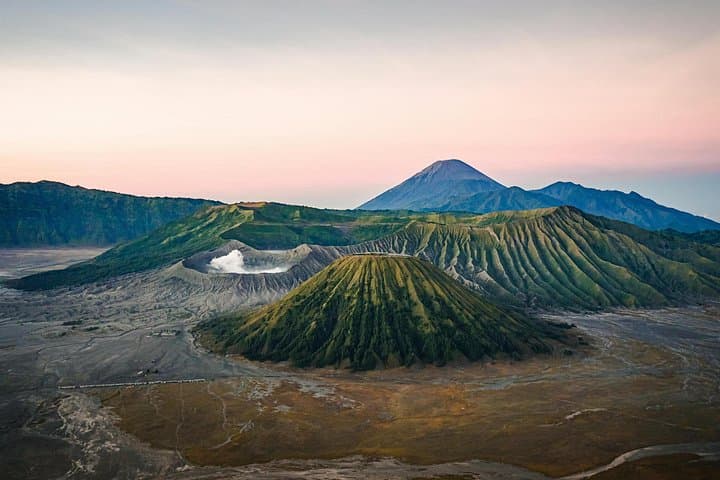


Dawn arrives cold and thin at Cemoro Lawang, the wind at 2,300 m cutting across the Sea of Sand as a line of jeeps rattles toward Mount Bromo’s rim. Travelers climb 250 dusty steps to stand where steam and sulfur leak from an active crater; the first light paints Batok and Semeru in stark relief. Two days later a different darkness awaits: a night ascent to Kawah Ijen, where the crater’s blue flames flare under a starry sky and the turquoise acid lake waits at sunrise.
Dawn arrives cold and thin at Cemoro Lawang, the wind at 2,300 m cutting across the Sea of Sand as a line of jeeps rattles toward Mount Bromo’s rim. Travelers climb 250 dusty steps to stand where steam and sulfur leak from an active crater; the first light paints Batok and Semeru in stark relief. Two days later a different darkness awaits: a night ascent to Kawah Ijen, where the crater’s blue flames flare under a starry sky and the turquoise acid lake waits at sunrise.
These two volcanoes tell Java’s geological story: Bromo sits in a vast caldera shaped by massive eruptions and long-term wind-driven erosion, while Ijen exposes active sulfur chemistry and live mining traditions. The Tengger people around Bromo maintain Hindu rituals tied to the massif, and at Ijen visitors meet sulfur porters whose work links to local livelihoods.
Expect uneven volcanic sand, short steep stairways, and narrow crater paths; the Ijen descent is steep and can be slippery. Guides provide respirators, headlamps, and local context—bring a light pack, layered clothing, and respect for miners and sacred sites.
Practical notes: start very early for Bromo sunrise; schedule the Ijen climb around 1:00 AM to reach the crater before dawn. Hydrate, wear ankle-supporting boots, and budget time for train and road transfers. Both parks are fragile—pack out waste, stay on trails, and follow ranger instructions to reduce impact while experiencing two of East Java’s most dramatic volcanic landscapes.