THE ADVENTURE COLLECTIVE® · Independent discovery and booking for outdoor travel

Three days across East Java’s volcanic highlands: watch Bromo ignite at sunrise, trek to Madakaripura’s 200m veil, then hike Ijen by night to see electric-blue sulfur flames and a turquoise crater lake. Practical route, rugged terrain, big views.
Three days across East Java’s volcanic highlands: watch Bromo ignite at sunrise, trek to Madakaripura’s 200m veil, then hike Ijen by night to see electric-blue sulfur flames and a turquoise crater lake. Practical route, rugged terrain, big views.
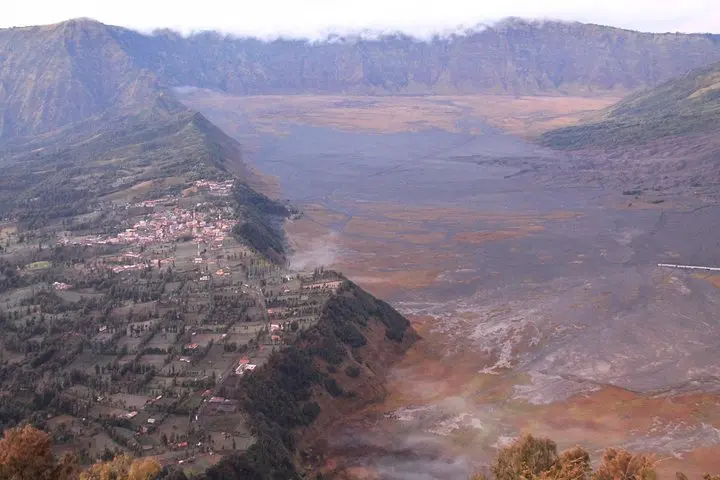
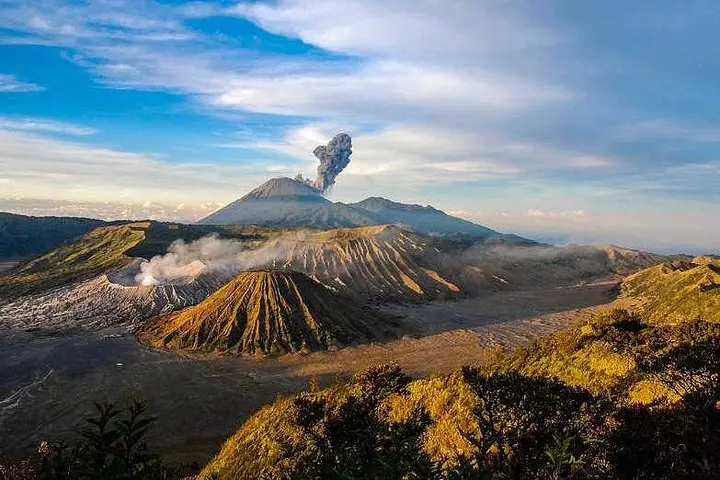
Pre-dawn wind sharpens on the rim of Penanjakan as a crowd of headlamps threads uphill and the Tengger caldera exhales a cool, mineral breath. Sunrise here is literal: light pours across the Sea of Sand, gilding Mount Batok’s weathered cone while distant Semeru pins the horizon with smoke.
Verified experiences and guided adventures in the surrounding area.
Operated by IsunOsing Tour · Surabaya, East Java
Pre-dawn wind sharpens on the rim of Penanjakan as a crowd of headlamps threads uphill and the Tengger caldera exhales a cool, mineral breath. Sunrise here is literal: light pours across the Sea of Sand, gilding Mount Batok’s weathered cone while distant Semeru pins the horizon with smoke.
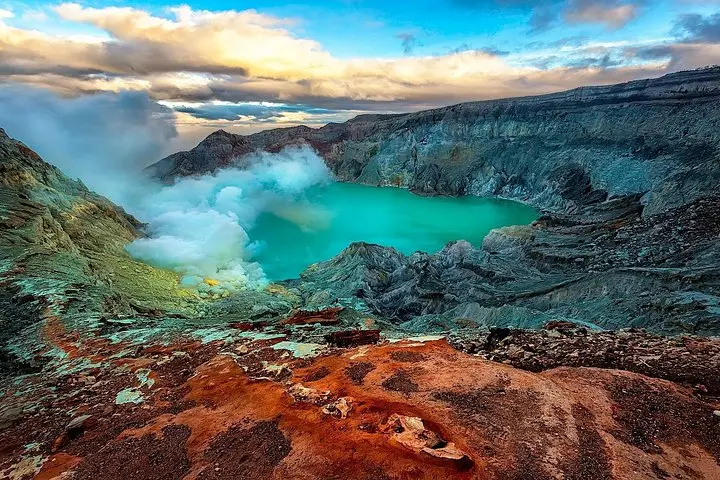
This three-day loop stitches together three very different East Java landscapes. Mount Bromo (≈2,329 m) sits inside the broad Tengger caldera—an ashy plain you cross on foot or by jeep to climb a stepped rim and peer into a smoking crater. Madakaripura Waterfall plunges roughly 200 meters into a narrow canyon; the approach is a short, wet trail with stream crossings and mossy boulders. Kawah Ijen delivers the finale: a night hike from Paltuding (roughly 3–4 km with ~300–400 m ascent) to witness the otherworldly blue flame of burning sulfur and a turquoise, highly acidic crater lake at dawn while sulfur miners work below.
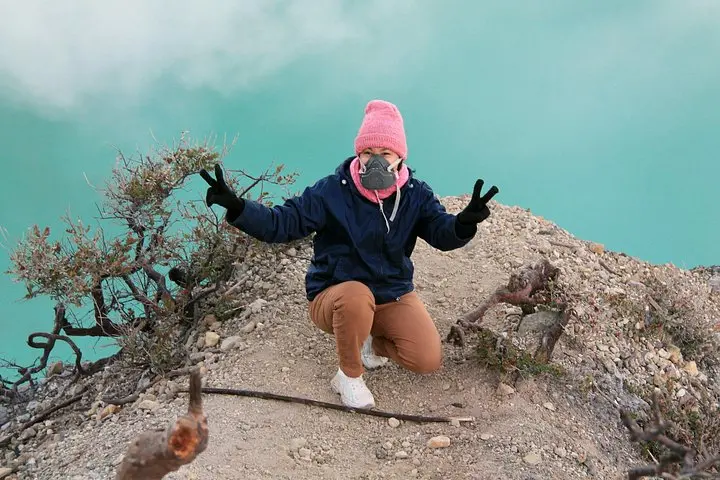
Expect mixed terrain: loose volcanic sand, rocky stairways, slippery river rock, and steep nighttime trail sections. Temperatures swing from near-freezing at high viewpoints to humid canyon bottoms. Gas masks are commonly provided because sulfur gas can be intense. Local culture surfaces in the Tengger people’s offerings and in Banyuwangi’s coastal cuisine.
Practically: aim for the dry season (May–September) for firmer trails and clearer skies, wear grippy hiking shoes, carry a headlamp and water, and allow time for altitude chills and unpaved transfers. This itinerary combines spectacle with physical demand—rewarding, elemental, and very real.
The main Ijen trail from Paltuding is about 3–4 km one way with 300–400 m ascent—steep in places but non-technical; plan 1.5–3 hours each way depending on pace.
Blue fire visibility depends on volcanic activity and wind; visiting around midnight to 3:30 AM maximizes chances, but there are no guarantees.
This itinerary is not recommended for pregnant travelers or those with serious heart/spinal conditions; children able to handle night hikes and long travel can join with caution.
Many operators include a basic gas mask or respirator for the Ijen section, but carrying your own rated mask ensures a better fit and protection.
IsunOsing Tour operates guided outdoor trips and adventures with an emphasis on safety, stewardship, and memorable experiences.
Pre-dawn wind sharpens on the rim of Penanjakan as a crowd of headlamps threads uphill and the Tengger caldera exhales a cool, mineral breath. Sunrise here is literal: light pours across the Sea of Sand, gilding Mount Batok’s weathered cone while distant Semeru pins the horizon with smoke.
Pre-dawn wind sharpens on the rim of Penanjakan as a crowd of headlamps threads uphill and the Tengger caldera exhales a cool, mineral breath. Sunrise here is literal: light pours across the Sea of Sand, gilding Mount Batok’s weathered cone while distant Semeru pins the horizon with smoke.
This three-day loop stitches together three very different East Java landscapes. Mount Bromo (≈2,329 m) sits inside the broad Tengger caldera—an ashy plain you cross on foot or by jeep to climb a stepped rim and peer into a smoking crater. Madakaripura Waterfall plunges roughly 200 meters into a narrow canyon; the approach is a short, wet trail with stream crossings and mossy boulders. Kawah Ijen delivers the finale: a night hike from Paltuding (roughly 3–4 km with ~300–400 m ascent) to witness the otherworldly blue flame of burning sulfur and a turquoise, highly acidic crater lake at dawn while sulfur miners work below.
Expect mixed terrain: loose volcanic sand, rocky stairways, slippery river rock, and steep nighttime trail sections. Temperatures swing from near-freezing at high viewpoints to humid canyon bottoms. Gas masks are commonly provided because sulfur gas can be intense. Local culture surfaces in the Tengger people’s offerings and in Banyuwangi’s coastal cuisine.
Practically: aim for the dry season (May–September) for firmer trails and clearer skies, wear grippy hiking shoes, carry a headlamp and water, and allow time for altitude chills and unpaved transfers. This itinerary combines spectacle with physical demand—rewarding, elemental, and very real.