THE ADVENTURE COLLECTIVE® · Independent discovery and booking for outdoor travel

Launch into ten miles of Class III rapids down the Arkansas River where Browns Canyon’s rock walls and willow-lined banks make every rapid also a view. This half-day run balances family-friendly thrills with durable scenery and practical, guide-led instruction.
Launch into ten miles of Class III rapids down the Arkansas River where Browns Canyon’s rock walls and willow-lined banks make every rapid also a view. This half-day run balances family-friendly thrills with durable scenery and practical, guide-led instruction.
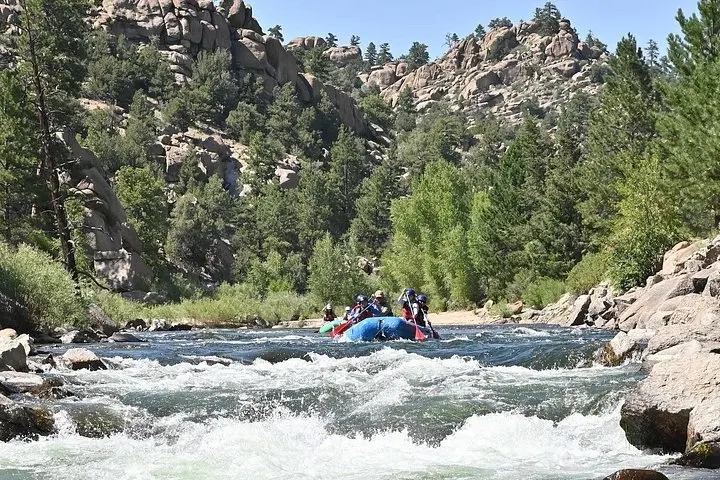
On a clear morning outside Buena Vista, the Arkansas River moves like a living thing—cold, bright, and impatient. You stand at an outpost of gravel and guide vans, swap a nervous grin with strangers, and feel the river's low, constant roar as if it were a promise. The guide fits your helmet, hands you a paddle, and the raft slips into current: ten miles of Class III whitewater wind through the folded, ochre walls of Browns Canyon National Monument.
Verified experiences and guided adventures in the surrounding area.
Operated by Downstream Adventures · Buena Vista, Colorado
On a clear morning outside Buena Vista, the Arkansas River moves like a living thing—cold, bright, and impatient. You stand at an outpost of gravel and guide vans, swap a nervous grin with strangers, and feel the river's low, constant roar as if it were a promise. The guide fits your helmet, hands you a paddle, and the raft slips into current: ten miles of Class III whitewater wind through the folded, ochre walls of Browns Canyon National Monument.
The canyon's rock is old and blunt, carved by millennia of ice and melt. Here the Arkansas has cut a clean corridor through volcanic and sedimentary layers, exposing ribs of stone that lean and crack into the river. Euro-American miners and later homesteaders once pushed into these valleys; today the canyon is public land aimed at both recreation and preservation, a place where rugged geology meets high-country river culture.
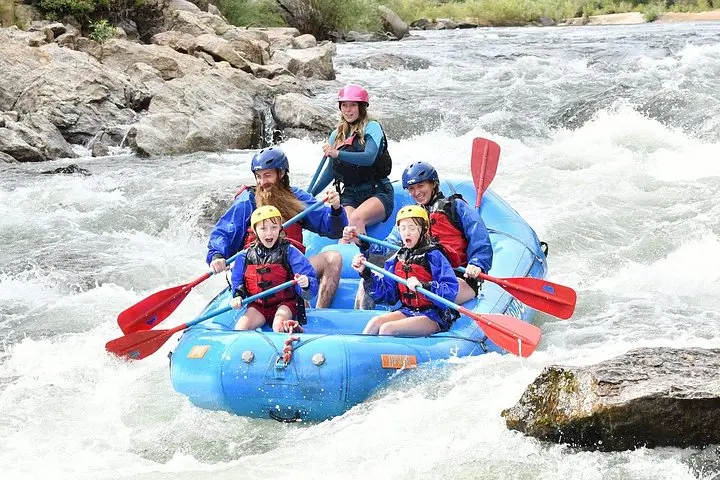
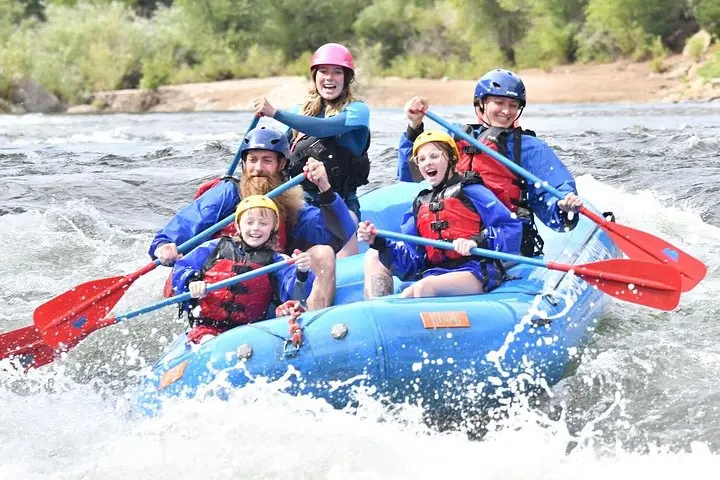
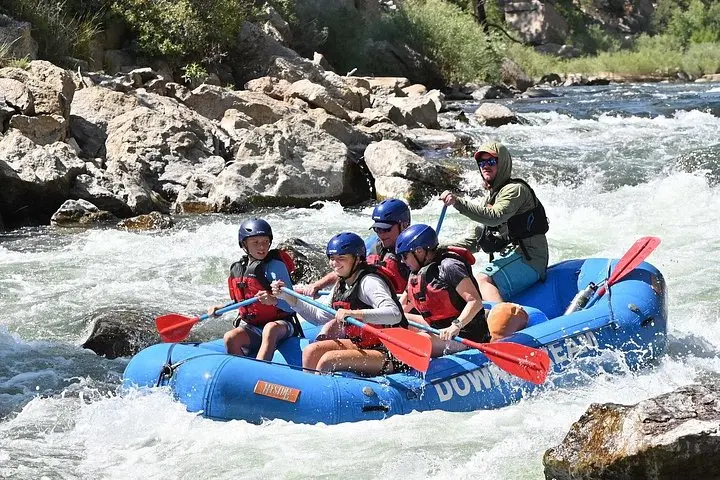
This run is compact adventure: roughly three to four hours from check-in to return, including a short shuttle to the creek-side put-in and a takeout ceremony that usually ends with a group high-five. The water is clear and brisk—expect splashes and brief, technical waves rather than long, continuous whitewater. It’s ideal for families and anyone new to rafting; children as young as six have made the trip, and guides focus on safety and simple paddling technique.
At roughly 8,000 feet of elevation, the oxygen is thinner than at sea level. That means easy exertion feels harder; hydrate and go slower on the first uphill hike or bike of your visit. The corridor’s vegetation shifts from cottonwood and willow at the waterline to juniper and scrub higher up, where raptors hunt thermals and river otters slip in quieter eddies.
Practicalities matter here: arrive 30 minutes early to complete waivers, fit wetsuits or splash jackets provided by the outfitter, and listen to the river safety talk. Expect to wear river shoes that won’t slip and quick-dry layers; bring a small dry bag for your phone or camera or purchase photos from guides afterward. Most trips run from late spring through early fall—water levels, snowmelt, and weather dictate conditions—so book when flows are steady for the best mix of fun and predictability.
If you want more than a thrill, ask your guide about local geology, historic mining camps upstream, or the quieter riffles where trout stack. Browns Canyon is not just a sequence of rapids; it’s a compact classroom on river dynamics, shaped rock, and how a living river challenges and rewards the visitor in equal measure.
The guided run covers about 10 miles of the Arkansas River and the total outing lasts roughly 3–4 hours including shuttle time.
Yes—children aged 6 and up can typically join, though parents should judge comfort with boats and water; guides lead all maneuvers.
Expect mostly Class III rapids—defined by moderate, irregular waves and straightforward routes with guide instruction.
No prior experience is required; guides provide paddling instruction and safety briefings before launch.
The area sits near 8,000 feet; participants should be in moderate physical condition and account for reduced oxygen by hydrating well.
Yes—outfitters supply wetsuits, splash jackets, helmets, paddles, and personal flotation devices as part of the trip.
Downstream Adventures operates guided outdoor trips and adventures with an emphasis on safety, stewardship, and memorable experiences.
On a clear morning outside Buena Vista, the Arkansas River moves like a living thing—cold, bright, and impatient. You stand at an outpost of gravel and guide vans, swap a nervous grin with strangers, and feel the river's low, constant roar as if it were a promise. The guide fits your helmet, hands you a paddle, and the raft slips into current: ten miles of Class III whitewater wind through the folded, ochre walls of Browns Canyon National Monument.
On a clear morning outside Buena Vista, the Arkansas River moves like a living thing—cold, bright, and impatient. You stand at an outpost of gravel and guide vans, swap a nervous grin with strangers, and feel the river's low, constant roar as if it were a promise. The guide fits your helmet, hands you a paddle, and the raft slips into current: ten miles of Class III whitewater wind through the folded, ochre walls of Browns Canyon National Monument.
The canyon's rock is old and blunt, carved by millennia of ice and melt. Here the Arkansas has cut a clean corridor through volcanic and sedimentary layers, exposing ribs of stone that lean and crack into the river. Euro-American miners and later homesteaders once pushed into these valleys; today the canyon is public land aimed at both recreation and preservation, a place where rugged geology meets high-country river culture.
This run is compact adventure: roughly three to four hours from check-in to return, including a short shuttle to the creek-side put-in and a takeout ceremony that usually ends with a group high-five. The water is clear and brisk—expect splashes and brief, technical waves rather than long, continuous whitewater. It’s ideal for families and anyone new to rafting; children as young as six have made the trip, and guides focus on safety and simple paddling technique.
At roughly 8,000 feet of elevation, the oxygen is thinner than at sea level. That means easy exertion feels harder; hydrate and go slower on the first uphill hike or bike of your visit. The corridor’s vegetation shifts from cottonwood and willow at the waterline to juniper and scrub higher up, where raptors hunt thermals and river otters slip in quieter eddies.
Practicalities matter here: arrive 30 minutes early to complete waivers, fit wetsuits or splash jackets provided by the outfitter, and listen to the river safety talk. Expect to wear river shoes that won’t slip and quick-dry layers; bring a small dry bag for your phone or camera or purchase photos from guides afterward. Most trips run from late spring through early fall—water levels, snowmelt, and weather dictate conditions—so book when flows are steady for the best mix of fun and predictability.
If you want more than a thrill, ask your guide about local geology, historic mining camps upstream, or the quieter riffles where trout stack. Browns Canyon is not just a sequence of rapids; it’s a compact classroom on river dynamics, shaped rock, and how a living river challenges and rewards the visitor in equal measure.