THE ADVENTURE COLLECTIVE® · Independent discovery and booking for outdoor travel

Explore Bucharest on a private walking tour from Arc de Triumf to the Palace of Parliament. Expect 1–2 hours of paved and cobbled streets, rich history, and flexible stops tailored to your group.
Explore Bucharest on a private walking tour from Arc de Triumf to the Palace of Parliament. Expect 1–2 hours of paved and cobbled streets, rich history, and flexible stops tailored to your group.
A morning in Bucharest begins with the clack of tram rails and the smell of strong coffee drifting from a pavement café. On a private sightseeing walk, the city reveals itself in quick, readable chapters: wide boulevards lined with plane trees, sudden baroque flourishes on apartment facades, and blind alleys that open onto sunlit squares.
Verified experiences and guided adventures in the surrounding area.
Operated by Elite Ride · Bucharest, Bucharest
A morning in Bucharest begins with the clack of tram rails and the smell of strong coffee drifting from a pavement café. On a private sightseeing walk, the city reveals itself in quick, readable chapters: wide boulevards lined with plane trees, sudden baroque flourishes on apartment facades, and blind alleys that open onto sunlit squares.
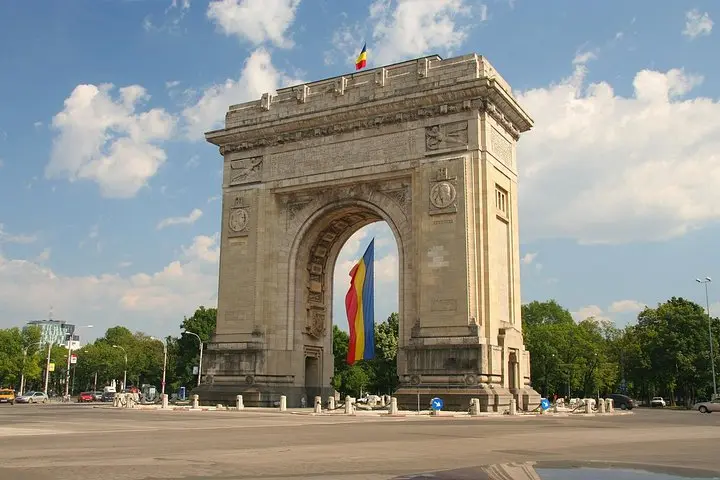
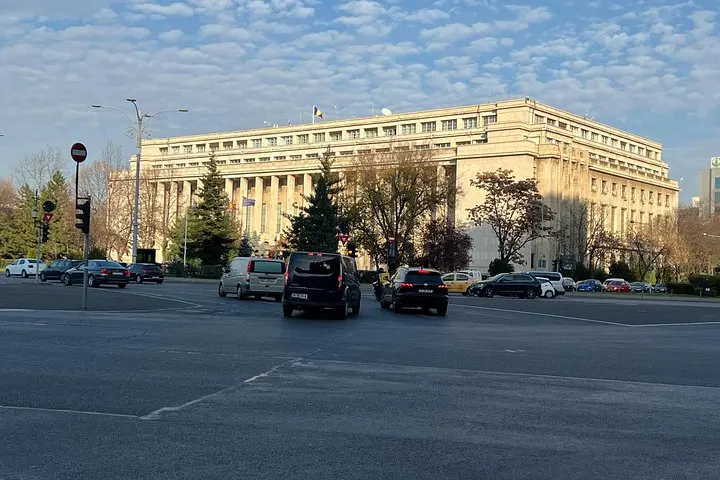
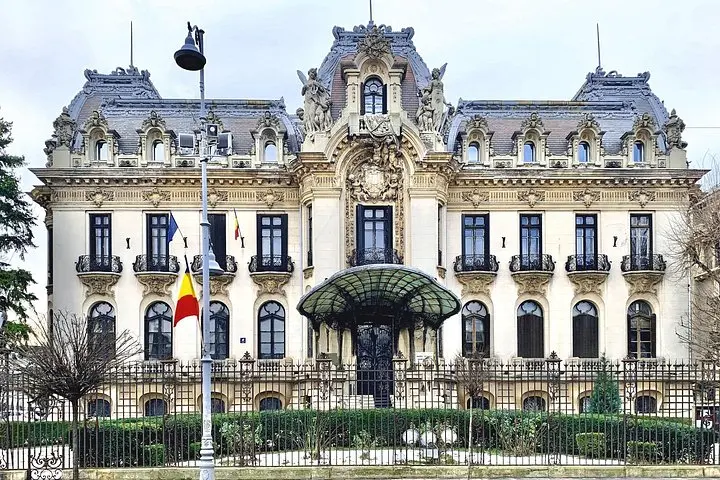
The route threads Victoria Avenue and the Arc de Triumf—an 1878 monument that marks national celebrations—before moving toward Revolution Square and the stately Cantacuzino Palace. The Palace of Parliament closes the loop: a 20th-century colossus built during the communist era that dwarfs nearby streets and reframes Romania’s recent history.
Bucharest sits on a low-lying plain north of the Dâmbovița River; its geology is gentle, so streets and parks change more by architecture and era than by terrain. Cultural layers are visible: Ottoman and Phanariot echoes in layout, French Beaux-Arts influence in facades, and the heavy imprint of mid-century Socialist design.
Practical guidance: expect 1–2 hours of walking across mostly paved surfaces and some cobbles. Morning departures avoid heat and crowds; evenings light up Old Town’s cafés if the group extends the tour. Wear supportive shoes, carry a small water bottle, and keep one hand free for quick photos of carved stonework and the surprising courtyards of older neighborhoods.
This private format adds flexibility—ask to climb the Arc (seasonal access) or linger at Revolution Square. Guides typically handle logistics and parking; travelers should bring ID for any optional interior visits. The city’s pulse is both brisk and approachable: history here moves at walking pace.
Much of the route is on paved streets and squares, but cobblestones and steps at some viewpoints can limit access; contact the operator in advance to arrange an accessible route.
Interior visits may require pre-booking and ID; the private tour can arrange entry if requested but check availability ahead of time.
Guides commonly speak English and Romanian; many operators can provide other languages on request—confirm when booking.
Yes. As a private tour, stops and durations are flexible—ask to extend time in Old Town, climb the Arc de Triumf, or include a coffee break.
Elite Ride operates guided outdoor trips and adventures with an emphasis on safety, stewardship, and memorable experiences.
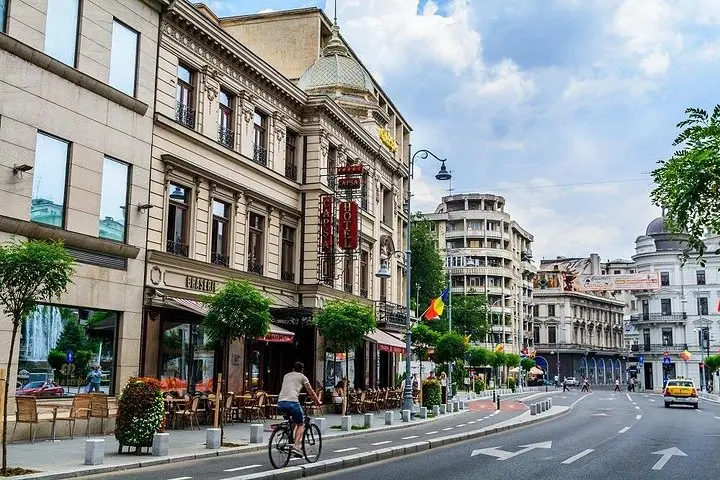
A morning in Bucharest begins with the clack of tram rails and the smell of strong coffee drifting from a pavement café. On a private sightseeing walk, the city reveals itself in quick, readable chapters: wide boulevards lined with plane trees, sudden baroque flourishes on apartment facades, and blind alleys that open onto sunlit squares.
A morning in Bucharest begins with the clack of tram rails and the smell of strong coffee drifting from a pavement café. On a private sightseeing walk, the city reveals itself in quick, readable chapters: wide boulevards lined with plane trees, sudden baroque flourishes on apartment facades, and blind alleys that open onto sunlit squares.
The route threads Victoria Avenue and the Arc de Triumf—an 1878 monument that marks national celebrations—before moving toward Revolution Square and the stately Cantacuzino Palace. The Palace of Parliament closes the loop: a 20th-century colossus built during the communist era that dwarfs nearby streets and reframes Romania’s recent history.
Bucharest sits on a low-lying plain north of the Dâmbovița River; its geology is gentle, so streets and parks change more by architecture and era than by terrain. Cultural layers are visible: Ottoman and Phanariot echoes in layout, French Beaux-Arts influence in facades, and the heavy imprint of mid-century Socialist design.
Practical guidance: expect 1–2 hours of walking across mostly paved surfaces and some cobbles. Morning departures avoid heat and crowds; evenings light up Old Town’s cafés if the group extends the tour. Wear supportive shoes, carry a small water bottle, and keep one hand free for quick photos of carved stonework and the surprising courtyards of older neighborhoods.
This private format adds flexibility—ask to climb the Arc (seasonal access) or linger at Revolution Square. Guides typically handle logistics and parking; travelers should bring ID for any optional interior visits. The city’s pulse is both brisk and approachable: history here moves at walking pace.