THE ADVENTURE COLLECTIVE® · Independent discovery and booking for outdoor travel

Descend beneath Buda for a three-hour private walk through two of Budapest’s most accessible caves. See calcite ‘flowers,’ gypsum crystals and the labyrinthine passages of Hungary’s longest cave system with an English-speaking guide.
Descend beneath Buda for a three-hour private walk through two of Budapest’s most accessible caves. See calcite ‘flowers,’ gypsum crystals and the labyrinthine passages of Hungary’s longest cave system with an English-speaking guide.
You step off the sunlit streets of Buda and into a cool hush; the city’s thermal springs have carved a secret world beneath your feet. The first cave opens into a chamber of mineral flowers—calcite plates and gypsum crystals crowding the walls like slow-grown gardens—while the second drops into a tighter labyrinth threaded with barite and fossilized lake deposits. Light is artificial but minimal; the stone seems to hold its own slow heartbeat.
Verified experiences and guided adventures in the surrounding area.
Operated by Caving Under Budapest · Budapest, Budapest
You step off the sunlit streets of Buda and into a cool hush; the city’s thermal springs have carved a secret world beneath your feet. The first cave opens into a chamber of mineral flowers—calcite plates and gypsum crystals crowding the walls like slow-grown gardens—while the second drops into a tighter labyrinth threaded with barite and fossilized lake deposits. Light is artificial but minimal; the stone seems to hold its own slow heartbeat.
Hungary’s caves formed over millennia as hot springs dissolved limestone under the Buda Hills. These passages fed the same waters that later built Budapest’s famous baths, so a cave tour here is as much geology as it is local history. The Pálvölgyi system is the country’s longest, and Szemlő-hegyi is celebrated for its floriform mineral concretions and a vantage point that peeks back up at the city.
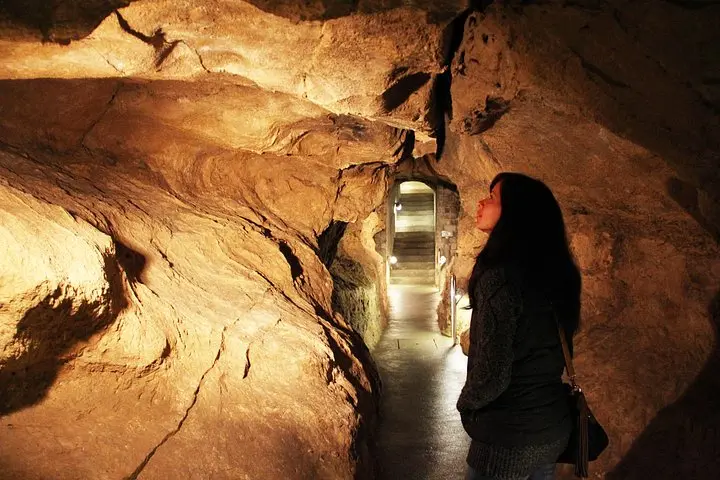
Expect paved paths, stair climbs (more than 400 steps across the visit) and a short ladder section; the route is non-technical but physically active. Guides explain formation processes, point out delicate speleothems, and emphasize minimal-impact behavior—no touching formations and keep noise low.
Practical notes: wear grippy, closed-toe shoes and a warm midlayer—the caves hold a steady cool. Cameras are allowed but respect tripods and flash rules. The private format limits the group to small numbers and includes English guiding and entry to both caves. If you want a quieter geological portrait of Budapest beneath the skyline, this three-hour walk pairs city history with a tactile lesson in subterranean time.
This route is designed to be less intense than technical caving and is suitable for many who dislike tight spaces, but it still visits narrower passages—assess comfort with enclosed spaces beforehand.
This specific private tour restricts ages to 6–75; younger children and those outside this range should check alternative group tours or family-friendly options.
Yes—photography is normally permitted, but follow your guide’s instructions regarding flash and tripods to protect formations and other visitors’ experience.
No; the itinerary includes more than 400 steps and a 7-meter ladder in places, so it is not suitable for those requiring step-free access.
Caving Under Budapest operates guided outdoor trips and adventures with an emphasis on safety, stewardship, and memorable experiences.
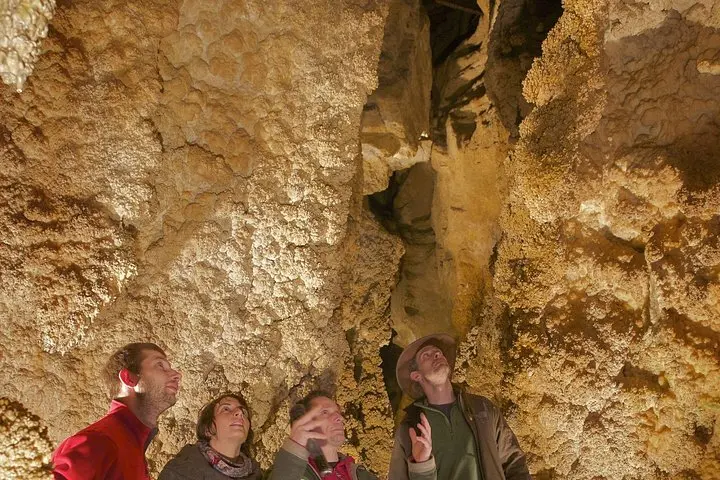
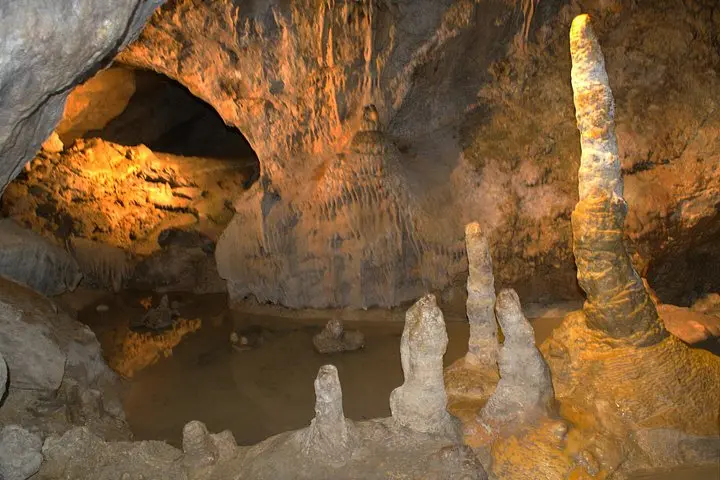
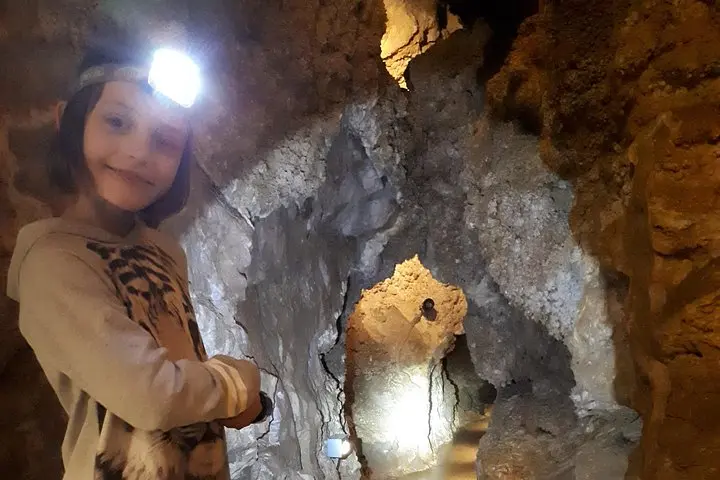
You step off the sunlit streets of Buda and into a cool hush; the city’s thermal springs have carved a secret world beneath your feet. The first cave opens into a chamber of mineral flowers—calcite plates and gypsum crystals crowding the walls like slow-grown gardens—while the second drops into a tighter labyrinth threaded with barite and fossilized lake deposits. Light is artificial but minimal; the stone seems to hold its own slow heartbeat.
You step off the sunlit streets of Buda and into a cool hush; the city’s thermal springs have carved a secret world beneath your feet. The first cave opens into a chamber of mineral flowers—calcite plates and gypsum crystals crowding the walls like slow-grown gardens—while the second drops into a tighter labyrinth threaded with barite and fossilized lake deposits. Light is artificial but minimal; the stone seems to hold its own slow heartbeat.
Hungary’s caves formed over millennia as hot springs dissolved limestone under the Buda Hills. These passages fed the same waters that later built Budapest’s famous baths, so a cave tour here is as much geology as it is local history. The Pálvölgyi system is the country’s longest, and Szemlő-hegyi is celebrated for its floriform mineral concretions and a vantage point that peeks back up at the city.
Expect paved paths, stair climbs (more than 400 steps across the visit) and a short ladder section; the route is non-technical but physically active. Guides explain formation processes, point out delicate speleothems, and emphasize minimal-impact behavior—no touching formations and keep noise low.
Practical notes: wear grippy, closed-toe shoes and a warm midlayer—the caves hold a steady cool. Cameras are allowed but respect tripods and flash rules. The private format limits the group to small numbers and includes English guiding and entry to both caves. If you want a quieter geological portrait of Budapest beneath the skyline, this three-hour walk pairs city history with a tactile lesson in subterranean time.