THE ADVENTURE COLLECTIVE® · Independent discovery and booking for outdoor travel

Taste Hungary in three hours: a guided walk through Budapest’s Great Market Hall with exclusive foie gras bites, classic lángos, chimney cake, and regional wines. Small groups, big stories—meet George at the market entrance for a culinary primer on the city’s flavors and history.
Taste Hungary in three hours: a guided walk through Budapest’s Great Market Hall with exclusive foie gras bites, classic lángos, chimney cake, and regional wines. Small groups, big stories—meet George at the market entrance for a culinary primer on the city’s flavors and history.
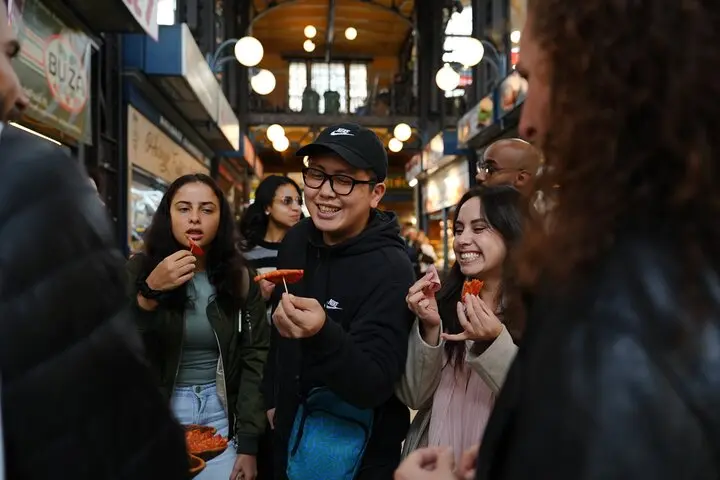
You step off the tram at Fővám tér into a gust of paprika-scented air and the guttural chatter of vendors arranging crates of peppers and onions. The Great Market Hall’s iron roof throws lattice shadows across mosaicked tiles, and George—bald, beard immaculate—waves from the main entrance. In three hours he will lead a compact group through the city’s culinary heartbeat: market stalls, a family-run eatery, street vendors, and a mid-tour surprise – Hungarian foie gras served the way local connoisseurs prefer it.
Verified experiences and guided adventures in the surrounding area.
Operated by Experiences by George · Budapest, Budapest
You step off the tram at Fővám tér into a gust of paprika-scented air and the guttural chatter of vendors arranging crates of peppers and onions. The Great Market Hall’s iron roof throws lattice shadows across mosaicked tiles, and George—bald, beard immaculate—waves from the main entrance. In three hours he will lead a compact group through the city’s culinary heartbeat: market stalls, a family-run eatery, street vendors, and a mid-tour surprise – Hungarian foie gras served the way local connoisseurs prefer it.
The market itself is more than a food court. Opened in 1897 and designed by Samu Pecz, the Great Market Hall is a late-19th-century iron-and-brick structure built for modernizing Budapest’s food supply. Beneath its arches, centuries of rural produce meet urban appetites: smoked cold cuts from Transdanubia, jars of pickles preserved as winter insurance, and paprika—Hungary’s spice of identity—piled in bright pyramids.
This is a walking tasting with context. George threads food between cultural notes: the scars and memorial plaques on nearby Váci Street from the 1956 Revolution, Gellért Hill’s martyrdom story passing like backdrop between bites, and how Tokaji and Egri Bikavér shaped regional dining rituals. Geological hints arrive when the guide gestures to the Danube’s low terraces—riverine soils that made Hungary a granary for the Austro-Hungarian empire.
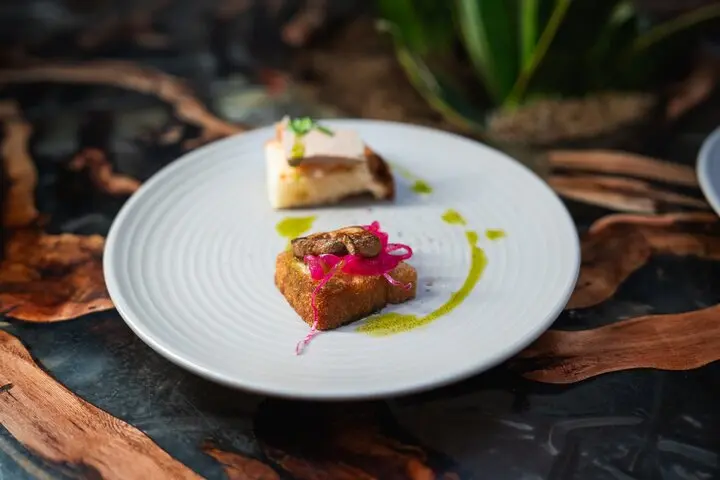
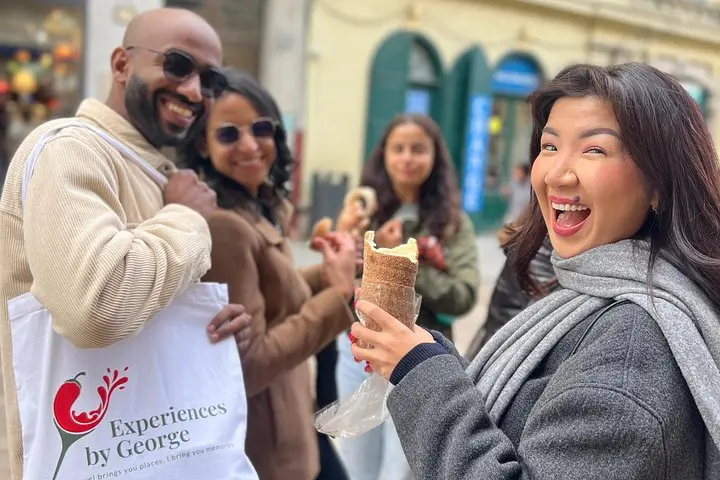
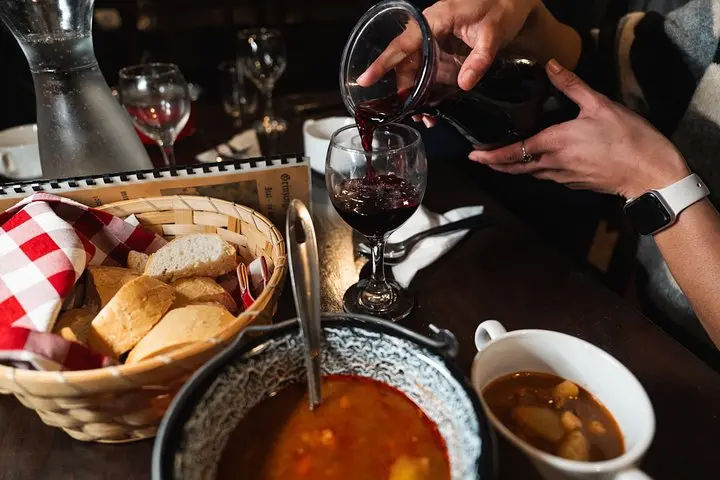
The menu reads like a practical course in Hungarian comfort: lángos fried to a golden crust, chimney cake caramelized over coals, beef goulash spooned thick and hot, house-cured cold cuts, pickles cut to bite-size. Wines include both dry Furmint and a toast-worthy Tokaji; bottled water is included for every guest. The tour’s signature is the exclusive foie gras tasting—goose liver presented in small, perfectly balanced bites that locals rarely offer off-menu.
Practicalities matter here: the route covers paved streets and market aisles, requires minimal walking but includes standing during tastings, and is rated easy—suitable for most travelers. Groups stay small (max 12), which keeps lines, waits, and explanations personal. Note the accessibility advantages: wheelchair- and stroller-friendly pathways in key areas, and instant confirmation means you can schedule this three-hour food education at short notice.
Taste deliberately. Start with lighter snacks, move to savory and heavier portions like foie gras and goulash, and finish with a sweet chimney cake. Carry a light daypack for purchases, bring comfortable shoes for market tile and cobblestone, and keep an eye on your belongings—busy markets reward attention. By the time the final forkful of pancake is paired with a local red, you’ll have not only a list of dishes to remember but the historical and cultural keys to why Hungarians eat the way they do.
The experience lasts approximately 3 hours, with multiple tasting stops and a final sit-down at a local eatery.
Yes—an exclusive mid-tour foie gras tasting is included; inform the operator in advance if you have dietary restrictions.
Meet at the Central Market Hall’s main entrance (Fővám tér). The guide is described as a bald man with a prominent beard.
Key areas on the tour, including the market, are wheelchair accessible; the operator notes the experience is suitable for most physical fitness levels.
Bottled water, alcoholic beverages, and wines sampled during the tour are included as listed in the tour’s inclusions.
The tour is limited to 12 travelers to keep the experience personal and manageable.
Experiences by George operates guided outdoor trips and adventures with an emphasis on safety, stewardship, and memorable experiences.
You step off the tram at Fővám tér into a gust of paprika-scented air and the guttural chatter of vendors arranging crates of peppers and onions. The Great Market Hall’s iron roof throws lattice shadows across mosaicked tiles, and George—bald, beard immaculate—waves from the main entrance. In three hours he will lead a compact group through the city’s culinary heartbeat: market stalls, a family-run eatery, street vendors, and a mid-tour surprise – Hungarian foie gras served the way local connoisseurs prefer it.
You step off the tram at Fővám tér into a gust of paprika-scented air and the guttural chatter of vendors arranging crates of peppers and onions. The Great Market Hall’s iron roof throws lattice shadows across mosaicked tiles, and George—bald, beard immaculate—waves from the main entrance. In three hours he will lead a compact group through the city’s culinary heartbeat: market stalls, a family-run eatery, street vendors, and a mid-tour surprise – Hungarian foie gras served the way local connoisseurs prefer it.
The market itself is more than a food court. Opened in 1897 and designed by Samu Pecz, the Great Market Hall is a late-19th-century iron-and-brick structure built for modernizing Budapest’s food supply. Beneath its arches, centuries of rural produce meet urban appetites: smoked cold cuts from Transdanubia, jars of pickles preserved as winter insurance, and paprika—Hungary’s spice of identity—piled in bright pyramids.
This is a walking tasting with context. George threads food between cultural notes: the scars and memorial plaques on nearby Váci Street from the 1956 Revolution, Gellért Hill’s martyrdom story passing like backdrop between bites, and how Tokaji and Egri Bikavér shaped regional dining rituals. Geological hints arrive when the guide gestures to the Danube’s low terraces—riverine soils that made Hungary a granary for the Austro-Hungarian empire.
The menu reads like a practical course in Hungarian comfort: lángos fried to a golden crust, chimney cake caramelized over coals, beef goulash spooned thick and hot, house-cured cold cuts, pickles cut to bite-size. Wines include both dry Furmint and a toast-worthy Tokaji; bottled water is included for every guest. The tour’s signature is the exclusive foie gras tasting—goose liver presented in small, perfectly balanced bites that locals rarely offer off-menu.
Practicalities matter here: the route covers paved streets and market aisles, requires minimal walking but includes standing during tastings, and is rated easy—suitable for most travelers. Groups stay small (max 12), which keeps lines, waits, and explanations personal. Note the accessibility advantages: wheelchair- and stroller-friendly pathways in key areas, and instant confirmation means you can schedule this three-hour food education at short notice.
Taste deliberately. Start with lighter snacks, move to savory and heavier portions like foie gras and goulash, and finish with a sweet chimney cake. Carry a light daypack for purchases, bring comfortable shoes for market tile and cobblestone, and keep an eye on your belongings—busy markets reward attention. By the time the final forkful of pancake is paired with a local red, you’ll have not only a list of dishes to remember but the historical and cultural keys to why Hungarians eat the way they do.