THE ADVENTURE COLLECTIVE® · Independent discovery and booking for outdoor travel

Experience the five‑meter reclining Vishnu at Budhanilkantha, a living shrine at the base of Shivapuri Hills. This half‑day tour combines guided cultural context with a local lunch and hotel pickup.
Experience the five‑meter reclining Vishnu at Budhanilkantha, a living shrine at the base of Shivapuri Hills. This half‑day tour combines guided cultural context with a local lunch and hotel pickup.
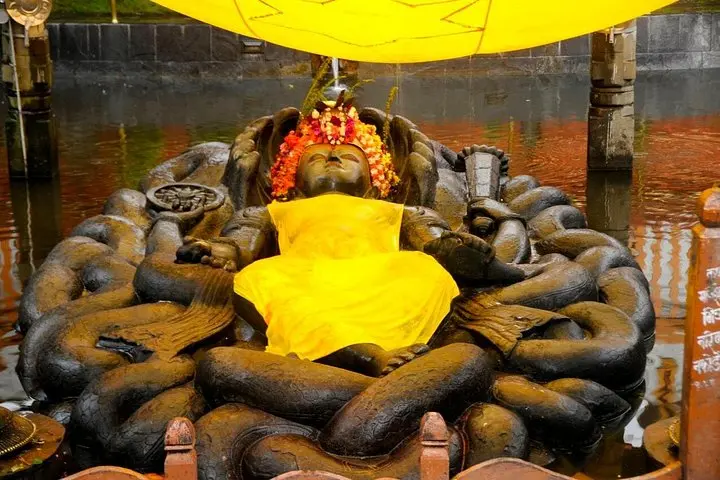
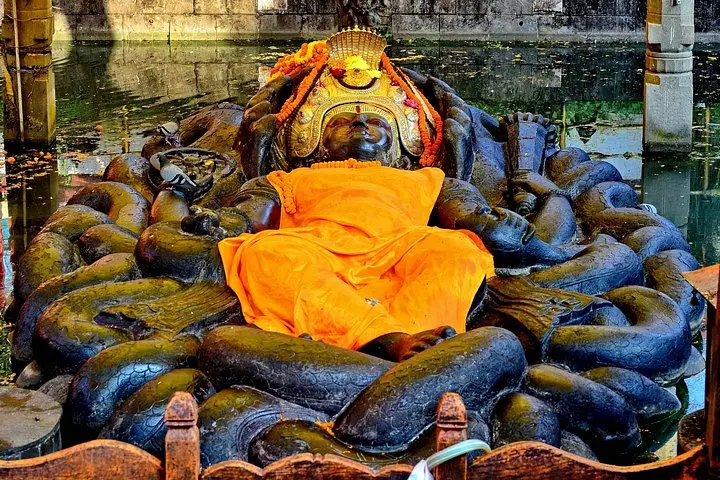
You step out of Kathmandu’s traffic and the air thins with a softer tempo—the foothills of Shivapuri breathe down the road. At the temple, water mirrors the sky and a five‑meter figure of Vishnu lies supine on a coiled serpent, carved from a single slab of dark stone; devotees move around him in a steady, deliberate rhythm that feels older than the city.
Verified experiences and guided adventures in the surrounding area.
Operated by Liberty Holidays · Kathmandu, Bagmati Province
You step out of Kathmandu’s traffic and the air thins with a softer tempo—the foothills of Shivapuri breathe down the road. At the temple, water mirrors the sky and a five‑meter figure of Vishnu lies supine on a coiled serpent, carved from a single slab of dark stone; devotees move around him in a steady, deliberate rhythm that feels older than the city.
The statue—locally called Jalasyana Narayan—anchors both Hindu and Buddhist reverence here. Its exact origins are debated; local tradition and craft point to several centuries of worship and continuous ritual. Geologically, the figure’s monochrome presence comes from dense black stone that holds fine carving across faces, coils and anklets, a quiet display of regional stonecraft.
Culturally this is a live site: tikas, garlands and fruit offerings are routine, and temple priests maintain rites on a daily cycle. Your guide will unpack folklore, priestly customs and the temple’s role in Kathmandu Valley spiritual geography before you watch devotees make their offerings.
Practicalities are straightforward. The half‑day visit (about three hours including transfer and lunch) includes hotel pickup and a Nepali meal nearby. Dress modestly and be ready to remove shoes at temple thresholds. Mornings bring softer light and fewer visitors; monsoon months mean wet paths on the access road. Carry local currency for small donations and expect gentle interactions with vendors outside the complex.
This is a short, contemplative stop that pairs well with a day of Kathmandu’s stupas and markets—an architectural and cultural counterpoint that rewards patience, quiet attention and basic planning.
The scheduled tour is about three hours total, including hotel pickup, the temple visit and lunch at a nearby restaurant.
Admission is typically included with guided tours; small donations to the temple are common for visitors.
Photography is generally allowed in exterior areas but avoid taking pictures of active rituals or inside restricted priest areas—check with your guide first.
It’s roughly 8–10 km north of central Kathmandu; by car the transfer takes about 30–45 minutes depending on traffic.
Liberty Holidays operates guided outdoor trips and adventures with an emphasis on safety, stewardship, and memorable experiences.
You step out of Kathmandu’s traffic and the air thins with a softer tempo—the foothills of Shivapuri breathe down the road. At the temple, water mirrors the sky and a five‑meter figure of Vishnu lies supine on a coiled serpent, carved from a single slab of dark stone; devotees move around him in a steady, deliberate rhythm that feels older than the city.
You step out of Kathmandu’s traffic and the air thins with a softer tempo—the foothills of Shivapuri breathe down the road. At the temple, water mirrors the sky and a five‑meter figure of Vishnu lies supine on a coiled serpent, carved from a single slab of dark stone; devotees move around him in a steady, deliberate rhythm that feels older than the city.
The statue—locally called Jalasyana Narayan—anchors both Hindu and Buddhist reverence here. Its exact origins are debated; local tradition and craft point to several centuries of worship and continuous ritual. Geologically, the figure’s monochrome presence comes from dense black stone that holds fine carving across faces, coils and anklets, a quiet display of regional stonecraft.
Culturally this is a live site: tikas, garlands and fruit offerings are routine, and temple priests maintain rites on a daily cycle. Your guide will unpack folklore, priestly customs and the temple’s role in Kathmandu Valley spiritual geography before you watch devotees make their offerings.
Practicalities are straightforward. The half‑day visit (about three hours including transfer and lunch) includes hotel pickup and a Nepali meal nearby. Dress modestly and be ready to remove shoes at temple thresholds. Mornings bring softer light and fewer visitors; monsoon months mean wet paths on the access road. Carry local currency for small donations and expect gentle interactions with vendors outside the complex.
This is a short, contemplative stop that pairs well with a day of Kathmandu’s stupas and markets—an architectural and cultural counterpoint that rewards patience, quiet attention and basic planning.