THE ADVENTURE COLLECTIVE® · Independent discovery and booking for outdoor travel

Explore Buenos Aires’ two football shrines—the museum-rich La Bombonera and the Monumental—on a guided behind-the-scenes tour. Learn the social history of Boca Juniors and River Plate, see iconic artifacts, and move between neighborhoods where football shapes daily life.
Explore Buenos Aires’ two football shrines—the museum-rich La Bombonera and the Monumental—on a guided behind-the-scenes tour. Learn the social history of Boca Juniors and River Plate, see iconic artifacts, and move between neighborhoods where football shapes daily life.
The tour opens under the city sky, where fans' scarves flutter like small flags and the air carries the distant echo of chants. A short walk from the meeting point drops visitors into La Boca’s color-splashed streets before La Bombonera’s steep stands rise into view; later the group's route shifts north to the Monumental, where concrete terraces hold decades of applause and World Cup history.
Verified experiences and guided adventures in the surrounding area.
Operated by Tangol · Buenos Aires, Ciudad Autónoma de Buenos Aires
The tour opens under the city sky, where fans' scarves flutter like small flags and the air carries the distant echo of chants. A short walk from the meeting point drops visitors into La Boca’s color-splashed streets before La Bombonera’s steep stands rise into view; later the group's route shifts north to the Monumental, where concrete terraces hold decades of applause and World Cup history.
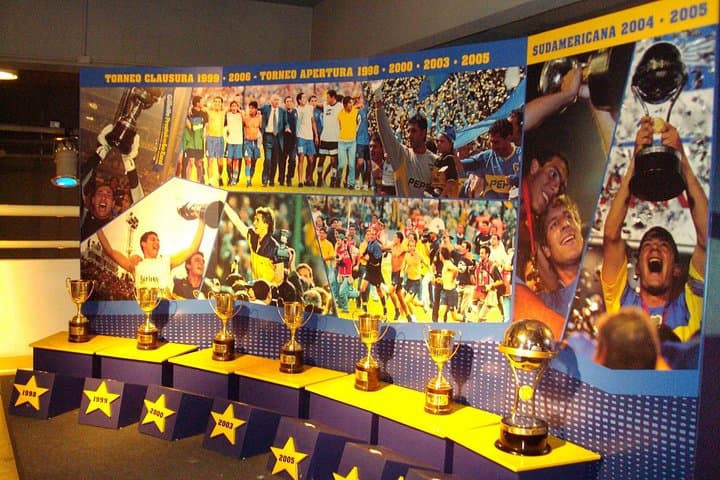
Buenos Aires football is local history written in club colors: Boca Juniors grew from immigrant dockworkers in the early 20th century, while River Plate moved from humble origins to a stadium that hosted the 1978 FIFA World Cup. The museums at each ground translate that social story into jerseys, trophies, match footage and oral histories—small artifacts that explain why a derby divides neighborhoods and unites a nation.
Expect museum exhibits, guided storytelling, and guided circulation around stadium exteriors; current renovations restrict access to playing surfaces, so the immersive elements are audiovisual and archival rather than pitch-side roped walks. The experience moves at an easy pace over 3–5 hours, suitable for families and solo travelers alike.
Practical notes: book timed entry to avoid match-day closures, wear comfortable shoes for pavement and stairs, and plan transport between La Boca and Núñez by taxi or public transit—traffic can add time. Bring a refillable water bottle, a compact rain layer for unpredictable weather, and cash or card for small purchases at museum shops. For football fans, the tour delivers context and atmosphere; for cultural travelers, it’s a pointed primer on how sport shapes a city.
Not currently—stadium renovations restrict pitch access; the tour focuses on museums, stands perimeters and audiovisual exhibits.
Yes; the itinerary is low-impact with museum stops, though there are stairs and some standing—notify the operator of mobility needs when booking.
Options include taxi, ride-share, or public transit; allow extra travel time for Buenos Aires traffic, especially during peak hours.
Museum access is included if selected in your booking option—confirm which stadium museums are part of your chosen package at checkout.
Tangol operates guided outdoor trips and adventures with an emphasis on safety, stewardship, and memorable experiences.



The tour opens under the city sky, where fans' scarves flutter like small flags and the air carries the distant echo of chants. A short walk from the meeting point drops visitors into La Boca’s color-splashed streets before La Bombonera’s steep stands rise into view; later the group's route shifts north to the Monumental, where concrete terraces hold decades of applause and World Cup history.
The tour opens under the city sky, where fans' scarves flutter like small flags and the air carries the distant echo of chants. A short walk from the meeting point drops visitors into La Boca’s color-splashed streets before La Bombonera’s steep stands rise into view; later the group's route shifts north to the Monumental, where concrete terraces hold decades of applause and World Cup history.
Buenos Aires football is local history written in club colors: Boca Juniors grew from immigrant dockworkers in the early 20th century, while River Plate moved from humble origins to a stadium that hosted the 1978 FIFA World Cup. The museums at each ground translate that social story into jerseys, trophies, match footage and oral histories—small artifacts that explain why a derby divides neighborhoods and unites a nation.
Expect museum exhibits, guided storytelling, and guided circulation around stadium exteriors; current renovations restrict access to playing surfaces, so the immersive elements are audiovisual and archival rather than pitch-side roped walks. The experience moves at an easy pace over 3–5 hours, suitable for families and solo travelers alike.
Practical notes: book timed entry to avoid match-day closures, wear comfortable shoes for pavement and stairs, and plan transport between La Boca and Núñez by taxi or public transit—traffic can add time. Bring a refillable water bottle, a compact rain layer for unpredictable weather, and cash or card for small purchases at museum shops. For football fans, the tour delivers context and atmosphere; for cultural travelers, it’s a pointed primer on how sport shapes a city.