THE ADVENTURE COLLECTIVE® · Independent discovery and booking for outdoor travel

Escape Seoul’s traffic for a private five-hour hike up Bukhansan’s granite peaks, topped with a traditional Korean lunch. Expect steep stone steps, sweeping city views from Baegundae, and an English-speaking guide to handle logistics.
Escape Seoul’s traffic for a private five-hour hike up Bukhansan’s granite peaks, topped with a traditional Korean lunch. Expect steep stone steps, sweeping city views from Baegundae, and an English-speaking guide to handle logistics.
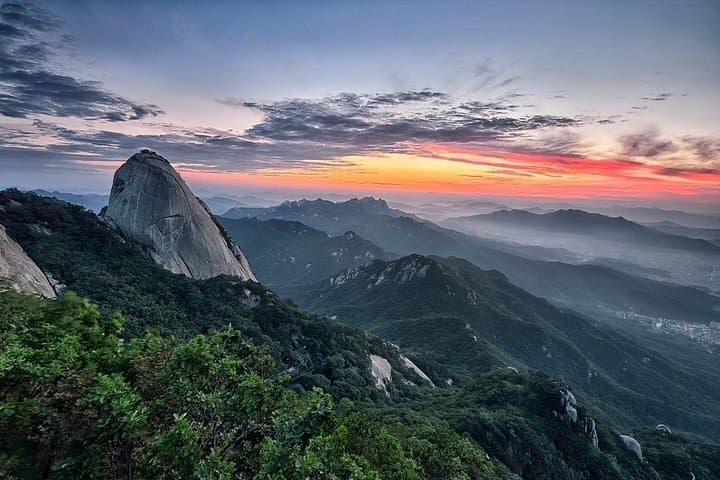
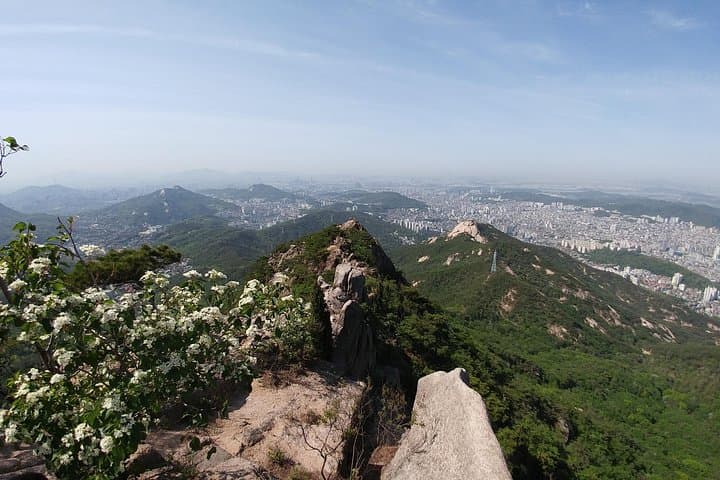
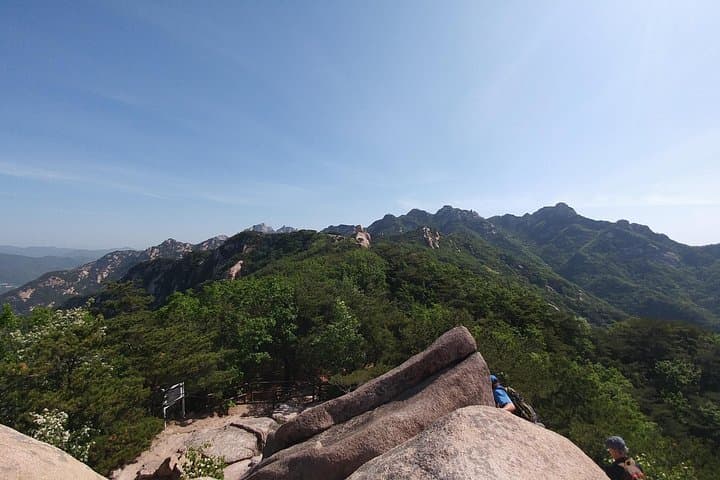
At 9:30 a.m. the van slips out of central Seoul and the city’s glass and concrete begin to blur into pine-lined roads. Within 30 minutes the skyline has been replaced by jagged granite spires—Bukhansan’s rocky teeth rising above the suburbs like an old city wall. On this private five-hour outing you trade subway crowds for steep stone steps, sheer slabs, and a granite summit that forces you to look back at the patchwork of Seoul below.
Verified experiences and guided adventures in the surrounding area.
Operated by OnedayKorea · Seoul, Seoul
At 9:30 a.m. the van slips out of central Seoul and the city’s glass and concrete begin to blur into pine-lined roads. Within 30 minutes the skyline has been replaced by jagged granite spires—Bukhansan’s rocky teeth rising above the suburbs like an old city wall. On this private five-hour outing you trade subway crowds for steep stone steps, sheer slabs, and a granite summit that forces you to look back at the patchwork of Seoul below.
Bukhansan’s peaks are roughly 800–840 meters high; the tallest, Baegundae, stands at 836.5 m and has watched the Han River basin for centuries. The park’s granite spine was worn smooth by glacial action and long-term weathering, and the mountains have been part of Korea’s cultural defense since the Joseon era—Bukhansanseong Fortress threads along the ridgeline and whispers of strategic watchpoints and old stone gates. Temples and stone pagodas appear in gullies and on ledges; the landscape reads like a ledger of geology and human history.
The hike itself is practical and earnest: expect roughly 4–6 km round-trip depending on the chosen route, with elevation gain around 400–600 m. Trails switch from packed dirt to exposed rock and stairs; there are short sections that demand basic scrambling and solid footing. Your English-speaking driver-guide manages logistics and keeps a steady pace, and a traditional Korean lunch—soup, rice, banchan—awaits at the trailhead or nearby village to complete the circuit.
Locals come to Bukhansan for training as much as for views; you’ll pass retirees doing interval climbs, students on weekend runs, and families making offerings at small temple altars. The park is popular year-round, but conditions change fast—granite gets slick in rain and icy in winter, while summer brings dense humidity.
Practical guidance: wear well-broken-in trekking shoes, carry at least 1–1.5 liters of water, and bring a light wind layer even on warm days—the wind on exposed summits cuts through clothing. If you’re prone to vertigo, mention it to your guide; alternative lower routes are available. The tour requires a high level of fitness and is best suited to hikers comfortable on uneven, steep terrain. For safety and conservation, stay on marked paths, carry out trash, and avoid feeding wildlife.
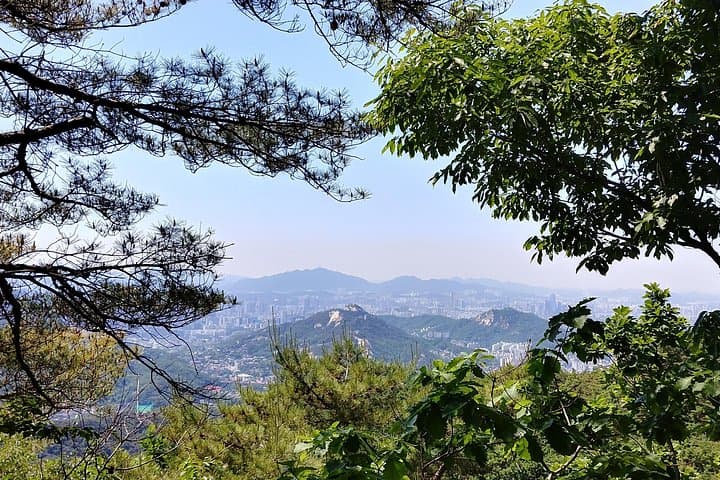
This private option is efficient for short visits—pickup from most Seoul hotels is included, group sizes are small (max 7), and the English-speaking guide smooths the experience. At the summit look west for a sweeping city panorama where the river threads through towers, and take a quiet moment at the fortress walls to feel the mountain’s history and the city’s pulse at once.
Yes—pickup from most hotels or Airbnbs in Seoul is included; request pickup point when booking (airport pickup costs extra).
The tour requires a high level of fitness; hikers should be comfortable with sustained uphill sections, stairs, and brief scrambling.
Yes—this private tour includes a traditional Korean lunch after the hike.
Private bookings are limited to a maximum of 7 people; a minimum of 2 people is required to run the tour.
The tour may be canceled in inclement weather; for a full refund cancel at least 24 hours before the scheduled departure time.
Yes—the driver/guide for this tour speaks English and handles navigation, logistics, and local orientation.
OnedayKorea operates guided outdoor trips and adventures with an emphasis on safety, stewardship, and memorable experiences.
At 9:30 a.m. the van slips out of central Seoul and the city’s glass and concrete begin to blur into pine-lined roads. Within 30 minutes the skyline has been replaced by jagged granite spires—Bukhansan’s rocky teeth rising above the suburbs like an old city wall. On this private five-hour outing you trade subway crowds for steep stone steps, sheer slabs, and a granite summit that forces you to look back at the patchwork of Seoul below.
At 9:30 a.m. the van slips out of central Seoul and the city’s glass and concrete begin to blur into pine-lined roads. Within 30 minutes the skyline has been replaced by jagged granite spires—Bukhansan’s rocky teeth rising above the suburbs like an old city wall. On this private five-hour outing you trade subway crowds for steep stone steps, sheer slabs, and a granite summit that forces you to look back at the patchwork of Seoul below.
Bukhansan’s peaks are roughly 800–840 meters high; the tallest, Baegundae, stands at 836.5 m and has watched the Han River basin for centuries. The park’s granite spine was worn smooth by glacial action and long-term weathering, and the mountains have been part of Korea’s cultural defense since the Joseon era—Bukhansanseong Fortress threads along the ridgeline and whispers of strategic watchpoints and old stone gates. Temples and stone pagodas appear in gullies and on ledges; the landscape reads like a ledger of geology and human history.
The hike itself is practical and earnest: expect roughly 4–6 km round-trip depending on the chosen route, with elevation gain around 400–600 m. Trails switch from packed dirt to exposed rock and stairs; there are short sections that demand basic scrambling and solid footing. Your English-speaking driver-guide manages logistics and keeps a steady pace, and a traditional Korean lunch—soup, rice, banchan—awaits at the trailhead or nearby village to complete the circuit.
Locals come to Bukhansan for training as much as for views; you’ll pass retirees doing interval climbs, students on weekend runs, and families making offerings at small temple altars. The park is popular year-round, but conditions change fast—granite gets slick in rain and icy in winter, while summer brings dense humidity.
Practical guidance: wear well-broken-in trekking shoes, carry at least 1–1.5 liters of water, and bring a light wind layer even on warm days—the wind on exposed summits cuts through clothing. If you’re prone to vertigo, mention it to your guide; alternative lower routes are available. The tour requires a high level of fitness and is best suited to hikers comfortable on uneven, steep terrain. For safety and conservation, stay on marked paths, carry out trash, and avoid feeding wildlife.
This private option is efficient for short visits—pickup from most Seoul hotels is included, group sizes are small (max 7), and the English-speaking guide smooths the experience. At the summit look west for a sweeping city panorama where the river threads through towers, and take a quiet moment at the fortress walls to feel the mountain’s history and the city’s pulse at once.