THE ADVENTURE COLLECTIVE® · Independent discovery and booking for outdoor travel

Walk four hours through Bukhara’s UNESCO‑listed core: pools, madrasahs, domed bazaars and the towering Kalyan Minaret. This guided route packs centuries of Silk Road history into a compact, easy walking experience.
Walk four hours through Bukhara’s UNESCO‑listed core: pools, madrasahs, domed bazaars and the towering Kalyan Minaret. This guided route packs centuries of Silk Road history into a compact, easy walking experience.
Morning light cuts across baked-brick facades as the guide gathers a small group near a tiled portal, and the city exhales centuries of trade and prayer. Walking through narrow lanes, the tour moves from the reflective calm of Labi‑Hauz’s rectangular pool to the soaring silhouette of the Kalyan Minaret, each turn revealing carved cedar doors, caravanserai arches and the occasional market stall selling handwoven suzani.
Verified experiences and guided adventures in the surrounding area.
Operated by Tourmania · Bukhara, Bukhara Region
Morning light cuts across baked-brick facades as the guide gathers a small group near a tiled portal, and the city exhales centuries of trade and prayer. Walking through narrow lanes, the tour moves from the reflective calm of Labi‑Hauz’s rectangular pool to the soaring silhouette of the Kalyan Minaret, each turn revealing carved cedar doors, caravanserai arches and the occasional market stall selling handwoven suzani.
Bukhara’s heart grew on the Silk Road; its architecture mixes Timurid and pre-Timurid influences, with madrasahs and trading domes built from local clay and fired bricks that weather the region’s hot summers and cool winters. Visitors will pass Nodir Devonbegi Madrasah, the covered Toki Sarrafon bazaar and the Magoki‑Attori Mosque — sites that map the city’s social and economic history from medieval caravan trade to present-day community life.
Practically, expect four hours of mostly flat walking across cobbles and shaded arcades, roughly 3–4 km at a leisurely pace. Moderate sun protection and comfortable shoes are essential; several stops include steps and narrow interiors where modest dress is required. Guides typically narrate context and architecture, and small purchases or tea at Labi‑Hauz are common pauses. For comfort, schedule morning or late‑afternoon departures to avoid midday heat, and bring local currency for souvenirs or small admissions.
This tour suits travelers who want a concentrated, readable introduction to Bukhara’s historic core — sensory, factual, and paced for discovery.
The tour runs about four hours and covers roughly 3–4 km of mostly flat walking through the old city and market areas.
The guide and taxes are included, but some monuments may charge small admission fees—bring local currency to cover these if required.
The route is mostly flat but includes cobbled streets and steps at some sites; it’s generally suitable for those with basic mobility but not for wheelchairs in all areas.
Guides commonly work in English and other major languages; confirm the language offered at booking to ensure compatibility.
Tourmania operates guided outdoor trips and adventures with an emphasis on safety, stewardship, and memorable experiences.
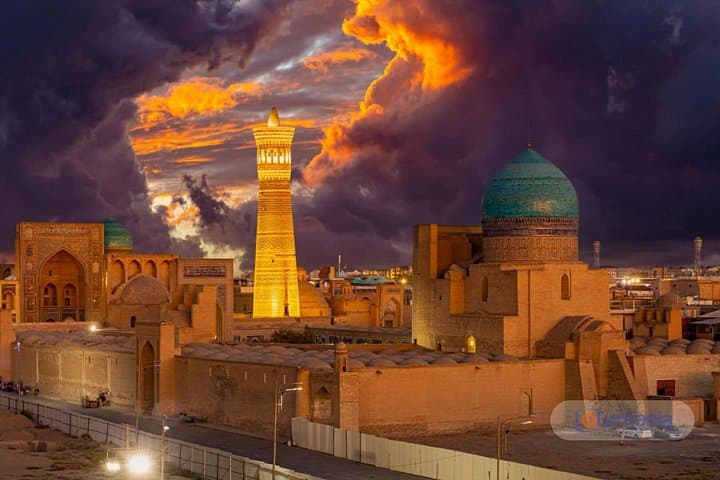


Morning light cuts across baked-brick facades as the guide gathers a small group near a tiled portal, and the city exhales centuries of trade and prayer. Walking through narrow lanes, the tour moves from the reflective calm of Labi‑Hauz’s rectangular pool to the soaring silhouette of the Kalyan Minaret, each turn revealing carved cedar doors, caravanserai arches and the occasional market stall selling handwoven suzani.
Morning light cuts across baked-brick facades as the guide gathers a small group near a tiled portal, and the city exhales centuries of trade and prayer. Walking through narrow lanes, the tour moves from the reflective calm of Labi‑Hauz’s rectangular pool to the soaring silhouette of the Kalyan Minaret, each turn revealing carved cedar doors, caravanserai arches and the occasional market stall selling handwoven suzani.
Bukhara’s heart grew on the Silk Road; its architecture mixes Timurid and pre-Timurid influences, with madrasahs and trading domes built from local clay and fired bricks that weather the region’s hot summers and cool winters. Visitors will pass Nodir Devonbegi Madrasah, the covered Toki Sarrafon bazaar and the Magoki‑Attori Mosque — sites that map the city’s social and economic history from medieval caravan trade to present-day community life.
Practically, expect four hours of mostly flat walking across cobbles and shaded arcades, roughly 3–4 km at a leisurely pace. Moderate sun protection and comfortable shoes are essential; several stops include steps and narrow interiors where modest dress is required. Guides typically narrate context and architecture, and small purchases or tea at Labi‑Hauz are common pauses. For comfort, schedule morning or late‑afternoon departures to avoid midday heat, and bring local currency for souvenirs or small admissions.
This tour suits travelers who want a concentrated, readable introduction to Bukhara’s historic core — sensory, factual, and paced for discovery.