THE ADVENTURE COLLECTIVE® · Independent discovery and booking for outdoor travel

Descend to a 24‑meter sandy flat off Playa del Carmen for a single‑tank, certified‑diver experience with bull sharks. Short bottom times, experienced guides, and a conservation focus make this an intense—yet carefully managed—shark encounter.
Descend to a 24‑meter sandy flat off Playa del Carmen for a single‑tank, certified‑diver experience with bull sharks. Short bottom times, experienced guides, and a conservation focus make this an intense—yet carefully managed—shark encounter.
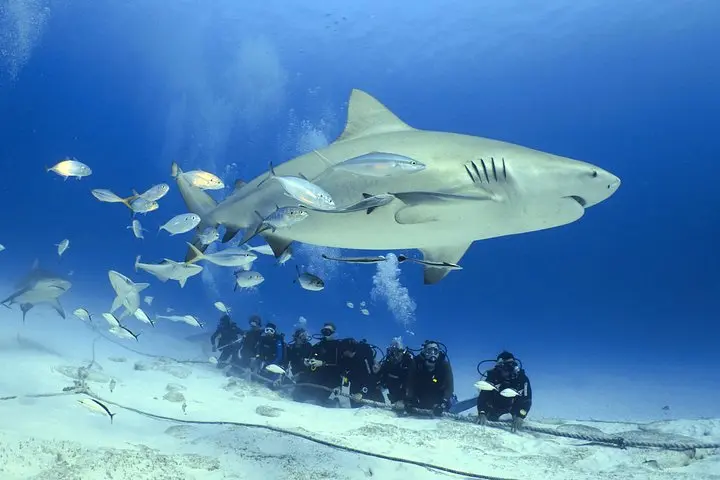
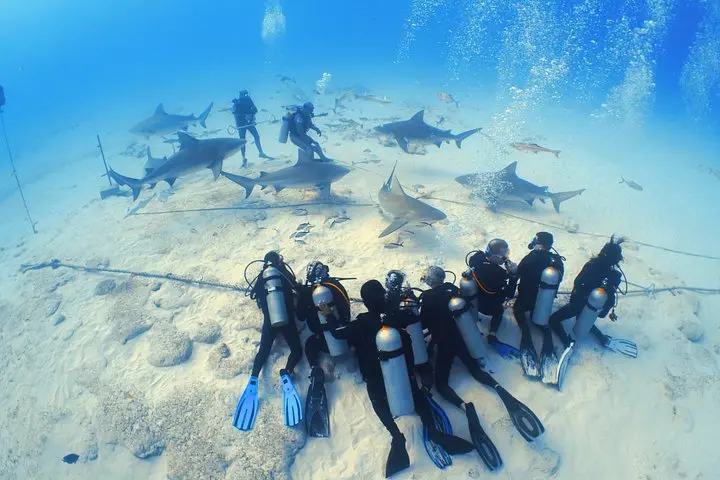
You step off Calle 4 and the Caribbean air hits with the taste of salt and sun. A short walk from 5th Avenue brings you to Scuba Libre’s weathered blue shop; within an hour the pavement blurs into horizon and the boat bobs over a 24‑meter sand plain. The briefing is terse, practiced — weights, hand signals, the line to hold — and then the ocean takes over. You descend into a square profile, settle onto the sandy floor, and feel the current nudge you toward a cluster of shapes. The bull sharks arrive with quiet purpose, circling slow as if evaluating the visitors in their territory.
Verified experiences and guided adventures in the surrounding area.
Operated by SCUBA LIBRE · Playa del Carmen, Quintana Roo
You step off Calle 4 and the Caribbean air hits with the taste of salt and sun. A short walk from 5th Avenue brings you to Scuba Libre’s weathered blue shop; within an hour the pavement blurs into horizon and the boat bobs over a 24‑meter sand plain. The briefing is terse, practiced — weights, hand signals, the line to hold — and then the ocean takes over. You descend into a square profile, settle onto the sandy floor, and feel the current nudge you toward a cluster of shapes. The bull sharks arrive with quiet purpose, circling slow as if evaluating the visitors in their territory.
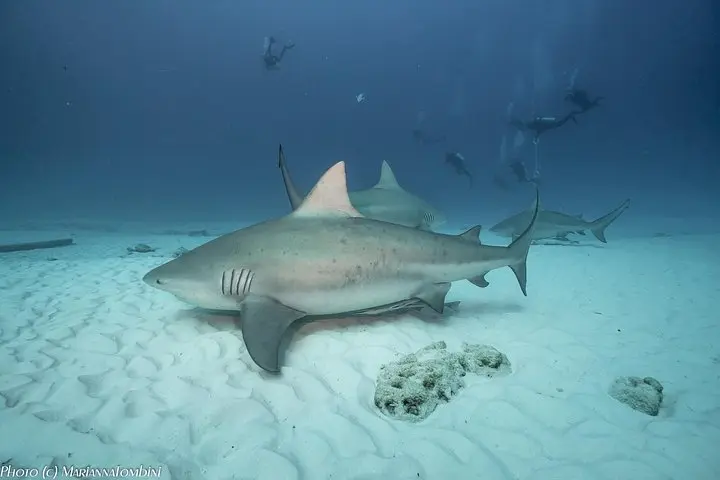
Playa del Carmen is one of the few places where seasonal bull shark aggregations are predictable. From November through March, pregnant females gather offshore before migrating to birthing grounds, a natural rhythm local operators have learned to work with rather than against. The dive follows a long-standing local effort — the SAVING OUR SHARKS initiative — which leverages tourism dollars to discourage shark fishing and fund monitoring.
Geologically the dive sits over a shallow reef and sandy plain carved by ancient sea level shifts; visibility varies but can be excellent in the cool months when plankton thins. Culturally, Playa shifted from a fisherman’s town to a tourism hub in recent decades, and shark tourism now plays a practical conservation role: live sharks equal livelihoods. Scuba Libre’s operation is small-group (max 9), and their routine — brief onshore paperwork, a five‑minute boat run to site, 35‑minute bottom time — reflects a balance of safety, animal welfare, and viewing opportunity.
Practical details matter: this is for certified divers only. Expect a 14:15 meeting at the shop, tanks and weights provided, and a square dive profile down to ~24 m (72 ft). The bottom time is short by design; bull sharks are often shy and conservation-minded procedures avoid prolonged feeding. Medical limits apply — not recommended for pregnant travelers or those with significant heart issues — and a moderate fitness level helps with surface intervals and boat transfers.
Plan to hydrate and eat lightly before the dive, secure your certification card, and check your dive computer and exposure protection. For photographers, a strobe and wide-angle lens are best; maintain neutral buoyancy and never chase animals. Weather can cancel trips — sales are final — so build flexibility into your itinerary. When the boat returns to the small pier and the town’s lights begin to warm, you’ll understand why this sharp, direct encounter still feels like a rare, mutual negotiation between human curiosity and a species that has learned to keep its distance.
Yes—evidence of a valid SCUBA certification is required at booking and check‑in.
November through March is peak season when pregnant females aggregate offshore before migrating to birthing areas.
The site sits over a sandy bottom at about 24 m (72 ft) with a square profile and roughly 35 minutes of bottom time.
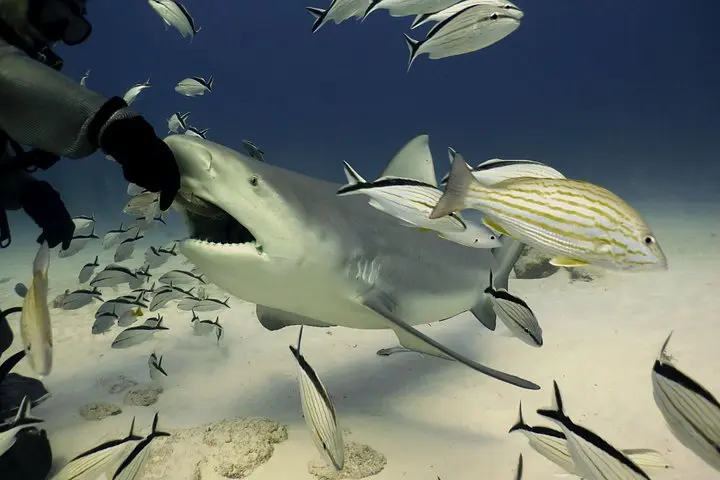
Operators use controlled baiting practices to draw sharks near but adhere to protocols intended to minimize behavioral changes and prioritize the animals’ welfare.
Not recommended for pregnant travelers or people with serious cardiovascular issues; moderate fitness is expected. Declare any health conditions when booking.
All sales are final; there are no refunds for cancellations, though the operator may cancel for bad weather.
SCUBA LIBRE operates guided outdoor trips and adventures with an emphasis on safety, stewardship, and memorable experiences.
You step off Calle 4 and the Caribbean air hits with the taste of salt and sun. A short walk from 5th Avenue brings you to Scuba Libre’s weathered blue shop; within an hour the pavement blurs into horizon and the boat bobs over a 24‑meter sand plain. The briefing is terse, practiced — weights, hand signals, the line to hold — and then the ocean takes over. You descend into a square profile, settle onto the sandy floor, and feel the current nudge you toward a cluster of shapes. The bull sharks arrive with quiet purpose, circling slow as if evaluating the visitors in their territory.
You step off Calle 4 and the Caribbean air hits with the taste of salt and sun. A short walk from 5th Avenue brings you to Scuba Libre’s weathered blue shop; within an hour the pavement blurs into horizon and the boat bobs over a 24‑meter sand plain. The briefing is terse, practiced — weights, hand signals, the line to hold — and then the ocean takes over. You descend into a square profile, settle onto the sandy floor, and feel the current nudge you toward a cluster of shapes. The bull sharks arrive with quiet purpose, circling slow as if evaluating the visitors in their territory.
Playa del Carmen is one of the few places where seasonal bull shark aggregations are predictable. From November through March, pregnant females gather offshore before migrating to birthing grounds, a natural rhythm local operators have learned to work with rather than against. The dive follows a long-standing local effort — the SAVING OUR SHARKS initiative — which leverages tourism dollars to discourage shark fishing and fund monitoring.
Geologically the dive sits over a shallow reef and sandy plain carved by ancient sea level shifts; visibility varies but can be excellent in the cool months when plankton thins. Culturally, Playa shifted from a fisherman’s town to a tourism hub in recent decades, and shark tourism now plays a practical conservation role: live sharks equal livelihoods. Scuba Libre’s operation is small-group (max 9), and their routine — brief onshore paperwork, a five‑minute boat run to site, 35‑minute bottom time — reflects a balance of safety, animal welfare, and viewing opportunity.
Practical details matter: this is for certified divers only. Expect a 14:15 meeting at the shop, tanks and weights provided, and a square dive profile down to ~24 m (72 ft). The bottom time is short by design; bull sharks are often shy and conservation-minded procedures avoid prolonged feeding. Medical limits apply — not recommended for pregnant travelers or those with significant heart issues — and a moderate fitness level helps with surface intervals and boat transfers.
Plan to hydrate and eat lightly before the dive, secure your certification card, and check your dive computer and exposure protection. For photographers, a strobe and wide-angle lens are best; maintain neutral buoyancy and never chase animals. Weather can cancel trips — sales are final — so build flexibility into your itinerary. When the boat returns to the small pier and the town’s lights begin to warm, you’ll understand why this sharp, direct encounter still feels like a rare, mutual negotiation between human curiosity and a species that has learned to keep its distance.