THE ADVENTURE COLLECTIVE® · Independent discovery and booking for outdoor travel

Travel by bullet train from Chongqing to see the 71‑meter Leshan Giant Buddha and spend time at Chengdu’s panda research base in one full day. This private tour blends UNESCO-scale history, riverside viewpoints and hands-on conservation sights.
Travel by bullet train from Chongqing to see the 71‑meter Leshan Giant Buddha and spend time at Chengdu’s panda research base in one full day. This private tour blends UNESCO-scale history, riverside viewpoints and hands-on conservation sights.
Steam-white air in a Chongqing morning, commuters trail toward the station as a 1.5-hour bullet train hums west to Chengdu, then on to Leshan where the stone Buddha watches over three rivers that dare the valley below.
Verified experiences and guided adventures in the surrounding area.
Operated by Unique Beijing Tours · Leshan, Sichuan
Steam-white air in a Chongqing morning, commuters trail toward the station as a 1.5-hour bullet train hums west to Chengdu, then on to Leshan where the stone Buddha watches over three rivers that dare the valley below.
Visitors step from glass and steel into Tang Dynasty scale—carved between 713 and 803, the 71‑meter Leshan Giant Buddha unspools centuries of labor in weathered sandstone, its coiled hair and carved features speaking to large-scale ritual engineering and flood control efforts that shaped local hydraulics.
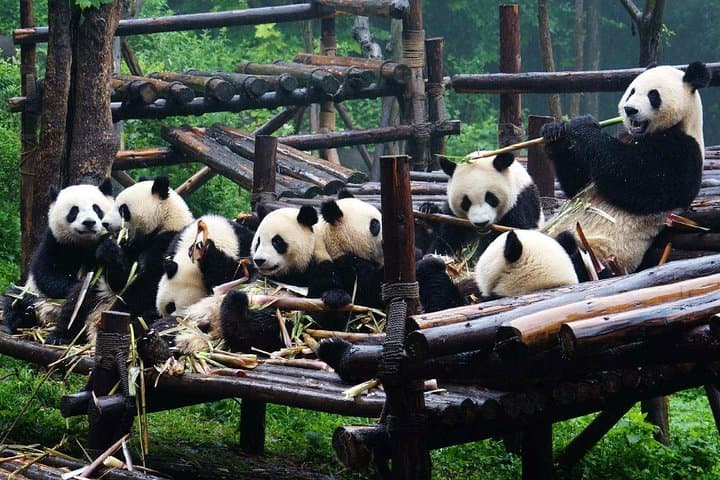
After the rivers have been observed from a temple ridge, the route winds down roughly 30 minutes of stairs to a riverside platform and an optional boat ride that frames the statue in full. Then the day turns green: Chengdu Research Base of Giant Panda Breeding hosts time-staged exhibits, playful enclosures, a small museum and an on-site hospital where keepers demonstrate husbandry and neonatal care.
Geology and culture collide here—red-brown sedimentary banks, river confluences that altered shipping routes, and Buddhist patronage that redirected local labor into a single monumental form. Modern conservation work at the panda base builds on China’s expanding protected-area and captive-breeding programs.
Practical edge: expect 8–10 hours of travel, moderate walking with stair descents, and variable crowds. Bring passport and printed or mobile train ticket, comfortable shoes for stone steps, sun protection, and a light jacket near the rivers. Start early to catch pandas at feeding times and reserve boat rides in advance where offered. Carry snacks, water, and small local currency for tips.
Yes — the tour offers the option to finish in Chengdu; confirm this when booking so transfer logistics are arranged.
Expect about 30 minutes of stairs and short walks to viewpoints; the site has some sloped paths and a riverside platform accessible by steps.
Infants can ride in prams and must sit on laps for train travel; verify stroller access for certain stair sections as access may be limited.
Photography is allowed in most public areas; avoid flash where posted and follow any designated no-photo zones in animal care areas.
Unique Beijing Tours operates guided outdoor trips and adventures with an emphasis on safety, stewardship, and memorable experiences.


Steam-white air in a Chongqing morning, commuters trail toward the station as a 1.5-hour bullet train hums west to Chengdu, then on to Leshan where the stone Buddha watches over three rivers that dare the valley below.
Steam-white air in a Chongqing morning, commuters trail toward the station as a 1.5-hour bullet train hums west to Chengdu, then on to Leshan where the stone Buddha watches over three rivers that dare the valley below.
Visitors step from glass and steel into Tang Dynasty scale—carved between 713 and 803, the 71‑meter Leshan Giant Buddha unspools centuries of labor in weathered sandstone, its coiled hair and carved features speaking to large-scale ritual engineering and flood control efforts that shaped local hydraulics.
After the rivers have been observed from a temple ridge, the route winds down roughly 30 minutes of stairs to a riverside platform and an optional boat ride that frames the statue in full. Then the day turns green: Chengdu Research Base of Giant Panda Breeding hosts time-staged exhibits, playful enclosures, a small museum and an on-site hospital where keepers demonstrate husbandry and neonatal care.
Geology and culture collide here—red-brown sedimentary banks, river confluences that altered shipping routes, and Buddhist patronage that redirected local labor into a single monumental form. Modern conservation work at the panda base builds on China’s expanding protected-area and captive-breeding programs.
Practical edge: expect 8–10 hours of travel, moderate walking with stair descents, and variable crowds. Bring passport and printed or mobile train ticket, comfortable shoes for stone steps, sun protection, and a light jacket near the rivers. Start early to catch pandas at feeding times and reserve boat rides in advance where offered. Carry snacks, water, and small local currency for tips.