THE ADVENTURE COLLECTIVE® · Independent discovery and booking for outdoor travel

A private full-day trip from Lanzhou delivers a crash course in Chinese Buddhist art and cliff-side engineering. Ride the bullet train to Tianshui, walk plank paths above the valley and view nearly 2,000 years of sculptures up close.
A private full-day trip from Lanzhou delivers a crash course in Chinese Buddhist art and cliff-side engineering. Ride the bullet train to Tianshui, walk plank paths above the valley and view nearly 2,000 years of sculptures up close.
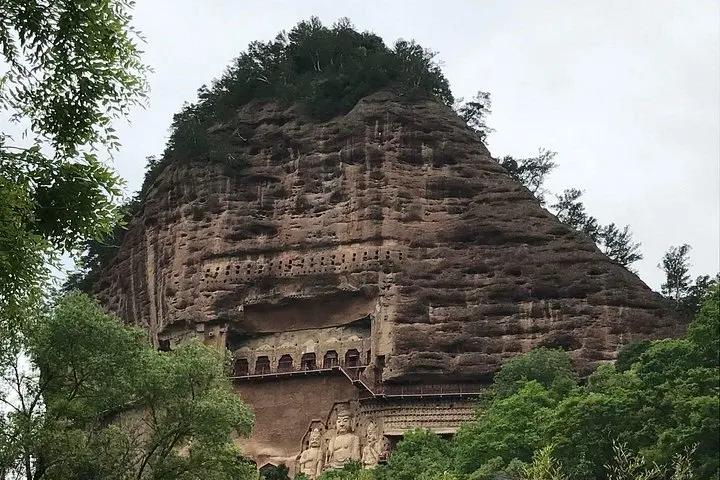
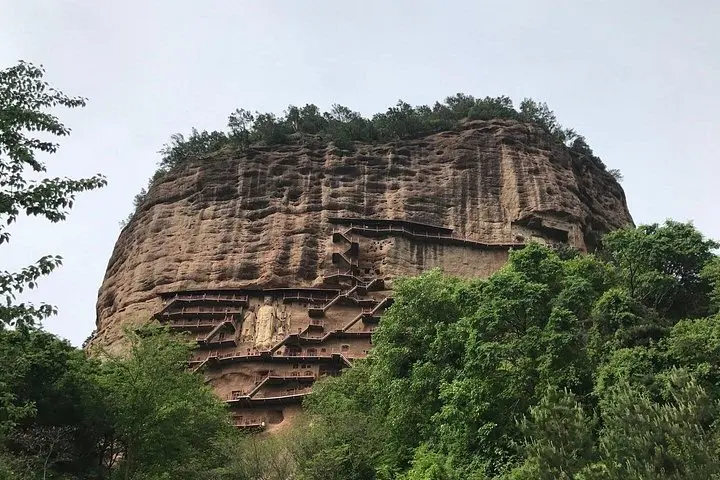
You step off a morning bullet train into the cool air of Tianshui and drive toward a cliff that seems to have been carved by time itself. Maiji Mountain rises in bands of ochre and rust; wooden walkways cling to its face and invite you along a vertical corridor of carved Buddhas and weathered niches.
Verified experiences and guided adventures in the surrounding area.
Operated by SilkRoadTrips · Tianshui, Gansu
You step off a morning bullet train into the cool air of Tianshui and drive toward a cliff that seems to have been carved by time itself. Maiji Mountain rises in bands of ochre and rust; wooden walkways cling to its face and invite you along a vertical corridor of carved Buddhas and weathered niches.
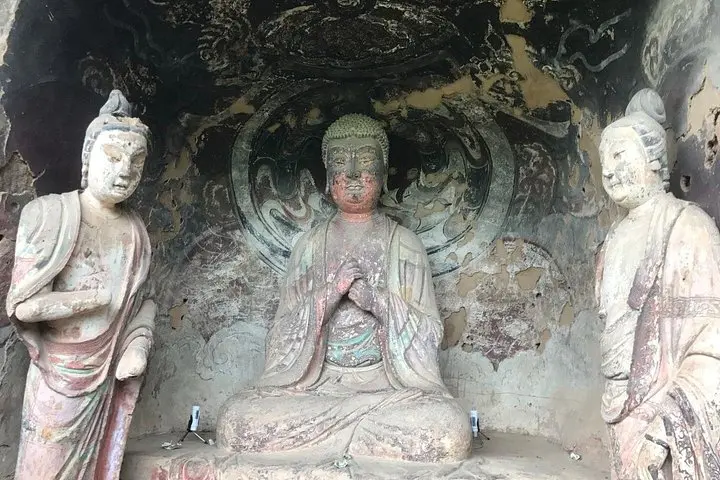
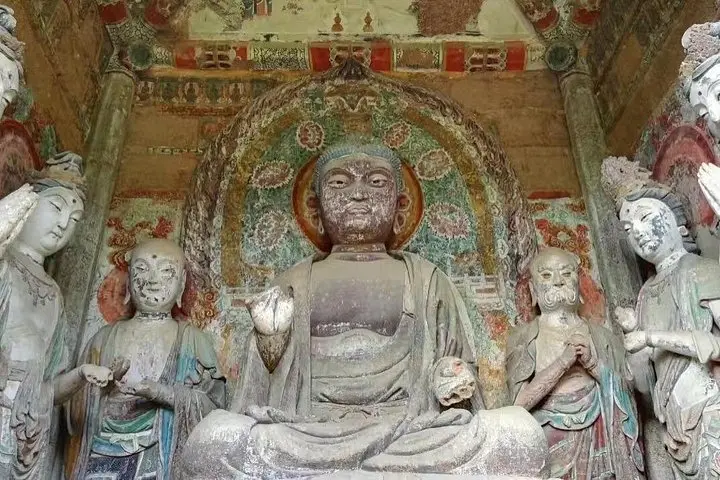
The grottoes began in 384 AD and grew across successive dynasties. Over 194 caves hold more than 7,200 clay and stone sculptures — work that tracks changing styles from Northern Wei to Tang. Geologically, Maiji is a compacted sandstone massif; its relative softness made it possible for artisans to cut chambers high above the valley and, later, for wind and rain to erode the surfaces you’ll study up close.
Culturally the site sits at an intersection of Silk Road influences and local Gansu traditions: monk-led patronage, imperial donations, and regional craft techniques all shaped the carvings. On the plank paths you’ll see how visitors once practiced devotion and how modern conservation tries to protect fragile pigments and brittle clay.
Practical notes: the tour departs Lanzhou around 8:00 a.m., includes round-trip second-class bullet-train fares (≈1.5 hours each way), a local guide, entrance fees, and a Chinese lunch. Expect stairs, exposed boardwalks, and short, steep stretches; comfortable walking shoes and a light rain layer are sensible. Bring your passport — it’s required for train ticketing — and a small daypack for water, sun protection and a camera. The itinerary returns to Lanzhou by evening; plan a relaxed evening after a full day of history, cliff-side views and close-up Buddhist sculpture.
The bullet train takes about 1.5 hours each way; the full day, including transfers and site time, is roughly 10 hours.
The site has steep steps and narrow plank sections; it’s not ideal for limited mobility — contact the operator in advance for specific accessibility options.
Yes, a Chinese lunch and bottled water are included with the tour price.
No; the tour operator reserves round-trip second-class bullet-train tickets, but you must supply passport details at booking and bring the passport on the day.
SilkRoadTrips operates guided outdoor trips and adventures with an emphasis on safety, stewardship, and memorable experiences.
You step off a morning bullet train into the cool air of Tianshui and drive toward a cliff that seems to have been carved by time itself. Maiji Mountain rises in bands of ochre and rust; wooden walkways cling to its face and invite you along a vertical corridor of carved Buddhas and weathered niches.
You step off a morning bullet train into the cool air of Tianshui and drive toward a cliff that seems to have been carved by time itself. Maiji Mountain rises in bands of ochre and rust; wooden walkways cling to its face and invite you along a vertical corridor of carved Buddhas and weathered niches.
The grottoes began in 384 AD and grew across successive dynasties. Over 194 caves hold more than 7,200 clay and stone sculptures — work that tracks changing styles from Northern Wei to Tang. Geologically, Maiji is a compacted sandstone massif; its relative softness made it possible for artisans to cut chambers high above the valley and, later, for wind and rain to erode the surfaces you’ll study up close.
Culturally the site sits at an intersection of Silk Road influences and local Gansu traditions: monk-led patronage, imperial donations, and regional craft techniques all shaped the carvings. On the plank paths you’ll see how visitors once practiced devotion and how modern conservation tries to protect fragile pigments and brittle clay.
Practical notes: the tour departs Lanzhou around 8:00 a.m., includes round-trip second-class bullet-train fares (≈1.5 hours each way), a local guide, entrance fees, and a Chinese lunch. Expect stairs, exposed boardwalks, and short, steep stretches; comfortable walking shoes and a light rain layer are sensible. Bring your passport — it’s required for train ticketing — and a small daypack for water, sun protection and a camera. The itinerary returns to Lanzhou by evening; plan a relaxed evening after a full day of history, cliff-side views and close-up Buddhist sculpture.