THE ADVENTURE COLLECTIVE® · Independent discovery and booking for outdoor travel

Leap from the historic Victoria Falls Bridge and drop 111 metres toward the Zambezi’s rapids — four seconds of raw free fall framed by one of Africa’s most dramatic gorges. This practical guide explains what to expect, seasonal conditions, and tips to plan your jump.
Leap from the historic Victoria Falls Bridge and drop 111 metres toward the Zambezi’s rapids — four seconds of raw free fall framed by one of Africa’s most dramatic gorges. This practical guide explains what to expect, seasonal conditions, and tips to plan your jump.
The drop begins at the lip of an iron arch where the bridge hums with traffic and the spray of Victoria Falls pulls at your face. Step to the edge, hear the gorge breathe, and watch the Zambezi dare you forward — four seconds of free fall followed by a tethered rebound above the river’s white rapids.
Verified experiences and guided adventures in the surrounding area.
Operated by Southern Dynasty Safaris · Victoria Falls, Matabeleland North
The drop begins at the lip of an iron arch where the bridge hums with traffic and the spray of Victoria Falls pulls at your face. Step to the edge, hear the gorge breathe, and watch the Zambezi dare you forward — four seconds of free fall followed by a tethered rebound above the river’s white rapids.
The Victoria Falls Bridge opened in 1905 as part of early 20th‑century rail ambitions to link southern Africa; its steel arch spans a basalt gorge carved by the Zambezi. The falls themselves are the work of ancient basalt flows and faulting, so the view from the bridge reads like a cross‑section of regional geology: polished rock, plunge pools and a river that has gnawed its path for millennia. Locally, the bridge sits between Zimbabwe and Zambia and has long been both transport link and showpiece — today it serves thrill‑seekers as much as trains.
Practically, the bungee operation is a compact experience: arrival, safety briefing, harness, and the jump — roughly an hour total. Operators run regulated anchors and trained riggers; weight limits, health checks and basic fitness are enforced. Weather and river levels affect visibility and safety: the mist can obscure the falls in the wet season, while low flow months give clearer views of the gorge.
For visitors: wear secure shoes, carry ID, and arrive hydrated but not overfull. Respect staff instructions, leave valuables with your group, and time your jump for morning light if you want the falls in your photos. The bridge offers a raw, elemental confrontation with gravity and river — an efficient, unforgettable adrenaline shot framed by one of the world’s great waterfalls.
Licensed operators use tested cords, anchors and harnesses; the activity carries risk but follows international safety protocols — follow staff instructions and disclose health issues.
Yes — operators enforce minimum and maximum weights and usually set age or guardian requirements; check specific operator rules when booking.
Wear secure lace‑up shoes, close‑fitting clothing and avoid jewelry or loose items that could be lost during the jump.
Yes — heavy rain, extreme wind or unsafe river levels can lead to cancellations; operators may reschedule or refund depending on policy.
Southern Dynasty Safaris operates guided outdoor trips and adventures with an emphasis on safety, stewardship, and memorable experiences.
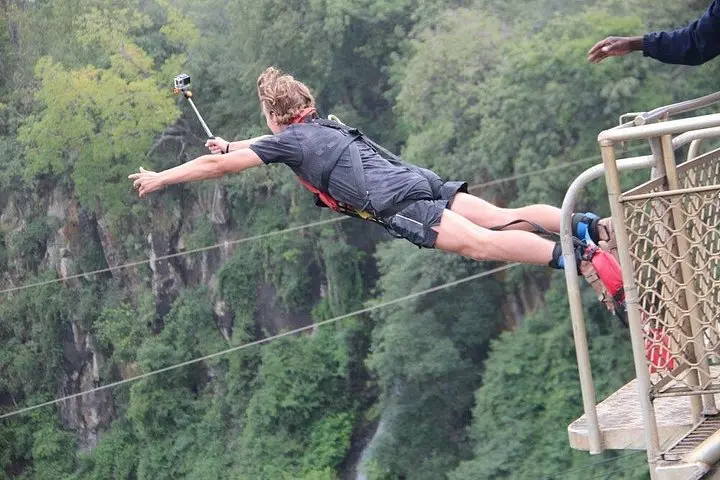
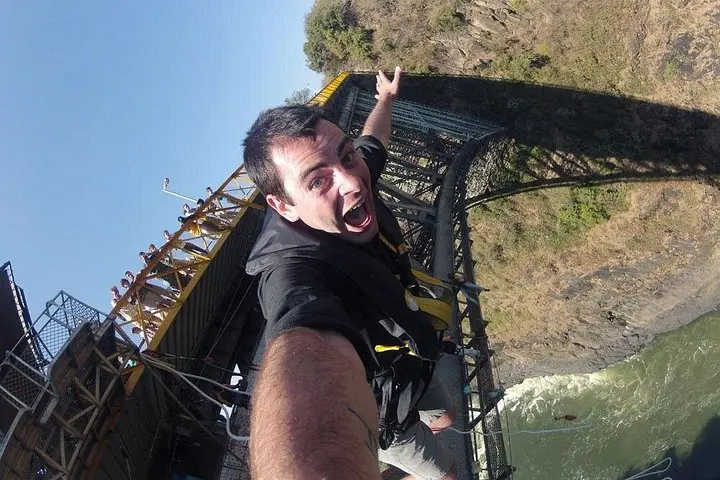
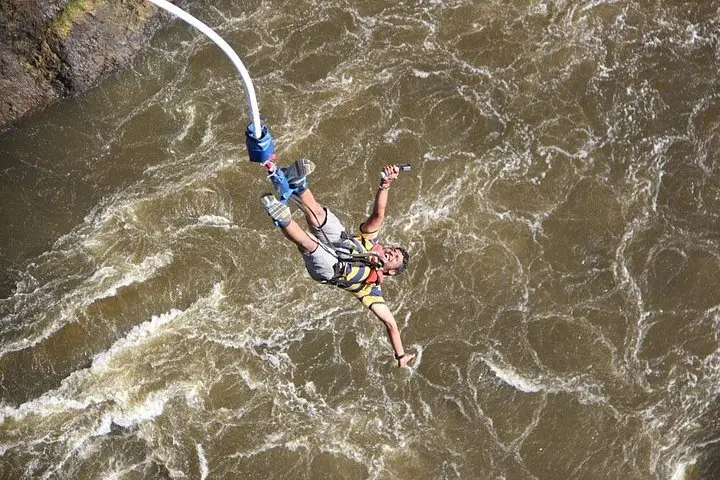
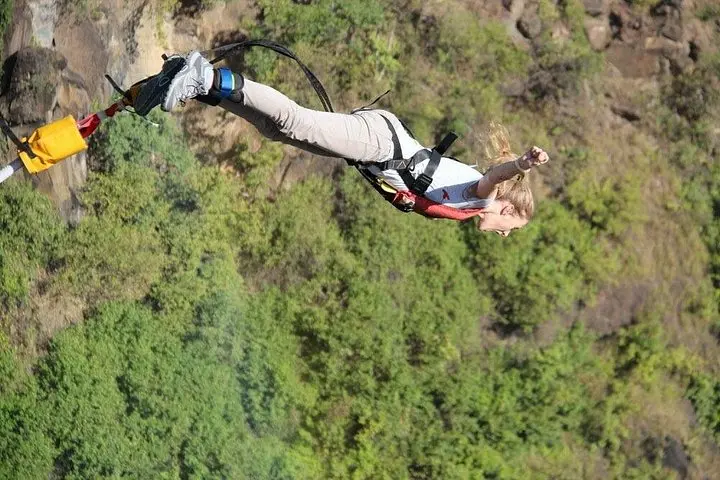
The drop begins at the lip of an iron arch where the bridge hums with traffic and the spray of Victoria Falls pulls at your face. Step to the edge, hear the gorge breathe, and watch the Zambezi dare you forward — four seconds of free fall followed by a tethered rebound above the river’s white rapids.
The drop begins at the lip of an iron arch where the bridge hums with traffic and the spray of Victoria Falls pulls at your face. Step to the edge, hear the gorge breathe, and watch the Zambezi dare you forward — four seconds of free fall followed by a tethered rebound above the river’s white rapids.
The Victoria Falls Bridge opened in 1905 as part of early 20th‑century rail ambitions to link southern Africa; its steel arch spans a basalt gorge carved by the Zambezi. The falls themselves are the work of ancient basalt flows and faulting, so the view from the bridge reads like a cross‑section of regional geology: polished rock, plunge pools and a river that has gnawed its path for millennia. Locally, the bridge sits between Zimbabwe and Zambia and has long been both transport link and showpiece — today it serves thrill‑seekers as much as trains.
Practically, the bungee operation is a compact experience: arrival, safety briefing, harness, and the jump — roughly an hour total. Operators run regulated anchors and trained riggers; weight limits, health checks and basic fitness are enforced. Weather and river levels affect visibility and safety: the mist can obscure the falls in the wet season, while low flow months give clearer views of the gorge.
For visitors: wear secure shoes, carry ID, and arrive hydrated but not overfull. Respect staff instructions, leave valuables with your group, and time your jump for morning light if you want the falls in your photos. The bridge offers a raw, elemental confrontation with gravity and river — an efficient, unforgettable adrenaline shot framed by one of the world’s great waterfalls.