THE ADVENTURE COLLECTIVE® · Independent discovery and booking for outdoor travel

A guided day hike up Bunsen Peak offers 1,300 feet of climbing, expansive Gallatin Range views, and a summit fire lookout for lunch. Choose a 4-mile out-and-back or extend to a quieter 7-mile loop down the east side.
A guided day hike up Bunsen Peak offers 1,300 feet of climbing, expansive Gallatin Range views, and a summit fire lookout for lunch. Choose a 4-mile out-and-back or extend to a quieter 7-mile loop down the east side.
You push through a last ribbon of subalpine fir and the valley opens: a ragged skyline of the Gallatin Range, meadows flecked with lupine, and the gray slope of Bunsen rising ahead. Wind teases the scree; the summit’s old fire lookout perches like an appointed bench where guides spread lunch and the park’s geology and history unfold.
Verified experiences and guided adventures in the surrounding area.
Operated by Wildland Trekking · Mammoth Hot Springs, Wyoming
You push through a last ribbon of subalpine fir and the valley opens: a ragged skyline of the Gallatin Range, meadows flecked with lupine, and the gray slope of Bunsen rising ahead. Wind teases the scree; the summit’s old fire lookout perches like an appointed bench where guides spread lunch and the park’s geology and history unfold.
Bunsen Peak is a volcanic remnant, its talus and scree telling of ancient eruptions and uplift. Named in the late 19th century after chemist Robert Bunsen, the ridge sits above the Mammoth Hot Springs corridor and has long been used for fire spotting and summer patrols. On a clear day the views sweep across Yellowstone’s valleys and the Gallatin backbone; in spring and early summer, wildflowers and bird song mark the lower meadows.
The route climbs roughly 1,300 feet over an out-and-back of about 4 miles, with an optional 3-mile return that drops the east side through quieter switchbacks. Terrain shifts from flat trailhead flats to intermittent forest and open meadow, then to steep scree and talus near the summit—expect some loose footing. Wildlife sightings are common: elk and bison lower down, marmots and raptors higher up.
Practical notes: start early from Albright Visitor Center to avoid midday heat and wildlife traffic, bring 1–2 liters of water, sturdy boots, and layers for wind at the summit. Guides typically supply snacks, lunch, and poles; you’ll need a moderate fitness level and awareness around wildlife to make the most of this day hike.
Standard route is about 4 miles round-trip with ~1,300 feet of elevation gain; the longer option adds ~3 miles on a quieter east-side descent.
No special permit for day hiking, but a Yellowstone park entrance fee applies to all visitors and is not included unless specified by the operator.
Yes, guided by Wildland Trekking professionals who typically provide snacks, lunch, backpacks, and trekking poles as noted in the tour inclusions.
Expect elk, bison, marmots, and birds; carry bear spray, stay on trail, keep a safe distance, and follow your guide’s instructions if animals are nearby.
Wildland Trekking operates guided outdoor trips and adventures with an emphasis on safety, stewardship, and memorable experiences.
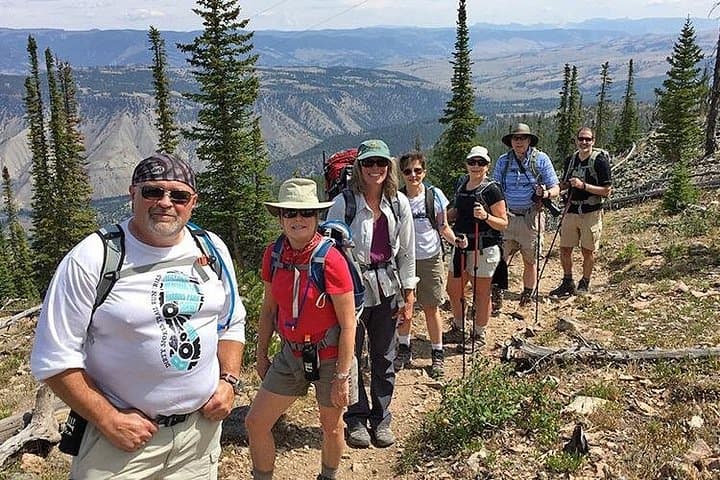


You push through a last ribbon of subalpine fir and the valley opens: a ragged skyline of the Gallatin Range, meadows flecked with lupine, and the gray slope of Bunsen rising ahead. Wind teases the scree; the summit’s old fire lookout perches like an appointed bench where guides spread lunch and the park’s geology and history unfold.
You push through a last ribbon of subalpine fir and the valley opens: a ragged skyline of the Gallatin Range, meadows flecked with lupine, and the gray slope of Bunsen rising ahead. Wind teases the scree; the summit’s old fire lookout perches like an appointed bench where guides spread lunch and the park’s geology and history unfold.
Bunsen Peak is a volcanic remnant, its talus and scree telling of ancient eruptions and uplift. Named in the late 19th century after chemist Robert Bunsen, the ridge sits above the Mammoth Hot Springs corridor and has long been used for fire spotting and summer patrols. On a clear day the views sweep across Yellowstone’s valleys and the Gallatin backbone; in spring and early summer, wildflowers and bird song mark the lower meadows.
The route climbs roughly 1,300 feet over an out-and-back of about 4 miles, with an optional 3-mile return that drops the east side through quieter switchbacks. Terrain shifts from flat trailhead flats to intermittent forest and open meadow, then to steep scree and talus near the summit—expect some loose footing. Wildlife sightings are common: elk and bison lower down, marmots and raptors higher up.
Practical notes: start early from Albright Visitor Center to avoid midday heat and wildlife traffic, bring 1–2 liters of water, sturdy boots, and layers for wind at the summit. Guides typically supply snacks, lunch, and poles; you’ll need a moderate fitness level and awareness around wildlife to make the most of this day hike.