THE ADVENTURE COLLECTIVE® · Independent discovery and booking for outdoor travel

Step from Venice’s vaporetto into Burano’s painted lanes, learn lace-making lore, then cross to Mazzorbo’s vineyards for Dorona wine and island flavors. This two-hour walk pairs vivid streetscapes with local history and practical tips for getting the most from a short lagoon escape.
Step from Venice’s vaporetto into Burano’s painted lanes, learn lace-making lore, then cross to Mazzorbo’s vineyards for Dorona wine and island flavors. This two-hour walk pairs vivid streetscapes with local history and practical tips for getting the most from a short lagoon escape.
You step off the vaporetto into a riot of color: façades painted in candy-bright hues, nets drying by low docks, and the guide—easy to spot in a pink-to-yellow gradient t‑shirt—waiting at the ferry arrival point.
Verified experiences and guided adventures in the surrounding area.
Operated by Arcadia Tour Operator e DMC · Venice, Veneto
You step off the vaporetto into a riot of color: façades painted in candy-bright hues, nets drying by low docks, and the guide—easy to spot in a pink-to-yellow gradient t‑shirt—waiting at the ferry arrival point.
The two-hour route threads Burano’s compact lanes and then crosses into quieter Mazzorbo. Burano’s identity grew from lagoon fishing and a centuries-old lace tradition; its leaning church bell tower and fish market still mark the island’s working past. Mazzorbo, once part of larger medieval settlements, keeps a cooler, agricultural rhythm: small vineyards, market gardens, and the Dorona grape that produced local wines you can taste at family wineries.
Geologically the islands are deposits and marshes of the Venetian Lagoon—low, saline ground that shaped a culture of boats, bridges, and resilient architecture. Culturally, expect stories of artisan lace-makers, post-war fishermen, and how island life balanced subsistence with Venice’s urban pull.
Practically: the walk is flat and short (about 2 hours total), mostly paved alleys, small bridges and narrow canals. Wear comfortable shoes for cobbles, bring water, and layer for wind off the lagoon. Morning departures dodge the largest crowds and give softer light for photos; late afternoon can be quieter on Mazzorbo and better for a glass of Dorona. Public vaporetto services connect Venice and these islands—check schedules, and keep small change or a contactless card for ticket machines. The tour focuses on walking and local context; tastings or restaurant meals may be extra. Respect private doorways and bird roosts, and you'll leave with a clearer picture of how color, craft and tide-shaped livelihoods still define this corner of the lagoon.
Take the vaporetto (water bus) from Venice—services depart from stops such as Fondamenta Nove and other main docks; check schedules for current lines.
The tour includes a guided walk and local context only; food and wine tastings or meals are generally extra and arranged locally.
The walk is mostly flat but includes cobblestones and small bridge steps; strollers with small wheels may be manageable but full wheelchair access is limited in places.
Full refunds are typically available if cancelled at least 24 hours before departure—confirm details at booking time.
Arcadia Tour Operator e DMC operates guided outdoor trips and adventures with an emphasis on safety, stewardship, and memorable experiences.
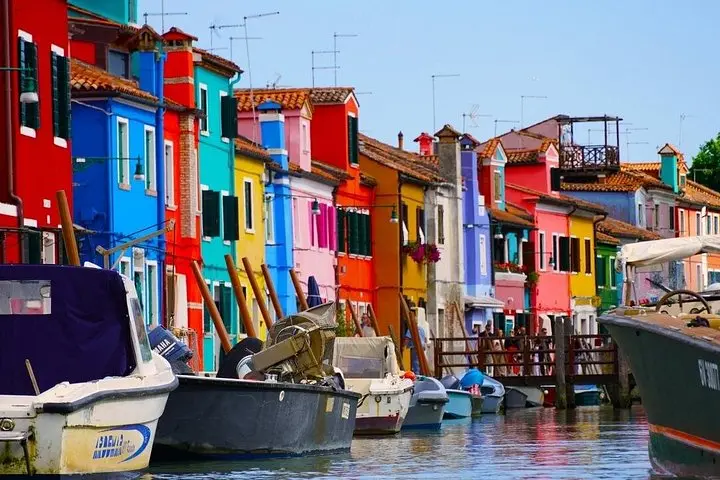
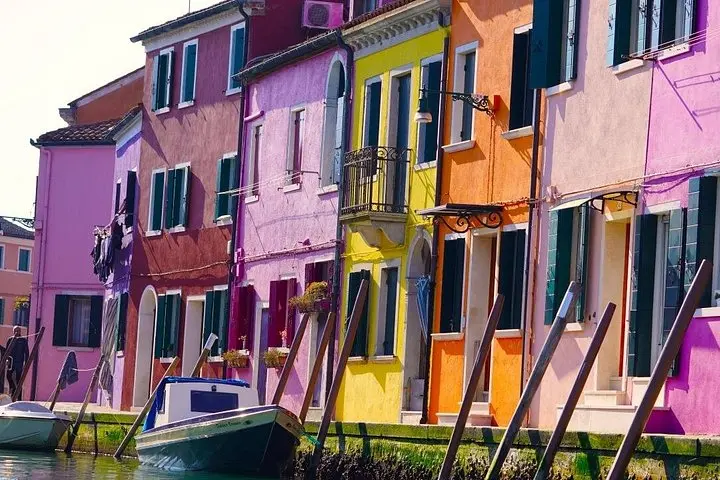
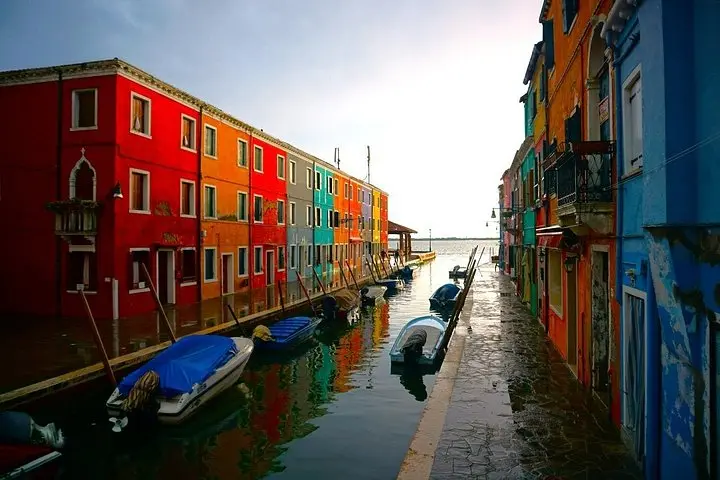
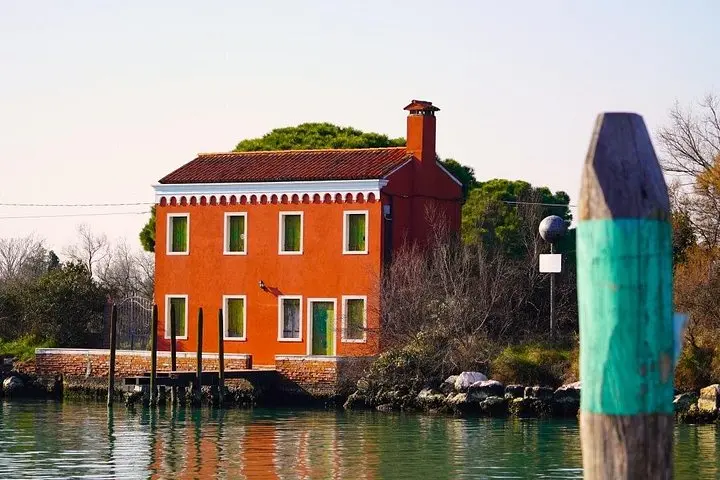
You step off the vaporetto into a riot of color: façades painted in candy-bright hues, nets drying by low docks, and the guide—easy to spot in a pink-to-yellow gradient t‑shirt—waiting at the ferry arrival point.
You step off the vaporetto into a riot of color: façades painted in candy-bright hues, nets drying by low docks, and the guide—easy to spot in a pink-to-yellow gradient t‑shirt—waiting at the ferry arrival point.
The two-hour route threads Burano’s compact lanes and then crosses into quieter Mazzorbo. Burano’s identity grew from lagoon fishing and a centuries-old lace tradition; its leaning church bell tower and fish market still mark the island’s working past. Mazzorbo, once part of larger medieval settlements, keeps a cooler, agricultural rhythm: small vineyards, market gardens, and the Dorona grape that produced local wines you can taste at family wineries.
Geologically the islands are deposits and marshes of the Venetian Lagoon—low, saline ground that shaped a culture of boats, bridges, and resilient architecture. Culturally, expect stories of artisan lace-makers, post-war fishermen, and how island life balanced subsistence with Venice’s urban pull.
Practically: the walk is flat and short (about 2 hours total), mostly paved alleys, small bridges and narrow canals. Wear comfortable shoes for cobbles, bring water, and layer for wind off the lagoon. Morning departures dodge the largest crowds and give softer light for photos; late afternoon can be quieter on Mazzorbo and better for a glass of Dorona. Public vaporetto services connect Venice and these islands—check schedules, and keep small change or a contactless card for ticket machines. The tour focuses on walking and local context; tastings or restaurant meals may be extra. Respect private doorways and bird roosts, and you'll leave with a clearer picture of how color, craft and tide-shaped livelihoods still define this corner of the lagoon.