THE ADVENTURE COLLECTIVE® · Independent discovery and booking for outdoor travel

Spend a day along Bulgaria’s Via Pontica, tracking pelicans, raptors and shorebirds across oak forests, salt pans and shallow lagoons — with optional wine tasting in Pomorie. Practical walking, big bird counts.
Spend a day along Bulgaria’s Via Pontica, tracking pelicans, raptors and shorebirds across oak forests, salt pans and shallow lagoons — with optional wine tasting in Pomorie. Practical walking, big bird counts.
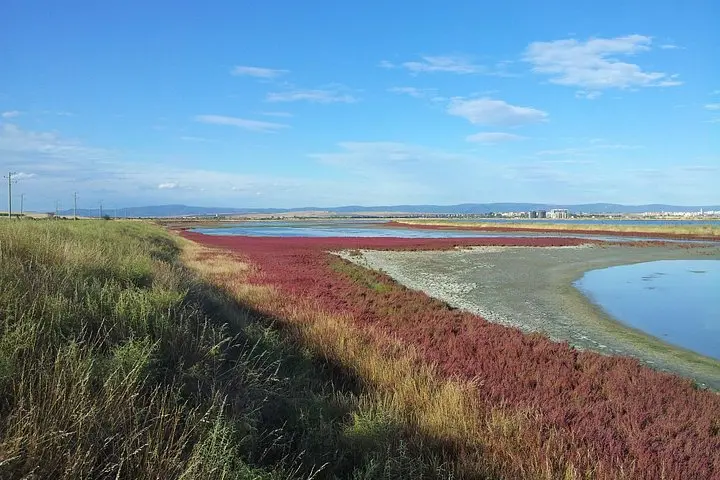
A salt-scented wind pushes across shallow lagoons as the van eases out of Bourgas and the first white pelicans cut low over the reeds. You stand at the edge of Atanasovsko and Pomorie lakes, binoculars raised, watching the Via Pontica do what it has for millennia: funnel millions of migrating birds along the Black Sea coast.
Verified experiences and guided adventures in the surrounding area.
Operated by Neophron Tours · Bourgas, Burgas Province
A salt-scented wind pushes across shallow lagoons as the van eases out of Bourgas and the first white pelicans cut low over the reeds. You stand at the edge of Atanasovsko and Pomorie lakes, binoculars raised, watching the Via Pontica do what it has for millennia: funnel millions of migrating birds along the Black Sea coast.
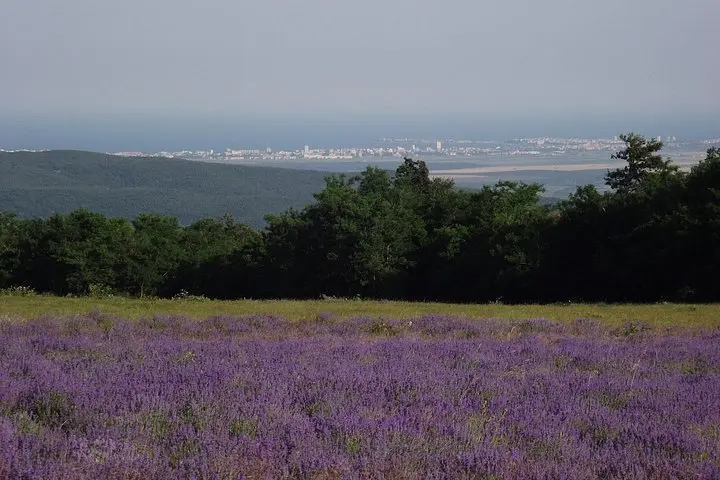
This full-day tour threads oak woodland in the eastern Balkan foothills with the saline flats and reedbeds south of Bourgas. Geologically the coast is a low-lying plain where Quaternary sediments and ancient marine terraces create broad shallow lagoons; those lagoons, fed by underground springs and seasonal runoff, are crucial staging grounds for migrants. Culturally the route passes Pomorie, a wine-growing, salt-harvesting town with a rare Thracian beehive tomb from the 2nd–3rd century AD — a direct line to the region’s layered past.
Expect to search oak canopies for woodpeckers, watch raptors riding thermal lifts, and scan mudflats for waders and terns. Guides typically point out Dalmatian Pelicans, Black Storks, Lesser Spotted Eagles and the torrent of passerines during peak migration.
Practically: the day runs about 7–8 hours with short, mostly level walks and vehicle transfers. Bring sturdy shoes for uneven salt pans, binoculars (often available on request), sun protection, and layered clothing for coastal winds. If you want wine tasting, arrange it ahead; saltworks and bird hides make excellent photo stops. The tour suits all fitness levels but isn’t recommended for those with serious heart conditions. Timing your visit for spring or autumn migration maximizes species counts.
Guides often have a limited number of binoculars available on request, but bringing your own ensures you won’t miss fast-moving birds.
Walking is limited to short stretches at hides, saltpans and viewpoints — mostly level terrain, but surfaces can be uneven or muddy.
Wine tasting is not automatically included; it can be arranged on request and may add time to the itinerary.
Peak migration along the Via Pontica occurs in spring (April–May) and autumn (September–October), when raptors and storks pass in high numbers.
Neophron Tours operates guided outdoor trips and adventures with an emphasis on safety, stewardship, and memorable experiences.


A salt-scented wind pushes across shallow lagoons as the van eases out of Bourgas and the first white pelicans cut low over the reeds. You stand at the edge of Atanasovsko and Pomorie lakes, binoculars raised, watching the Via Pontica do what it has for millennia: funnel millions of migrating birds along the Black Sea coast.
A salt-scented wind pushes across shallow lagoons as the van eases out of Bourgas and the first white pelicans cut low over the reeds. You stand at the edge of Atanasovsko and Pomorie lakes, binoculars raised, watching the Via Pontica do what it has for millennia: funnel millions of migrating birds along the Black Sea coast.
This full-day tour threads oak woodland in the eastern Balkan foothills with the saline flats and reedbeds south of Bourgas. Geologically the coast is a low-lying plain where Quaternary sediments and ancient marine terraces create broad shallow lagoons; those lagoons, fed by underground springs and seasonal runoff, are crucial staging grounds for migrants. Culturally the route passes Pomorie, a wine-growing, salt-harvesting town with a rare Thracian beehive tomb from the 2nd–3rd century AD — a direct line to the region’s layered past.
Expect to search oak canopies for woodpeckers, watch raptors riding thermal lifts, and scan mudflats for waders and terns. Guides typically point out Dalmatian Pelicans, Black Storks, Lesser Spotted Eagles and the torrent of passerines during peak migration.
Practically: the day runs about 7–8 hours with short, mostly level walks and vehicle transfers. Bring sturdy shoes for uneven salt pans, binoculars (often available on request), sun protection, and layered clothing for coastal winds. If you want wine tasting, arrange it ahead; saltworks and bird hides make excellent photo stops. The tour suits all fitness levels but isn’t recommended for those with serious heart conditions. Timing your visit for spring or autumn migration maximizes species counts.