THE ADVENTURE COLLECTIVE® · Independent discovery and booking for outdoor travel

See Busan’s seaside temple, coastal drives, vibrant markets and night panoramas in one private day tour. Ideal for cruise passengers who want a focused introduction to the city’s highlights.
See Busan’s seaside temple, coastal drives, vibrant markets and night panoramas in one private day tour. Ideal for cruise passengers who want a focused introduction to the city’s highlights.
You step off the ship into Busan’s humid air and the city unfolds: waves crashing against cliff temples, neon spreading across a harbor, narrow alleys full of sizzling street food. The day begins with Haedong Yonggungsa, a seaside Buddhist temple that presses its stone stairs into the surf — the ocean seems to tug at its foundations and the site frames the city’s maritime pulse.
Verified experiences and guided adventures in the surrounding area.
Operated by Frank Yi · Busan, Busan
You step off the ship into Busan’s humid air and the city unfolds: waves crashing against cliff temples, neon spreading across a harbor, narrow alleys full of sizzling street food. The day begins with Haedong Yonggungsa, a seaside Buddhist temple that presses its stone stairs into the surf — the ocean seems to tug at its foundations and the site frames the city’s maritime pulse.
From there the route threads Dalmaji-gil’s pine-and-camellia bluff, drops to Haeundae’s wide sand and Dongbaekseom’s sculpted headland, then moves inland to the tidy lines of the UN Memorial Cemetery and the riotous color of Gamcheon Culture Village. Markets like Gukje and Jagalchi put Busan’s post-war trading history on display: stalls born from necessity that evolved into a living, noisy commerce hub.
Geology here is straightforward — granite headlands, reclaimed harbor basins, and sandy urban beaches shaped by currents from the Korea Strait. Culturally, Busan is a working port that became a refuge during the Korean War and then a center for film and trade; that pragmatic energy powers much of the city’s character.
Practical side: this private, full-day loop runs about 8–9 hours with light walking and multiple short stops. Expect city traffic between sights; entrances are mostly pay-as-you-go. Bring comfortable shoes, sun protection, and cash or card for market purchases. If you’re a cruise passenger, confirm docking and reboarding times at booking. The night segment targets Mt. Hwangnyeongsan or Gwanganli for a panoramic city-after-dark view — a tidy, photogenic close to a densely packed day.
No — most temple and attraction entrances are pay-as-you-go; the tour covers transport and guide services only.
This is a private tour so stops can usually be adjusted, but confirm desired changes at booking to fit timing and traffic constraints.
Yes — operators request ship name and docking times at booking and offer pickup/drop-off aligned with cruise schedules.
Lunch and food at markets are typically not included; the itinerary allows time for a sit-down lunch and market sampling at your expense.
Frank Yi operates guided outdoor trips and adventures with an emphasis on safety, stewardship, and memorable experiences.

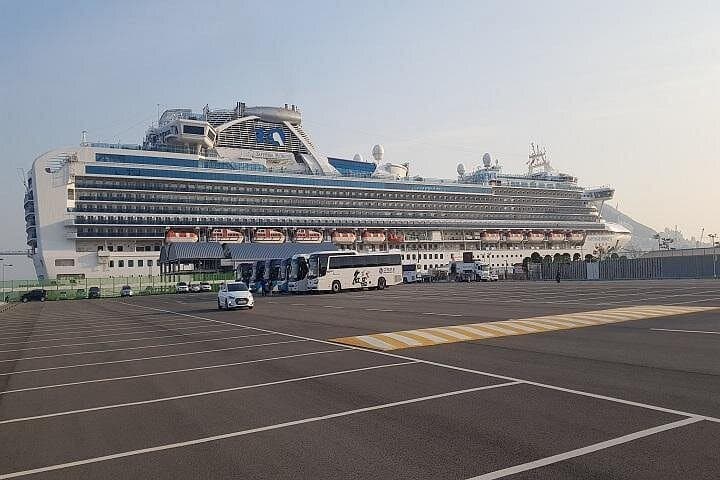
You step off the ship into Busan’s humid air and the city unfolds: waves crashing against cliff temples, neon spreading across a harbor, narrow alleys full of sizzling street food. The day begins with Haedong Yonggungsa, a seaside Buddhist temple that presses its stone stairs into the surf — the ocean seems to tug at its foundations and the site frames the city’s maritime pulse.
You step off the ship into Busan’s humid air and the city unfolds: waves crashing against cliff temples, neon spreading across a harbor, narrow alleys full of sizzling street food. The day begins with Haedong Yonggungsa, a seaside Buddhist temple that presses its stone stairs into the surf — the ocean seems to tug at its foundations and the site frames the city’s maritime pulse.
From there the route threads Dalmaji-gil’s pine-and-camellia bluff, drops to Haeundae’s wide sand and Dongbaekseom’s sculpted headland, then moves inland to the tidy lines of the UN Memorial Cemetery and the riotous color of Gamcheon Culture Village. Markets like Gukje and Jagalchi put Busan’s post-war trading history on display: stalls born from necessity that evolved into a living, noisy commerce hub.
Geology here is straightforward — granite headlands, reclaimed harbor basins, and sandy urban beaches shaped by currents from the Korea Strait. Culturally, Busan is a working port that became a refuge during the Korean War and then a center for film and trade; that pragmatic energy powers much of the city’s character.
Practical side: this private, full-day loop runs about 8–9 hours with light walking and multiple short stops. Expect city traffic between sights; entrances are mostly pay-as-you-go. Bring comfortable shoes, sun protection, and cash or card for market purchases. If you’re a cruise passenger, confirm docking and reboarding times at booking. The night segment targets Mt. Hwangnyeongsan or Gwanganli for a panoramic city-after-dark view — a tidy, photogenic close to a densely packed day.