THE ADVENTURE COLLECTIVE® · Independent discovery and booking for outdoor travel

Drive from Bucharest into the Central Balkan Mountains to photograph the abandoned Buzludzha Monument, then explore Veliko Tarnovo’s Tsarevets Fortress and the peaceful Dryanovo Monastery. This long private day blends Soviet-era ruin, medieval history, and sharp mountain views.
Drive from Bucharest into the Central Balkan Mountains to photograph the abandoned Buzludzha Monument, then explore Veliko Tarnovo’s Tsarevets Fortress and the peaceful Dryanovo Monastery. This long private day blends Soviet-era ruin, medieval history, and sharp mountain views.
You leave Bucharest before sunrise, the city lights shrinking in the rearview as the road pushes south toward rolling plains and, eventually, the rising spine of the Central Balkan Mountains. By midafternoon the ceremony of the drive ends: a concrete saucer and a tall cylindrical tower crown a windswept ridge at about 1,432 meters. The Buzludzha Monument sits like a relic dared back into daylight, its weathered mosaics peeking from cracks and the surrounding ridgeline throwing long shadows across the Valley of the Roses.
Verified experiences and guided adventures in the surrounding area.
Operated by Tours in Romania by Adrian Ene · Kazanlak, Stara Zagora Province
You leave Bucharest before sunrise, the city lights shrinking in the rearview as the road pushes south toward rolling plains and, eventually, the rising spine of the Central Balkan Mountains. By midafternoon the ceremony of the drive ends: a concrete saucer and a tall cylindrical tower crown a windswept ridge at about 1,432 meters. The Buzludzha Monument sits like a relic dared back into daylight, its weathered mosaics peeking from cracks and the surrounding ridgeline throwing long shadows across the Valley of the Roses.
Built in 1981 as a congress hall for the Bulgarian Communist Party, Buzludzha is both recent history and raw ruin — a place to read the late 20th century in chipped tiles and collapsing concrete. The Central Balkans here are a mix of forested slopes and exposed ridgelines; expect uneven, rocky terrain on short approach paths and gusty winds on the summit.
The day trip pairs this eerie landmark with Veliko Tarnovo’s medieval Tsarevets Fortress and the 12th-century Dryanovo Monastery, giving a brisk cultural sweep from Ottoman resistance to socialist monumentalism. Local life still orbits rose cultivation and small artisan shops along Samovodska Charshiya.
Practical note: it’s an 11–13 hour private outing with long stretches in the vehicle and short walks at each stop. Bring a passport or national ID for the Bulgaria border, wear sturdy shoes and windproof layers, and expect limited facilities on the ridge. Photography is the focus — interiors are officially closed, so plan for exterior viewpoints and the longer stops in Veliko Tarnovo and Dryanovo to break the day.
No — the interior is officially closed and structurally unsafe; tours photograph and explore the exterior only.
Both countries are EU members; most travelers from EU countries need only a national ID, while non-EU visitors should carry passports and check visa rules before travel.
Walking is short at each stop — typically 10–30 minutes on uneven paths — but the tour includes long driving periods totaling an 11–13 hour day.
The tour notes that some museum admissions are included; confirm with the operator at booking for specifics on Tsarevets or Dryanovo fees.
Tours in Romania by Adrian Ene operates guided outdoor trips and adventures with an emphasis on safety, stewardship, and memorable experiences.
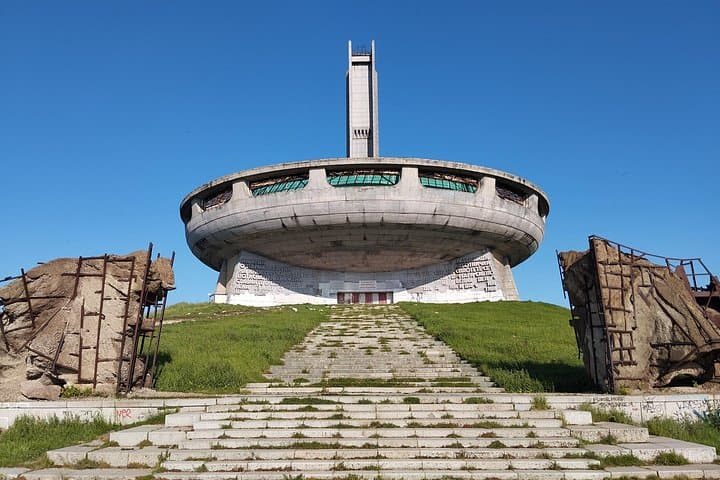



You leave Bucharest before sunrise, the city lights shrinking in the rearview as the road pushes south toward rolling plains and, eventually, the rising spine of the Central Balkan Mountains. By midafternoon the ceremony of the drive ends: a concrete saucer and a tall cylindrical tower crown a windswept ridge at about 1,432 meters. The Buzludzha Monument sits like a relic dared back into daylight, its weathered mosaics peeking from cracks and the surrounding ridgeline throwing long shadows across the Valley of the Roses.
You leave Bucharest before sunrise, the city lights shrinking in the rearview as the road pushes south toward rolling plains and, eventually, the rising spine of the Central Balkan Mountains. By midafternoon the ceremony of the drive ends: a concrete saucer and a tall cylindrical tower crown a windswept ridge at about 1,432 meters. The Buzludzha Monument sits like a relic dared back into daylight, its weathered mosaics peeking from cracks and the surrounding ridgeline throwing long shadows across the Valley of the Roses.
Built in 1981 as a congress hall for the Bulgarian Communist Party, Buzludzha is both recent history and raw ruin — a place to read the late 20th century in chipped tiles and collapsing concrete. The Central Balkans here are a mix of forested slopes and exposed ridgelines; expect uneven, rocky terrain on short approach paths and gusty winds on the summit.
The day trip pairs this eerie landmark with Veliko Tarnovo’s medieval Tsarevets Fortress and the 12th-century Dryanovo Monastery, giving a brisk cultural sweep from Ottoman resistance to socialist monumentalism. Local life still orbits rose cultivation and small artisan shops along Samovodska Charshiya.
Practical note: it’s an 11–13 hour private outing with long stretches in the vehicle and short walks at each stop. Bring a passport or national ID for the Bulgaria border, wear sturdy shoes and windproof layers, and expect limited facilities on the ridge. Photography is the focus — interiors are officially closed, so plan for exterior viewpoints and the longer stops in Veliko Tarnovo and Dryanovo to break the day.