THE ADVENTURE COLLECTIVE® · Independent discovery and booking for outdoor travel

Go behind the glass at Drayton Hall with preservation staff to trace nearly three centuries of gardening, science, and labor in a one-hour guided exhibition. Discover artifacts, maps, and digital reconstructions that connect the plantation’s cultivated landscape to the people who shaped it.
Go behind the glass at Drayton Hall with preservation staff to trace nearly three centuries of gardening, science, and labor in a one-hour guided exhibition. Discover artifacts, maps, and digital reconstructions that connect the plantation’s cultivated landscape to the people who shaped it.
Book with Drayton Hall Preservation Trust
Verified experiences and guided adventures in the surrounding area.
Operated by Drayton Hall Preservation Trust · Charleston, South Carolina
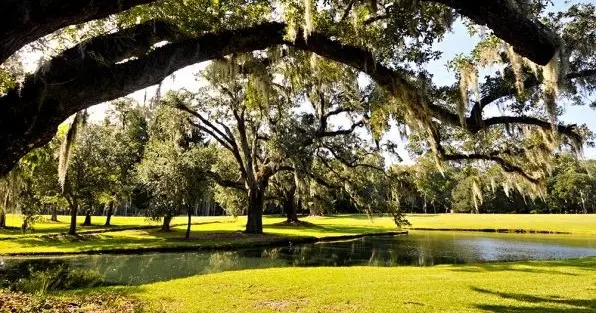
Drayton Hall sits on the banks of the Ashley River near Charleston, South Carolina, where the exhibition Through Time and Space: Layers of History Revealed unfolds a precise dialogue between cultivated land and human curiosity. In this one-hour guided presentation at Drayton Hall (location: 56 Beaufain St, Charleston, SC 29401, USA), museum staff Trish Lowe Smith, Luke Pecoraro, and Nicole Houck move visitors beyond display cases into the layered soils and archives that record nearly three centuries of gardening, agriculture, and scientific inquiry.
The program threads together a finely crafted 1760s telescope, archaeological finds from plantation grounds, historic maps, archival correspondence, and modern digital reconstructions to show how botanical practice, industry, and observation shaped the site. Key features include the exhibition itself, artifacts recovered from excavation, documentary maps that chart garden plans, and the landscape that preserves strata of past labor and land use. Visitors will hear explicit accounts of the enslaved men and women whose work established and maintained these living systems, and see the material traces—ceramics, tools, and soil profiles—that anchor those stories.
This presentation stands out because it treats the grounds as an active record. Rather than isolating objects behind glass, guides interpret how formal gardens, agricultural plots, and woodland margins interacted with tides, soil types, and introduced plant species. The show illuminates practical horticultural knowledge passed down through labor and careful management, revealing craft and experimentation alongside wider scientific curiosity such as astronomical observation.
Why visit? The program compresses layered history into an hour that both orients and surprises. It pairs tactile archaeology with big-picture themes—colonial science, landscape engineering, and cultural labor—making Drayton Hall a rare museum site that privileges the landscape as evidence. For travelers who love history tied to place, or who study how ecology and industry collide, the tour is efficient, authoritative, and humane.
Practical notes: the talk happens in Festival Hall and moves between displays and the surrounding terrain; wear comfortable shoes for short outdoor segments and plan for limited indoor seating. The exhibition is suitable for curious adults, educators, and families with older children. Booking through the provided referral link reserves a seat in a small-group setting led by preservation staff—an ideal way to deepen a Charleston itinerary with clear, place-based storytelling that foregrounds both natural processes and human labor at Drayton Hall.
Sessions often include a Q&A and occasional viewings of fragile objects up close; photography rules vary, so check with staff before shooting. The one-hour format makes this an easy add-on to a day of plantations, lowcountry natural areas, or downtown Charleston museum visits. Arrive 10 minutes early for check-in at Festival Hall and bring curiosity—the exhibition rewards questions and attention to material detail. Expect grounded, evidence-driven interpretation daily.
The guided presentation is one hour long and typically includes time for questions.
Check-in is at Festival Hall; the listing notes that location specifically for this program.
Yes—families with older children who can follow a museum talk and brief outdoor walking are welcome; content includes difficult historical topics.
Photography rules vary by object; staff will advise when fragile items are being handled and whether photography is permitted.
The program includes indoor and short outdoor segments on uneven terrain; contact Drayton Hall in advance for specific accessibility accommodations.
Use the provided referral link to book a seat; tours are led by preservation staff and often available in small groups.
Drayton Hall Preservation Trust stewards Drayton Hall, a nationally significant historic property located on the Ashley River in Charleston, South Carolina. The Trust preserves America’s earliest unrestored Palladian house—often described as the nation's oldest preserved plantation house—and interprets its architectural, cultural, and archaeological stories for the public. Programming includes daily and seasonal guided tours such as the one-hour Signature Experience Tour that visits the cellar, main, and second floors and features the Steven and Laura Gates Exhibit Gallery and the Lenhardt Courtyard Garden. Educator-led Student House Tours provide 45–60 minute curriculum-based experiences exploring African American history, architectural preservation, and onsite archaeology. Evening offerings range from Candlelight Tours that illuminate 18th-century spaces to special events like Drayton Hall at Night with live lawn music and archaeological presentations. Seasonal and community events include the popular Annual Deck the Hall Oyster Roast, holiday concerts such as African American Spirituals with Ann Caldwell and The Magnolia Singers, and hands-on workshops like the Wreath Building Workshop led by local florist Lela Solomon. The Trust also collaborates with nearby institutions to offer combination itineraries—for example, joint tours and package days with Middleton Place and Charleston Strolls walking tours—giving visitors economical ways to experience Lowcountry gardens, houses, and historic streets. Interpreters and guides emphasize preservation, authenticity, and historical context. Many ticketed experiences have limited capacity, so visitors are encouraged to book in advance to secure a place. Public programming supports conservation of the house, landscape, and archaeological collections through admission and membership, and community engagement efforts nationwide.


Book with Drayton Hall Preservation Trust