THE ADVENTURE COLLECTIVE® · Independent discovery and booking for outdoor travel

Board a fast, small-group boat out of Byron Bay with a marine biologist guide and a hydrophone to hear whale song. This three-hour tour focuses on close, regulated encounters with humpbacks during their seasonal migration.
Board a fast, small-group boat out of Byron Bay with a marine biologist guide and a hydrophone to hear whale song. This three-hour tour focuses on close, regulated encounters with humpbacks during their seasonal migration.
A cold wind pushes across the deck as the boat slips away from Byron Bay’s shoreline, the lighthouse shrinking into a white dot. Salt and diesel mix; gulls wheel and daring currents test the hull. Within minutes the mainland falls flat and the ocean becomes a living arena—blows, tails and the glossy backs of humpbacks cutting the surface.
Verified experiences and guided adventures in the surrounding area.
A cold wind pushes across the deck as the boat slips away from Byron Bay’s shoreline, the lighthouse shrinking into a white dot. Salt and diesel mix; gulls wheel and daring currents test the hull. Within minutes the mainland falls flat and the ocean becomes a living arena—blows, tails and the glossy backs of humpbacks cutting the surface.
This three-hour outing pairs a marine biologist guide with a fast, stable boat and a hydrophone so you can hear whale song beneath the waves. Byron Bay sits on the eastern tip of Australia’s continental shelf, where deep offshore canyons bring nutrient-rich water close to shore and create reliable seasonal whale passages. The area’s Indigenous Arakwal custodians have long-known these migratory routes; later European history included coastal whaling before modern protections.
Expect close but regulated encounters: operators aim for small groups and maintain distances required by law while letting animals lead the encounter. Weather shifts quickly here—sun, spray, and sudden swells keep the tempo honest.
Practical guidance: arrive early to check in, dress in windproof layers, and bring binoculars and a waterproof camera. If you’re prone to seasickness, take medication before boarding and focus on the horizon. The hydrophone adds a rare sensory layer—listen for low-frequency songs that travel for kilometres and change how you see these animals, no longer just shapes in the water but active communicators in a vast blue world.
Sightings are frequent during migration season—operators target known routes but wildlife is never guaranteed; small groups increase chances of close views when whales approach.
Most commonly humpback whales on north-south migrations; you may also see bottlenose dolphins and occasionally sea turtles.
Yes—families are common, but children should be supervised on deck and brought warm layers; check operator age policies for very young infants.
Operators monitor conditions and may reschedule or refund if seas are unsafe; always check the booking’s cancellation policy before departure.
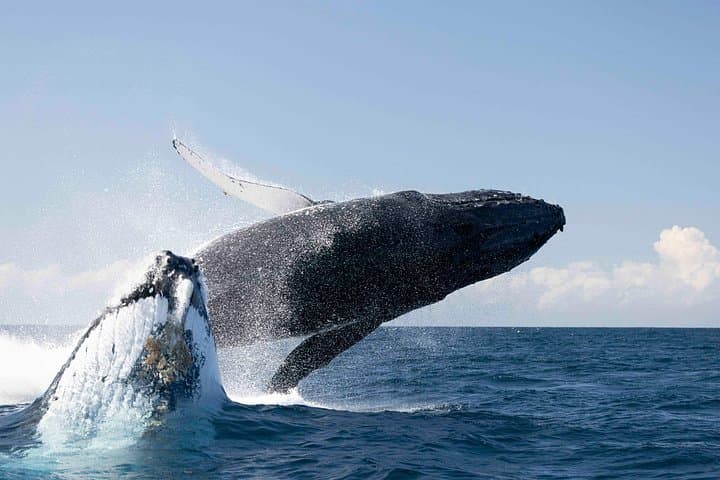
A cold wind pushes across the deck as the boat slips away from Byron Bay’s shoreline, the lighthouse shrinking into a white dot. Salt and diesel mix; gulls wheel and daring currents test the hull. Within minutes the mainland falls flat and the ocean becomes a living arena—blows, tails and the glossy backs of humpbacks cutting the surface.
A cold wind pushes across the deck as the boat slips away from Byron Bay’s shoreline, the lighthouse shrinking into a white dot. Salt and diesel mix; gulls wheel and daring currents test the hull. Within minutes the mainland falls flat and the ocean becomes a living arena—blows, tails and the glossy backs of humpbacks cutting the surface.
This three-hour outing pairs a marine biologist guide with a fast, stable boat and a hydrophone so you can hear whale song beneath the waves. Byron Bay sits on the eastern tip of Australia’s continental shelf, where deep offshore canyons bring nutrient-rich water close to shore and create reliable seasonal whale passages. The area’s Indigenous Arakwal custodians have long-known these migratory routes; later European history included coastal whaling before modern protections.
Expect close but regulated encounters: operators aim for small groups and maintain distances required by law while letting animals lead the encounter. Weather shifts quickly here—sun, spray, and sudden swells keep the tempo honest.
Practical guidance: arrive early to check in, dress in windproof layers, and bring binoculars and a waterproof camera. If you’re prone to seasickness, take medication before boarding and focus on the horizon. The hydrophone adds a rare sensory layer—listen for low-frequency songs that travel for kilometres and change how you see these animals, no longer just shapes in the water but active communicators in a vast blue world.