THE ADVENTURE COLLECTIVE® · Independent discovery and booking for outdoor travel

Leave Cartagena before dawn for a full-day journey into Tayrona National Park. A two-hour rainforest hike yields a chain of beaches and the wide bay of Cabo San Juan—perfect for swimming, photography, and a fresh seaside lunch.
Leave Cartagena before dawn for a full-day journey into Tayrona National Park. A two-hour rainforest hike yields a chain of beaches and the wide bay of Cabo San Juan—perfect for swimming, photography, and a fresh seaside lunch.
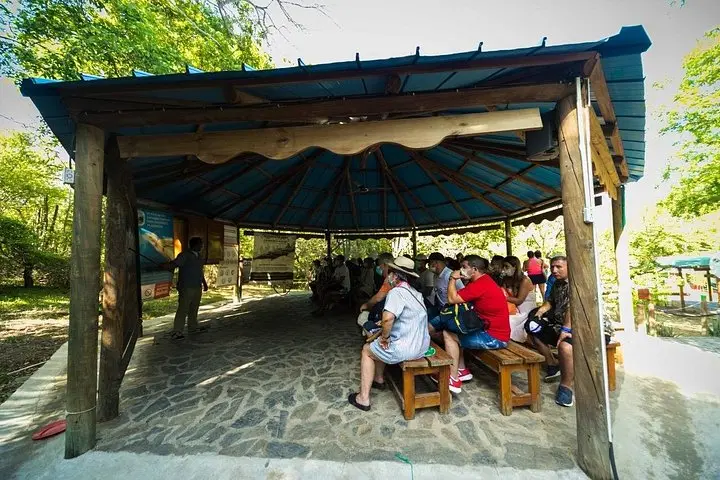
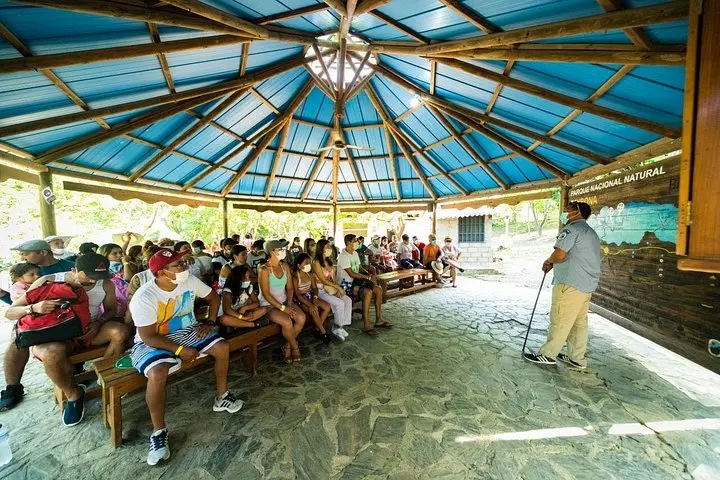
Morning light off the Caribbean cuts across the harbor as the minivan leaves Cartagena’s walled city, and the day feels engineered to separate tourists from the city’s heat and into the wild. By the time the road narrows and palms crowd the windows, the guide’s voice shifts from logistics to landscape—names of plants, the rules of the park, and a short but exacting conservation talk that frames every footstep.
Verified experiences and guided adventures in the surrounding area.
Operated by Life Travelers · Santa Marta, Magdalena
Morning light off the Caribbean cuts across the harbor as the minivan leaves Cartagena’s walled city, and the day feels engineered to separate tourists from the city’s heat and into the wild. By the time the road narrows and palms crowd the windows, the guide’s voice shifts from logistics to landscape—names of plants, the rules of the park, and a short but exacting conservation talk that frames every footstep.
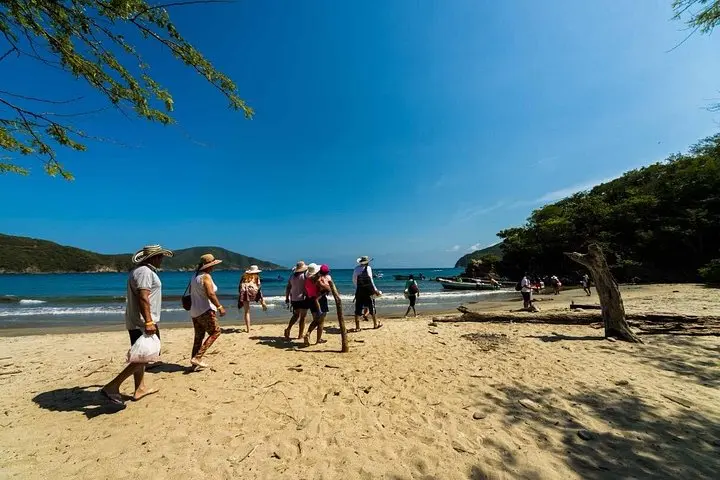
Tayrona National Natural Park is where Sierra Nevada de Santa Marta meets a sea that keeps changing color as the angle of the sun moves. The hike to Cabo San Juan is half rainforest, half beach procession: a two-hour trail that climbs and drops through humid canopy, crosses small streams that dare you to listen closely, and opens suddenly onto a string of beaches—Arrecifes, Arenilla, La Piscina—each with its own shoreline personality. Cabo San Juan itself is a broad sweep of sand flanked by a jutting rock and a communal palapa; people come to float, to climb the rock and look back at the curve of the cove, or to linger over the included lunch: fresh fish, chicken, meat or a vegetarian plate.
The park is older than the road that takes you there. Its coastline was used by indigenous groups long before colonial trade picked up steam, and the Sierra Nevada’s limestone and metamorphic formations feed rivers here that have carved terraces and small coves. Cultural threads—Kogui and Arhuaco communities—remain present; guides often remind visitors that this is both a natural reserve and a living cultural landscape.
Practical: the full-day trip leaves very early from Cartagena (pickups between 4:00–4:30 a.m.). Expect long transfers; most of the day is walking, beach time, and return travel. Trails are tropical—mud or dust depending on recent rain—and the sun can become relentless on exposed stretches. The operator includes park entrance, bilingual guide, water, and lunch; wear lightweight, closed-toe shoes for the hike and bring reef-safe sunscreen.
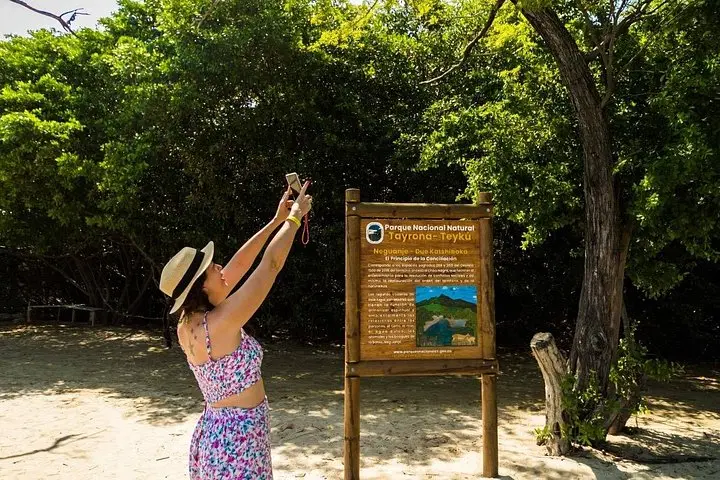
Timing matters: arrive at the trailhead early to get ahead of late arrivals, and plan your photography around morning and late-afternoon windows when the light softens and the heat eases. Respect the park: stick to marked paths, carry out all trash, and follow guide instructions where beach vegetation is regenerating.
For travelers based in Cartagena who want a single, full-throttle nature day without overnight logistics, this route delivers a concentrated cut of Colombia’s Caribbean coast—rainforest that breathes on your neck and beaches that make you understand why the area insists on being protected.
The trail segment described is about a 2-hour hike each way through tropical forest and coastal paths, with periods of steep or uneven footing.
Yes—this tour includes entrance to Tayrona Park along with an environmental talk and a bilingual guide.
Yes, the cove at Cabo San Juan is suitable for swimming, though currents can vary; follow your guide’s advice and avoid entering the water during strong surf.
The tour is described as physically easy in booking notes, but participants should be comfortable walking for up to two hours and handling basic trail conditions; infants must sit on an adult’s lap during transport.
Lunch at Arenilla is included with a choice of fish, chicken, meat or vegetarian dishes; if you have dietary restrictions, note them at booking.
Expect a multi-hour transfer each way—pickups are early (around 4:00–4:30 a.m.) and the full-day schedule returns you to Cartagena in the evening.
Life Travelers operates guided outdoor trips and adventures with an emphasis on safety, stewardship, and memorable experiences.
Morning light off the Caribbean cuts across the harbor as the minivan leaves Cartagena’s walled city, and the day feels engineered to separate tourists from the city’s heat and into the wild. By the time the road narrows and palms crowd the windows, the guide’s voice shifts from logistics to landscape—names of plants, the rules of the park, and a short but exacting conservation talk that frames every footstep.
Morning light off the Caribbean cuts across the harbor as the minivan leaves Cartagena’s walled city, and the day feels engineered to separate tourists from the city’s heat and into the wild. By the time the road narrows and palms crowd the windows, the guide’s voice shifts from logistics to landscape—names of plants, the rules of the park, and a short but exacting conservation talk that frames every footstep.
Tayrona National Natural Park is where Sierra Nevada de Santa Marta meets a sea that keeps changing color as the angle of the sun moves. The hike to Cabo San Juan is half rainforest, half beach procession: a two-hour trail that climbs and drops through humid canopy, crosses small streams that dare you to listen closely, and opens suddenly onto a string of beaches—Arrecifes, Arenilla, La Piscina—each with its own shoreline personality. Cabo San Juan itself is a broad sweep of sand flanked by a jutting rock and a communal palapa; people come to float, to climb the rock and look back at the curve of the cove, or to linger over the included lunch: fresh fish, chicken, meat or a vegetarian plate.
The park is older than the road that takes you there. Its coastline was used by indigenous groups long before colonial trade picked up steam, and the Sierra Nevada’s limestone and metamorphic formations feed rivers here that have carved terraces and small coves. Cultural threads—Kogui and Arhuaco communities—remain present; guides often remind visitors that this is both a natural reserve and a living cultural landscape.
Practical: the full-day trip leaves very early from Cartagena (pickups between 4:00–4:30 a.m.). Expect long transfers; most of the day is walking, beach time, and return travel. Trails are tropical—mud or dust depending on recent rain—and the sun can become relentless on exposed stretches. The operator includes park entrance, bilingual guide, water, and lunch; wear lightweight, closed-toe shoes for the hike and bring reef-safe sunscreen.
Timing matters: arrive at the trailhead early to get ahead of late arrivals, and plan your photography around morning and late-afternoon windows when the light softens and the heat eases. Respect the park: stick to marked paths, carry out all trash, and follow guide instructions where beach vegetation is regenerating.
For travelers based in Cartagena who want a single, full-throttle nature day without overnight logistics, this route delivers a concentrated cut of Colombia’s Caribbean coast—rainforest that breathes on your neck and beaches that make you understand why the area insists on being protected.