THE ADVENTURE COLLECTIVE® · Independent discovery and booking for outdoor travel

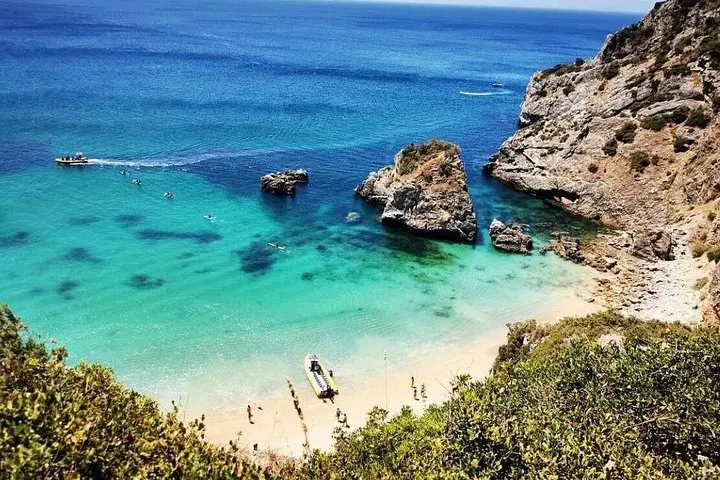
Drive a convertible from Lisbon across winding coastal roads to Arrábida Natural Park, stopping at Miradouros, a seaside sanctuary and the secluded Praia do Ribeiro do Cavalo. Expect scenic lookouts, a short hike to a hidden beach, and a final cup of coffee atop Forte de São Filipe.
Drive a convertible from Lisbon across winding coastal roads to Arrábida Natural Park, stopping at Miradouros, a seaside sanctuary and the secluded Praia do Ribeiro do Cavalo. Expect scenic lookouts, a short hike to a hidden beach, and a final cup of coffee atop Forte de São Filipe.
The engine hums, the convertible roof folds away, and the Atlantic breeze pushes through your shirt as the road climbs out of Lisbon toward the green flank of the Arrábida massif.
Verified experiences and guided adventures in the surrounding area.
Operated by Denys · Lisbon, Lisbon
The engine hums, the convertible roof folds away, and the Atlantic breeze pushes through your shirt as the road climbs out of Lisbon toward the green flank of the Arrábida massif.
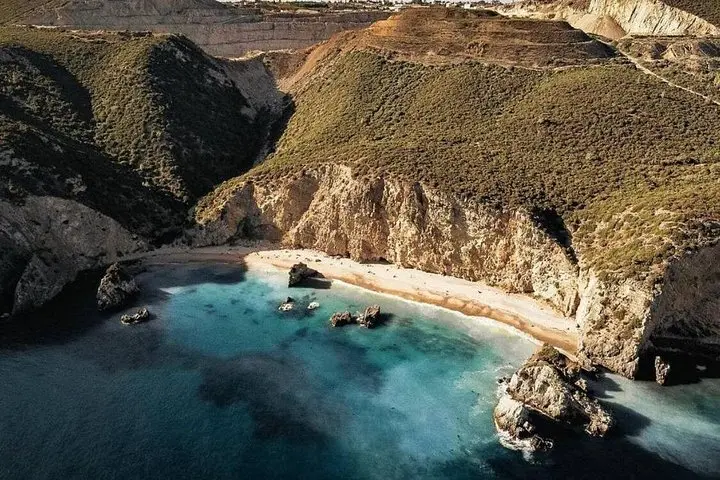
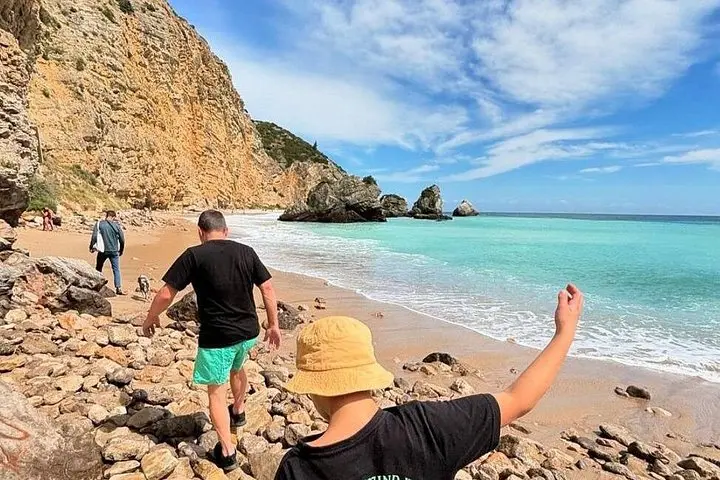
You’ll drive serrated coastal roads with the sea flashing at every bend, pause under wind-bleached pines at Miradouro do Portinho da Arrábida, and descend a steep track to the small, sheltered Praia do Ribeiro do Cavalo where cliffs hold the surf like watchful hands. The day moves between coastal lookouts, a short walk at the Santuário do Cabo Espichel and a photo stop at Herdade do Cabeço da Flauta, a surprising stretch of red-orange sand and tall trees.
Geologically, Arrábida is a limestone block pushed up against the Tagus estuary; cliffs and hidden coves were carved by millennia of waves and fractures. Culturally the route threads fishing towns—Sesimbra and Setúbal—where seafood traditions like choco frito speak to generations who read the currents. Forte de São Filipe, a 16th-century coastal fort, closes the loop with panoramic harbor views.
Practical notes: the full trip runs about 7–8 hours with roughly 25-minute descents to the beach and a short but uneven trail; moderate fitness required. Wear sturdy shoes for the Ribeiro do Cavalo path, bring plenty of water and sun protection, and expect narrow, serpentine roads—top-down driving is thrilling but exposed. Cell service is patchy on the cliffs; pack a light wind layer and a small dry bag for swim gear. If you prefer less walking, ask to adjust stops; otherwise, the convertible route is a compact, sensory way to experience southern Lisbon’s coastline.
The trail is roughly a 25-minute descent (and 25 minutes back) on uneven, sometimes steep terrain—allow extra time for stops and returning up the slope.
Yes, the water is clear and suitable for swimming in calm conditions, but there are no lifeguards—check sea conditions and avoid strong surf days.
Yes, but expect spray and wind on exposed stretches; bring layers and secure loose items to prevent them from blowing out of the car.
Facilities are limited at secluded beaches; you’ll find cafés near Forte de São Filipe and in Sesimbra/Setúbal—carry supplies for the beach stop.
Denys operates guided outdoor trips and adventures with an emphasis on safety, stewardship, and memorable experiences.

The engine hums, the convertible roof folds away, and the Atlantic breeze pushes through your shirt as the road climbs out of Lisbon toward the green flank of the Arrábida massif.
The engine hums, the convertible roof folds away, and the Atlantic breeze pushes through your shirt as the road climbs out of Lisbon toward the green flank of the Arrábida massif.
You’ll drive serrated coastal roads with the sea flashing at every bend, pause under wind-bleached pines at Miradouro do Portinho da Arrábida, and descend a steep track to the small, sheltered Praia do Ribeiro do Cavalo where cliffs hold the surf like watchful hands. The day moves between coastal lookouts, a short walk at the Santuário do Cabo Espichel and a photo stop at Herdade do Cabeço da Flauta, a surprising stretch of red-orange sand and tall trees.
Geologically, Arrábida is a limestone block pushed up against the Tagus estuary; cliffs and hidden coves were carved by millennia of waves and fractures. Culturally the route threads fishing towns—Sesimbra and Setúbal—where seafood traditions like choco frito speak to generations who read the currents. Forte de São Filipe, a 16th-century coastal fort, closes the loop with panoramic harbor views.
Practical notes: the full trip runs about 7–8 hours with roughly 25-minute descents to the beach and a short but uneven trail; moderate fitness required. Wear sturdy shoes for the Ribeiro do Cavalo path, bring plenty of water and sun protection, and expect narrow, serpentine roads—top-down driving is thrilling but exposed. Cell service is patchy on the cliffs; pack a light wind layer and a small dry bag for swim gear. If you prefer less walking, ask to adjust stops; otherwise, the convertible route is a compact, sensory way to experience southern Lisbon’s coastline.