THE ADVENTURE COLLECTIVE® · Independent discovery and booking for outdoor travel

Walk a 20-acre cacao farm in Puerto Rico, taste cacao straight from the pod and learn bean-to-bar methods on a two-hour guided tour. Ideal for curious food travelers and outdoor-minded visitors.
Walk a 20-acre cacao farm in Puerto Rico, taste cacao straight from the pod and learn bean-to-bar methods on a two-hour guided tour. Ideal for curious food travelers and outdoor-minded visitors.
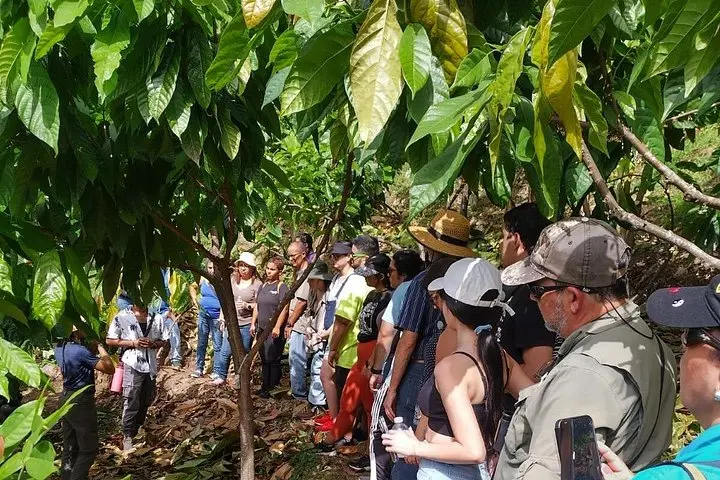
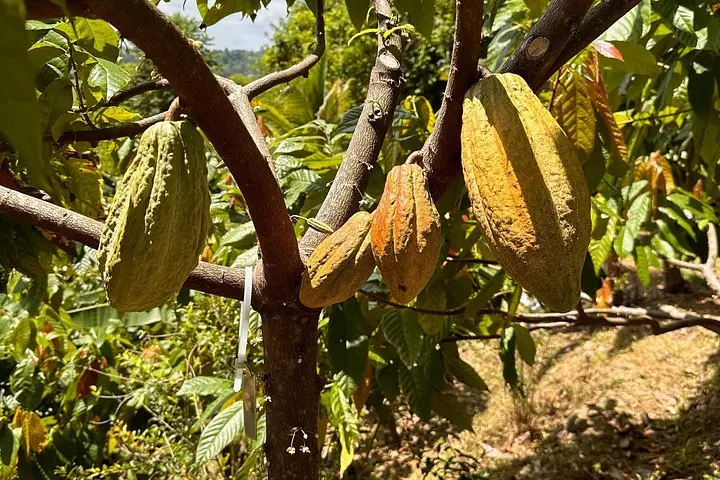
A warm, humid breeze moves through low-hanging cacao pods as visitors step onto a hillside path edged with banana and coffee plants. The 20-acre farm unfurls in terraces, and for two hours guests follow prepared contour walkways where soil, shade trees and the cacao canopy interact like gears in a machine. Guides move easily among the rows—pointing out flowers, swollen pods and the white mucilage that protects the beans—while the scent of green chocolate and damp earth fills the air.
Verified experiences and guided adventures in the surrounding area.
Operated by Cacao Farm Finca La Providencia · San Juan, Puerto Rico
A warm, humid breeze moves through low-hanging cacao pods as visitors step onto a hillside path edged with banana and coffee plants. The 20-acre farm unfurls in terraces, and for two hours guests follow prepared contour walkways where soil, shade trees and the cacao canopy interact like gears in a machine. Guides move easily among the rows—pointing out flowers, swollen pods and the white mucilage that protects the beans—while the scent of green chocolate and damp earth fills the air.
Cacao has roots in pre-Columbian Caribbean agriculture and on many Puerto Rican farms recent generations have revived small-scale, single-origin production. Geologically the farm sits on Puerto Rico’s interior hills, where shallow slopes and rich volcanic-alluvial soils suit shade-grown cacao; the property’s contour farming reduces erosion and keeps runoff from rushing downhill.
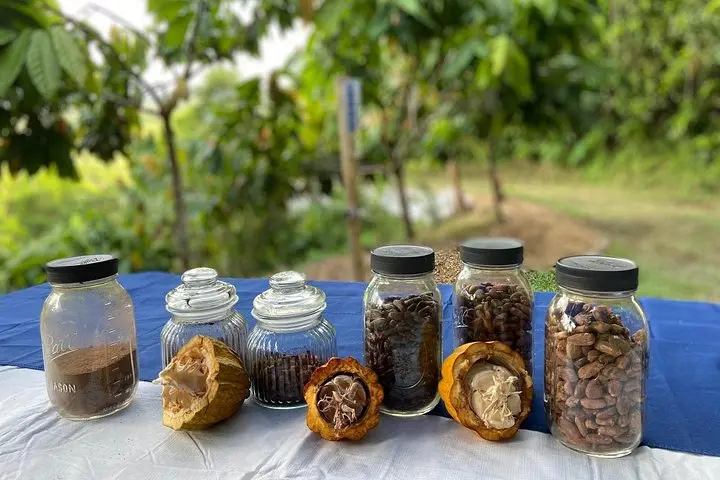
Culturally the tour connects agriculture and craft: guests watch a live harvest, learn about worm tea and organic composting, and sample cacao fruit straight from the tree. Tastings include cacao-husk tea, hot chocolate and single-source dark bars (65% and 75%), plus snacks and bottled water provided.
Practical guidance: expect 1–2 miles of walking over modest slopes and stairs—moderate fitness helps. Wear closed-toe shoes with grip, bring sun protection and a refillable bottle, and time visits for morning or late afternoon to avoid midday heat. Note medical advisories: not recommended for pregnant visitors or those with serious spinal or heart issues. Bean-to-bar bars are available for purchase on-site for a simple, tactile souvenir.
The experience is about 2–2.5 hours with roughly 1–2 miles of walking on prepared hillside paths and modest elevation changes.
Yes—guests taste cacao fruit, cacao-husk tea, hot chocolate, and single-origin dark chocolate (including 65% and 75% samples); bottled water and snacks are provided.
Children who can walk modest distances will enjoy it; the farm has slopes and steps, so it’s not ideal for those with significant mobility limitations or serious spinal conditions.
Yes, bean-to-bar single-origin bars are available for purchase at the farm as a takeaway souvenir.
Cacao Farm Finca La Providencia operates guided outdoor trips and adventures with an emphasis on safety, stewardship, and memorable experiences.
A warm, humid breeze moves through low-hanging cacao pods as visitors step onto a hillside path edged with banana and coffee plants. The 20-acre farm unfurls in terraces, and for two hours guests follow prepared contour walkways where soil, shade trees and the cacao canopy interact like gears in a machine. Guides move easily among the rows—pointing out flowers, swollen pods and the white mucilage that protects the beans—while the scent of green chocolate and damp earth fills the air.
A warm, humid breeze moves through low-hanging cacao pods as visitors step onto a hillside path edged with banana and coffee plants. The 20-acre farm unfurls in terraces, and for two hours guests follow prepared contour walkways where soil, shade trees and the cacao canopy interact like gears in a machine. Guides move easily among the rows—pointing out flowers, swollen pods and the white mucilage that protects the beans—while the scent of green chocolate and damp earth fills the air.
Cacao has roots in pre-Columbian Caribbean agriculture and on many Puerto Rican farms recent generations have revived small-scale, single-origin production. Geologically the farm sits on Puerto Rico’s interior hills, where shallow slopes and rich volcanic-alluvial soils suit shade-grown cacao; the property’s contour farming reduces erosion and keeps runoff from rushing downhill.
Culturally the tour connects agriculture and craft: guests watch a live harvest, learn about worm tea and organic composting, and sample cacao fruit straight from the tree. Tastings include cacao-husk tea, hot chocolate and single-source dark bars (65% and 75%), plus snacks and bottled water provided.
Practical guidance: expect 1–2 miles of walking over modest slopes and stairs—moderate fitness helps. Wear closed-toe shoes with grip, bring sun protection and a refillable bottle, and time visits for morning or late afternoon to avoid midday heat. Note medical advisories: not recommended for pregnant visitors or those with serious spinal or heart issues. Bean-to-bar bars are available for purchase on-site for a simple, tactile souvenir.