THE ADVENTURE COLLECTIVE® · Independent discovery and booking for outdoor travel

Pedal the Cádiz peninsula on a focused two-hour guided ride that links the cathedral, La Caleta beach and city forts. Expect flat terrain, cobbled streets, and local stories peppered with history.
Pedal the Cádiz peninsula on a focused two-hour guided ride that links the cathedral, La Caleta beach and city forts. Expect flat terrain, cobbled streets, and local stories peppered with history.
You roll off a quiet plaza and the Atlantic wind picks up the ribbon of your jacket, nudging you toward the sea. The peninsula of Cádiz opens like a low-lying promontory, its streets folding into squares and seawalls where the city meets the water. In two hours a knowledgeable guide will steer you through baroque façades, seaside promenades and compact neighborhoods that still smell of fried fish and salt.
Verified experiences and guided adventures in the surrounding area.
Operated by Pancho Tours · Cádiz, Andalusia
You roll off a quiet plaza and the Atlantic wind picks up the ribbon of your jacket, nudging you toward the sea. The peninsula of Cádiz opens like a low-lying promontory, its streets folding into squares and seawalls where the city meets the water. In two hours a knowledgeable guide will steer you through baroque façades, seaside promenades and compact neighborhoods that still smell of fried fish and salt.
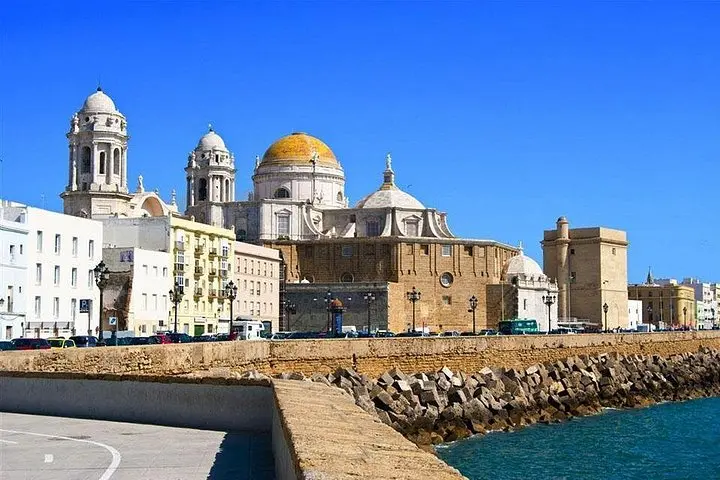
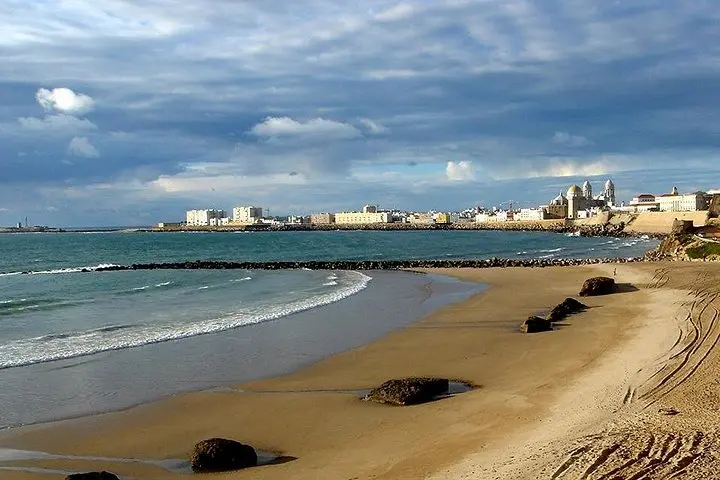
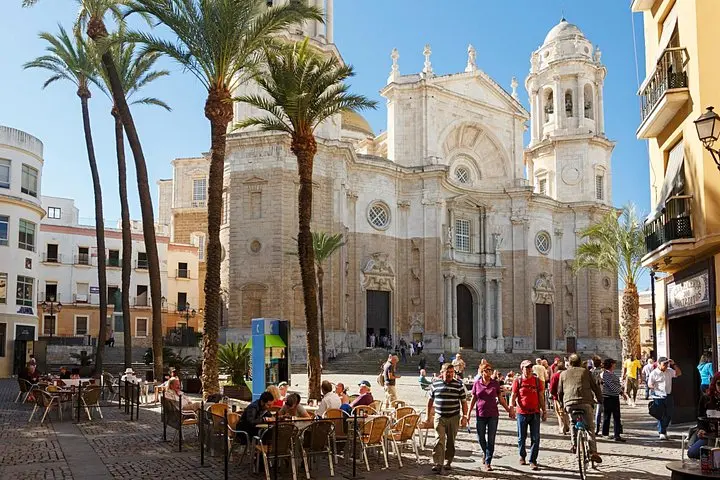
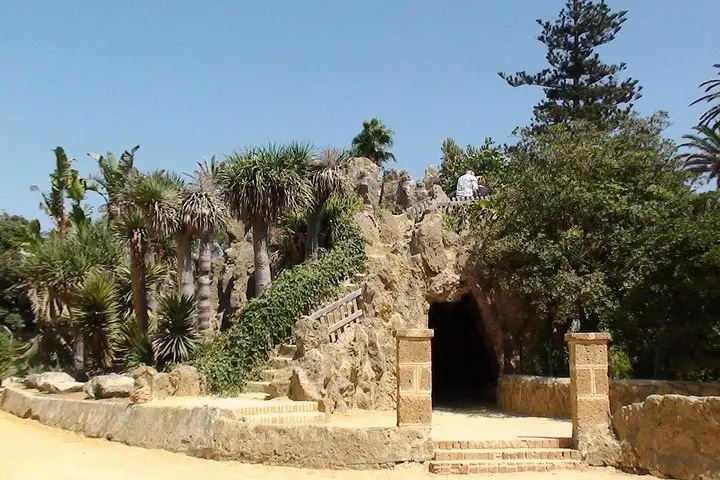
Cádiz is one of Western Europe’s oldest ports — Phoenician, Roman and later Spanish naval power left layers of fortifications and plazas. Geologically the city sits on sand and Quaternary deposits; expect cobbled lanes, broad promenades atop reclaimed shoreline, and flat terrain with almost no sustained climbs. Riders pause at landmarks such as the 18th‑century cathedral begun in 1722, the Gran Teatro Falla, Genovés Park, La Caleta beach and the small islet crowned by Castillo de San Sebastián.
Culturally you’ll pass through La Viña, where tapas bars and Carnival lore give the route a lively pulse; guides often weave in local anecdotes and music history. The light off the Atlantic can be blinding; the sea seems to push you forward along the coast.
Practically: the ride covers roughly 8–10 km on mostly flat, mixed pavement and historic cobbles, suitable for anyone with basic cycling skill. Bikes and helmets are provided and the tour is wheelchair‑accessible in parts. Bring water, sunscreen and shoes that handle short stretches of uneven stone. Aim for morning or late afternoon to avoid peak sun and traffic.
The tour starts and ends at the same central meeting point in Cádiz’s historic center; exact location is confirmed at booking.
Yes for older children with basic cycling skills; the pace is moderate and guides adapt to the group, but parents should assess bike handling on cobbles.
Yes—bike rental and helmets are included; you can also bring your own helmet if preferred.
Tours are often operated by multilingual guides; confirm language availability when booking.
Pancho Tours operates guided outdoor trips and adventures with an emphasis on safety, stewardship, and memorable experiences.
You roll off a quiet plaza and the Atlantic wind picks up the ribbon of your jacket, nudging you toward the sea. The peninsula of Cádiz opens like a low-lying promontory, its streets folding into squares and seawalls where the city meets the water. In two hours a knowledgeable guide will steer you through baroque façades, seaside promenades and compact neighborhoods that still smell of fried fish and salt.
You roll off a quiet plaza and the Atlantic wind picks up the ribbon of your jacket, nudging you toward the sea. The peninsula of Cádiz opens like a low-lying promontory, its streets folding into squares and seawalls where the city meets the water. In two hours a knowledgeable guide will steer you through baroque façades, seaside promenades and compact neighborhoods that still smell of fried fish and salt.
Cádiz is one of Western Europe’s oldest ports — Phoenician, Roman and later Spanish naval power left layers of fortifications and plazas. Geologically the city sits on sand and Quaternary deposits; expect cobbled lanes, broad promenades atop reclaimed shoreline, and flat terrain with almost no sustained climbs. Riders pause at landmarks such as the 18th‑century cathedral begun in 1722, the Gran Teatro Falla, Genovés Park, La Caleta beach and the small islet crowned by Castillo de San Sebastián.
Culturally you’ll pass through La Viña, where tapas bars and Carnival lore give the route a lively pulse; guides often weave in local anecdotes and music history. The light off the Atlantic can be blinding; the sea seems to push you forward along the coast.
Practically: the ride covers roughly 8–10 km on mostly flat, mixed pavement and historic cobbles, suitable for anyone with basic cycling skill. Bikes and helmets are provided and the tour is wheelchair‑accessible in parts. Bring water, sunscreen and shoes that handle short stretches of uneven stone. Aim for morning or late afternoon to avoid peak sun and traffic.