THE ADVENTURE COLLECTIVE® · Independent discovery and booking for outdoor travel

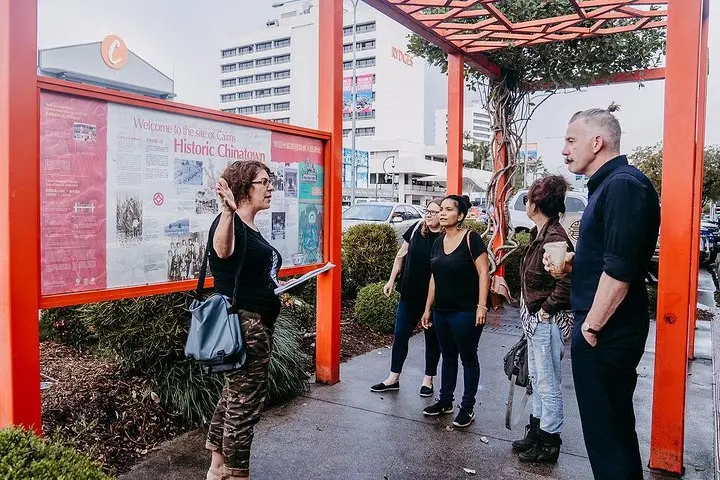
Walk 90 minutes through Cairns' central streets to uncover stories from Indigenous meeting places to WWII and the Chinese merchants who shaped Chinatown. This accessible, small-group tour links civic architecture and public art to the city's coastal and rainforest setting.
Walk 90 minutes through Cairns' central streets to uncover stories from Indigenous meeting places to WWII and the Chinese merchants who shaped Chinatown. This accessible, small-group tour links civic architecture and public art to the city's coastal and rainforest setting.
Under the palms outside Cairns Museum, the group's chatter folds into the wider city noise and a guide's voice draws a line from the Coral Sea to the Great Dividing Range.
Verified experiences and guided adventures in the surrounding area.
Operated by Cairns Urban Walking Tours · Cairns, Queensland
Under the palms outside Cairns Museum, the group's chatter folds into the wider city noise and a guide's voice draws a line from the Coral Sea to the Great Dividing Range.
Over ninety minutes the walk threads Shields and Lake streets, pauses at Chinatown laneways, inspects colonial facades and public art, and stands by the war memorials where the city’s role in World War II is laid out. The Coral Sea seems to call from the Esplanade, daring walkers to remember why Cairns was a maritime gateway long before tourism took hold.
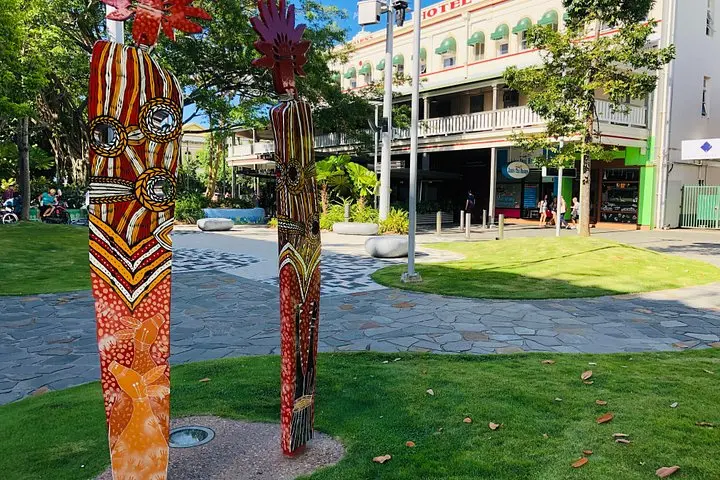
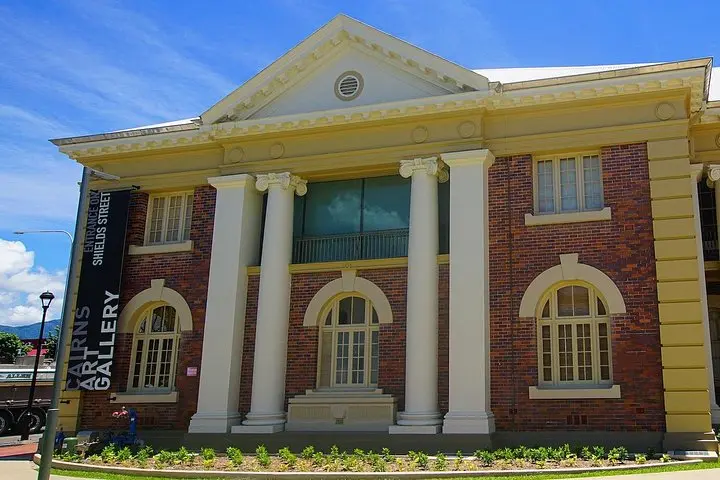
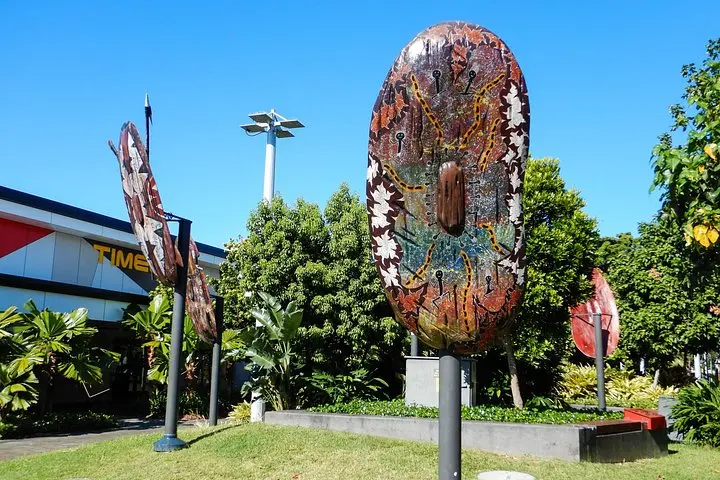
Geology and climate shaped the place: a low coastal plain backed by rugged ranges and flushed by monsoon seasonality, giving rise to trade, pearling, gold rush traffic and multiethnic settlement. Cultural layers are visible in the Bolands Centre's telltale frontage, the School of Arts, and in Paul Bong’s Shields Street artwork that marks both Indigenous and settler histories.
The tour balances archival detail with local memory—stories of hotels, dance halls, and the Chinese merchants who made Grafton Street a commercial heart. Expect short stops, readable plaques, and a narrative that ties city streets to nearby reef and rainforest World Heritage sites.
Practical guidance: the route is flat and wheelchair accessible but you should wear sun protection, carry water and a light rain jacket in the wet months. Arrive 10 minutes early at the museum entrance by Evoburger (corner of Shields and Lake). Groups are kept small for questions; photography is welcomed but be respectful at memorials. This walk is ideal as a context-setting primer before heading to the reef or hinterland.
Meet in front of Cairns Museum near Evoburger on the Shields Street side (corner of Shields and Lake Streets); arrive 10 minutes early.
Yes; the itinerary and surfaces are wheelchair accessible and strollers are accommodated—notify the operator of special requirements at booking.
Tours can be canceled for bad weather or insufficient travelers; check the operator’s 24‑hour cancellation policy for refunds and rescheduling.
Mobile or printed tickets are accepted; bring one ticket per booking and present it to the guide on arrival.
Cairns Urban Walking Tours operates guided outdoor trips and adventures with an emphasis on safety, stewardship, and memorable experiences.
Under the palms outside Cairns Museum, the group's chatter folds into the wider city noise and a guide's voice draws a line from the Coral Sea to the Great Dividing Range.
Under the palms outside Cairns Museum, the group's chatter folds into the wider city noise and a guide's voice draws a line from the Coral Sea to the Great Dividing Range.
Over ninety minutes the walk threads Shields and Lake streets, pauses at Chinatown laneways, inspects colonial facades and public art, and stands by the war memorials where the city’s role in World War II is laid out. The Coral Sea seems to call from the Esplanade, daring walkers to remember why Cairns was a maritime gateway long before tourism took hold.
Geology and climate shaped the place: a low coastal plain backed by rugged ranges and flushed by monsoon seasonality, giving rise to trade, pearling, gold rush traffic and multiethnic settlement. Cultural layers are visible in the Bolands Centre's telltale frontage, the School of Arts, and in Paul Bong’s Shields Street artwork that marks both Indigenous and settler histories.
The tour balances archival detail with local memory—stories of hotels, dance halls, and the Chinese merchants who made Grafton Street a commercial heart. Expect short stops, readable plaques, and a narrative that ties city streets to nearby reef and rainforest World Heritage sites.
Practical guidance: the route is flat and wheelchair accessible but you should wear sun protection, carry water and a light rain jacket in the wet months. Arrive 10 minutes early at the museum entrance by Evoburger (corner of Shields and Lake). Groups are kept small for questions; photography is welcomed but be respectful at memorials. This walk is ideal as a context-setting primer before heading to the reef or hinterland.