THE ADVENTURE COLLECTIVE® · Independent discovery and booking for outdoor travel

See Cairo through a different lens: a felucca on the Nile, illuminated Ottoman domes at the Citadel, and lantern-lit alleys of Khan El Khalili. This private 4–5 hour night tour pairs historical insight with local color and easy walking.
See Cairo through a different lens: a felucca on the Nile, illuminated Ottoman domes at the Citadel, and lantern-lit alleys of Khan El Khalili. This private 4–5 hour night tour pairs historical insight with local color and easy walking.
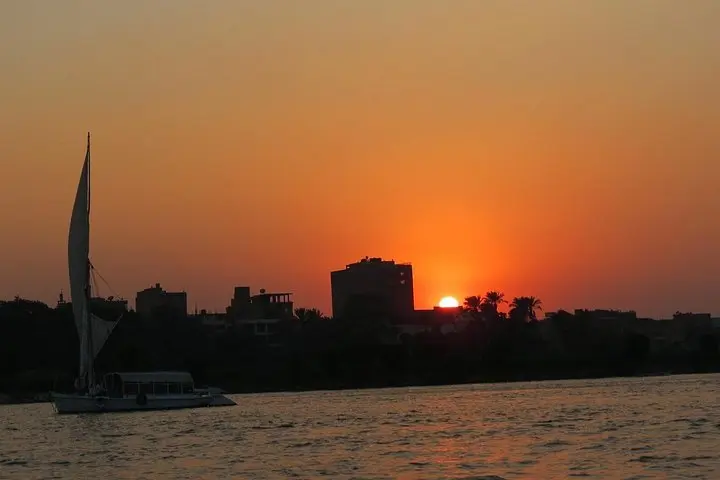
You begin on the dark glass of the Nile, a wooden felucca cutting a gentle wake as Cairo's lights ripple and reform across the water. The air smells faintly of river and spices; the city that feels chaotic by day becomes a stitched sequence of lit monuments and slow conversation.
Verified experiences and guided adventures in the surrounding area.
Operated by Your Egypt Tours · Cairo, Cairo Governorate
You begin on the dark glass of the Nile, a wooden felucca cutting a gentle wake as Cairo's lights ripple and reform across the water. The air smells faintly of river and spices; the city that feels chaotic by day becomes a stitched sequence of lit monuments and slow conversation.
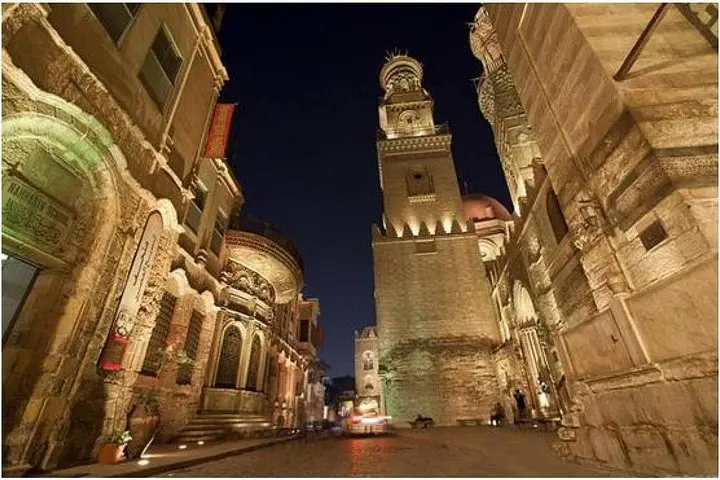
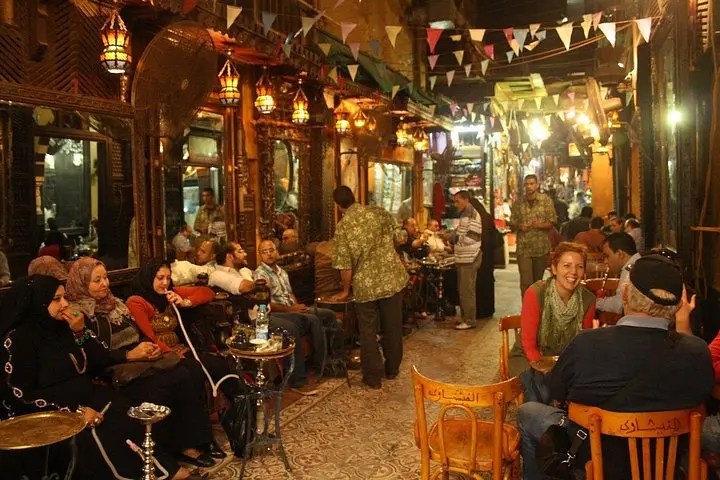
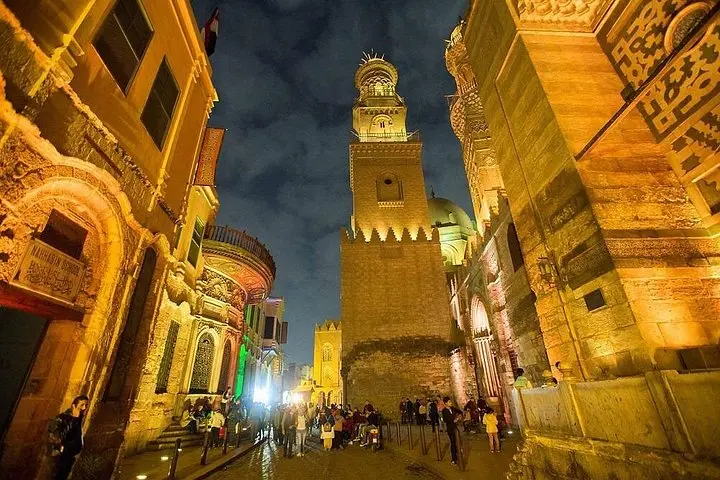
The route threads modern history and medieval urban fabric: a drive past Tahrir Square, where 20th- and 21st-century politics reshaped the nation; a slow felucca ride that opens a new, quieter view of the riverbanks; then to the Citadel, where Muhammad Ali Mosque glows over Cairo from 19th-century Ottoman stone. After the Citadel, Al-Muizz Street becomes an open-air museum of Fatimid and Mamluk architecture—gates, carved wood mashrabiya, and centuries-old shops—ending in Khan El Khalili, whose lantern-lit alleys have traded goods since the 14th century.
Geology here is subtle: the Nile's alluvial plain laid the foundation for millennia of settlement, and the Cairo plateau offers vantage points where the river and the city meet. Cultural textures are immediate—coffeehouse conversation at El Fishawy, vendors arranging spices, and the guide's local stories.
Practical guidance: the tour lasts about 4–5 hours with hotel pickup and AC transport between stops. Expect several short walks on uneven historic pavement and an hour on a felucca—bring comfortable shoes, a light jacket for the breeze on the river, and a charged camera. Nighttime in Cairo is cooler and safer with a guide; carry small change for tips and souvenirs. This is a low-strain, high-context way to see Cairo’s monuments when their lights change the city’s rhythm.
The private evening tour runs approximately 4–5 hours, including hotel pickup and return.
Yes—an hour-long felucca (sailboat) ride on the Nile is part of the itinerary.
The tour is labeled easy and suitable for most fitness levels, but there are short walks on uneven surfaces; contact the operator about mobility accommodations.
The itinerary notes admission is included for specific stops; confirm with the provider for any optional or additional sites.
Your Egypt Tours operates guided outdoor trips and adventures with an emphasis on safety, stewardship, and memorable experiences.
You begin on the dark glass of the Nile, a wooden felucca cutting a gentle wake as Cairo's lights ripple and reform across the water. The air smells faintly of river and spices; the city that feels chaotic by day becomes a stitched sequence of lit monuments and slow conversation.
You begin on the dark glass of the Nile, a wooden felucca cutting a gentle wake as Cairo's lights ripple and reform across the water. The air smells faintly of river and spices; the city that feels chaotic by day becomes a stitched sequence of lit monuments and slow conversation.
The route threads modern history and medieval urban fabric: a drive past Tahrir Square, where 20th- and 21st-century politics reshaped the nation; a slow felucca ride that opens a new, quieter view of the riverbanks; then to the Citadel, where Muhammad Ali Mosque glows over Cairo from 19th-century Ottoman stone. After the Citadel, Al-Muizz Street becomes an open-air museum of Fatimid and Mamluk architecture—gates, carved wood mashrabiya, and centuries-old shops—ending in Khan El Khalili, whose lantern-lit alleys have traded goods since the 14th century.
Geology here is subtle: the Nile's alluvial plain laid the foundation for millennia of settlement, and the Cairo plateau offers vantage points where the river and the city meet. Cultural textures are immediate—coffeehouse conversation at El Fishawy, vendors arranging spices, and the guide's local stories.
Practical guidance: the tour lasts about 4–5 hours with hotel pickup and AC transport between stops. Expect several short walks on uneven historic pavement and an hour on a felucca—bring comfortable shoes, a light jacket for the breeze on the river, and a charged camera. Nighttime in Cairo is cooler and safer with a guide; carry small change for tips and souvenirs. This is a low-strain, high-context way to see Cairo’s monuments when their lights change the city’s rhythm.