THE ADVENTURE COLLECTIVE® · Independent discovery and booking for outdoor travel

Spend a full day moving from the wind-swept Giza Plateau to the Egyptian Museum and the busy lanes of Khan El-Khalili, finishing with a tranquil felucca on the Nile. This guided tour packs Cairo’s iconic highlights into a single, well-paced day.
Spend a full day moving from the wind-swept Giza Plateau to the Egyptian Museum and the busy lanes of Khan El-Khalili, finishing with a tranquil felucca on the Nile. This guided tour packs Cairo’s iconic highlights into a single, well-paced day.
You arrive at first light to wind and dust that push across the limestone plateau, the Great Pyramid dominating the skyline like a carved horizon. The air smells faintly of sand and exhaust; vendors call softly in the distance. Walking between the three pyramids and up toward the Sphinx, you feel the scale of structures built more than 4,500 years ago.
Verified experiences and guided adventures in the surrounding area.
Operated by Egypt Sunny Tours · Giza, Giza Governorate
You arrive at first light to wind and dust that push across the limestone plateau, the Great Pyramid dominating the skyline like a carved horizon. The air smells faintly of sand and exhaust; vendors call softly in the distance. Walking between the three pyramids and up toward the Sphinx, you feel the scale of structures built more than 4,500 years ago.
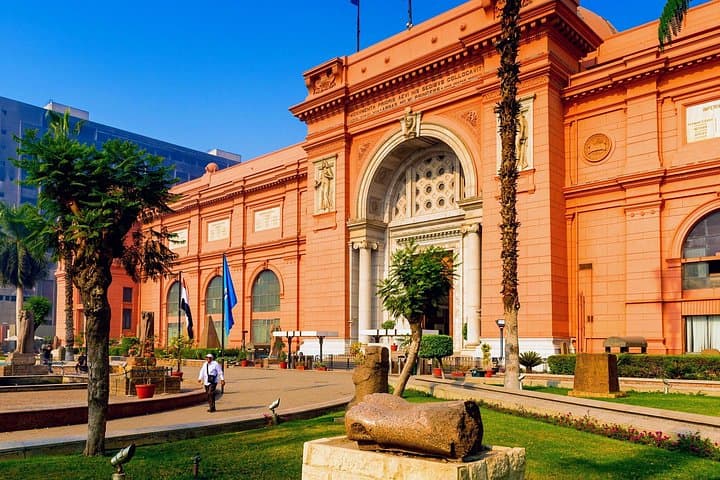
The Giza Plateau sits on Upper Egypt limestone that was quarried to build the pyramids; the Great Pyramid of Khufu remains the largest stone structure on Earth. Nearby, the Egyptian Museum in Tahrir Square holds pharaonic collections — most famously Tutankhamun’s funerary goods — that trace the civilization’s political and religious life. Khan El-Khalili’s market grew from a medieval caravan bazaar and today mixes spices, metalsmiths, and street cafés where locals smoke shisha and sip strong tea. A late-afternoon felucca ride on the Nile offers a calmer perspective, the river nudging the cityscape as dusk falls.
Expect mostly flat walking on paved and sandy surfaces totaling roughly 2–3 km on the plateau with minimal elevation change; the museum visit is typically two hours, the bazaar another 60–90 minutes. Practicalities matter: bring sun protection, secure your belongings when crowds tighten in alleys, and carry a printed or mobile ID for museum entry. Guided tours streamline logistics and include entrance fees, bottled water, and pickup. Timing your visit for morning light at Giza and a late-afternoon felucca gives the best balance of cooler temperatures and softer photos. This is a day that pairs monumental archaeology with lively urban textures — sensory, historic, and intensely walkable.
Yes—this guided tour includes entrance fees for the Giza plateau sites and the Egyptian Museum as listed in the tour inclusions.
Yes, a short felucca sail on the Nile is included, typically later in the day to catch cooler winds and skyline views.
The tour listing indicates wheelchair-accessible options for transportation and many surfaces, but access across the plateau can be limited; check with the operator about specific mobility needs.
Plan roughly 60–90 minutes at Giza (walking between monuments), about two hours at the Egyptian Museum, and 60–90 minutes for Khan El-Khalili, plus transport and a 30–60 minute felucca ride.
Egypt Sunny Tours operates guided outdoor trips and adventures with an emphasis on safety, stewardship, and memorable experiences.



You arrive at first light to wind and dust that push across the limestone plateau, the Great Pyramid dominating the skyline like a carved horizon. The air smells faintly of sand and exhaust; vendors call softly in the distance. Walking between the three pyramids and up toward the Sphinx, you feel the scale of structures built more than 4,500 years ago.
You arrive at first light to wind and dust that push across the limestone plateau, the Great Pyramid dominating the skyline like a carved horizon. The air smells faintly of sand and exhaust; vendors call softly in the distance. Walking between the three pyramids and up toward the Sphinx, you feel the scale of structures built more than 4,500 years ago.
The Giza Plateau sits on Upper Egypt limestone that was quarried to build the pyramids; the Great Pyramid of Khufu remains the largest stone structure on Earth. Nearby, the Egyptian Museum in Tahrir Square holds pharaonic collections — most famously Tutankhamun’s funerary goods — that trace the civilization’s political and religious life. Khan El-Khalili’s market grew from a medieval caravan bazaar and today mixes spices, metalsmiths, and street cafés where locals smoke shisha and sip strong tea. A late-afternoon felucca ride on the Nile offers a calmer perspective, the river nudging the cityscape as dusk falls.
Expect mostly flat walking on paved and sandy surfaces totaling roughly 2–3 km on the plateau with minimal elevation change; the museum visit is typically two hours, the bazaar another 60–90 minutes. Practicalities matter: bring sun protection, secure your belongings when crowds tighten in alleys, and carry a printed or mobile ID for museum entry. Guided tours streamline logistics and include entrance fees, bottled water, and pickup. Timing your visit for morning light at Giza and a late-afternoon felucca gives the best balance of cooler temperatures and softer photos. This is a day that pairs monumental archaeology with lively urban textures — sensory, historic, and intensely walkable.