THE ADVENTURE COLLECTIVE® · Independent discovery and booking for outdoor travel

See Egypt’s foundational sites in a single, well‑paced day: Giza’s pyramids and Sphinx, the Step Pyramid at Saqqara, ancient Memphis, and Dahshur’s Bent and Red Pyramids. This private tour pairs efficient transfers with guided context to make the most of eight hours.
See Egypt’s foundational sites in a single, well‑paced day: Giza’s pyramids and Sphinx, the Step Pyramid at Saqqara, ancient Memphis, and Dahshur’s Bent and Red Pyramids. This private tour pairs efficient transfers with guided context to make the most of eight hours.
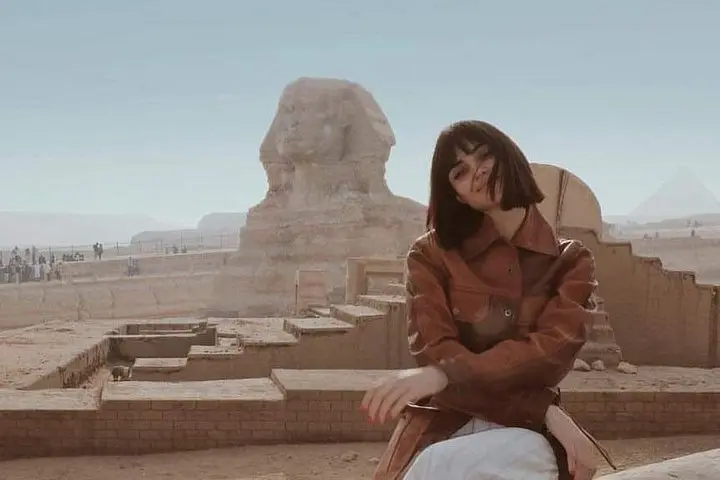
You step out of the air‑conditioned van onto wind‑pressed sand and the horizon rearranges itself into angles of stone: three pyramids rising like timeworn peaks, the Sphinx watching on. The Giza Plateau unfolds in broad light; tourists drift like beads around tomb entrances while limestone dust clings to the soles of your shoes.
Verified experiences and guided adventures in the surrounding area.
Operated by This Is Egypt · Cairo, Cairo Governorate
You step out of the air‑conditioned van onto wind‑pressed sand and the horizon rearranges itself into angles of stone: three pyramids rising like timeworn peaks, the Sphinx watching on. The Giza Plateau unfolds in broad light; tourists drift like beads around tomb entrances while limestone dust clings to the soles of your shoes.
This full‑day route threads together Egypt’s formative monuments. Giza’s Great Pyramid (Khufu) dominates the skyline; Saqqara’s Step Pyramid, earlier and rawer, reveals the experiment of stacked mastabas that birthed true pyramid architecture. Memphis, once the nation’s administrative heart, yields colossal statuary and the polished alabaster sphinx; Dahshur presents the Bent and Red Pyramids—structural experiments showing builders adapting to settlement stresses and Nile‑fed economies.
Geology here is as much actor as backdrop: Eocene limestone and compacted sands preserve both tombs and footprints of human ambition. Local guides link inscriptions to dynastic shifts, explain burial chemistry, and point to artisan neighborhoods that still craft alabaster and papyrus.
Practical guidance: plan for an eight‑hour day with long periods of standing and uneven surfaces. Early starts or late afternoons thin the crowds and ease heat stress. Bring sun protection, a refillable water bottle, and shoes with good traction: some pathways are loose sand mixed with ancient stone. Expect basic restaurant lunch, accessible restrooms at major sites, and a private vehicle for transfers—handy for covering the 40 km stretch to Dahshur.
This itinerary is immersive history with practical logistics—ideal for travelers who want the monuments without guesswork.
Yes—this private tour includes entrance fees to Giza pyramids, the Sphinx area, Saqqara, Memphis and Dahshur as described in the itinerary.
Yes—private transfers include pickup and return to hotels within central Cairo areas; confirm your pickup point at booking.
The tour is listed as suitable for all fitness levels, but expect walking and uneven ground; mobility limitations should be communicated in advance for assistance.
Access inside certain pyramids is limited and subject to site rules and ticketing; your guide will advise which interiors are open on the day.
This Is Egypt operates guided outdoor trips and adventures with an emphasis on safety, stewardship, and memorable experiences.


You step out of the air‑conditioned van onto wind‑pressed sand and the horizon rearranges itself into angles of stone: three pyramids rising like timeworn peaks, the Sphinx watching on. The Giza Plateau unfolds in broad light; tourists drift like beads around tomb entrances while limestone dust clings to the soles of your shoes.
You step out of the air‑conditioned van onto wind‑pressed sand and the horizon rearranges itself into angles of stone: three pyramids rising like timeworn peaks, the Sphinx watching on. The Giza Plateau unfolds in broad light; tourists drift like beads around tomb entrances while limestone dust clings to the soles of your shoes.
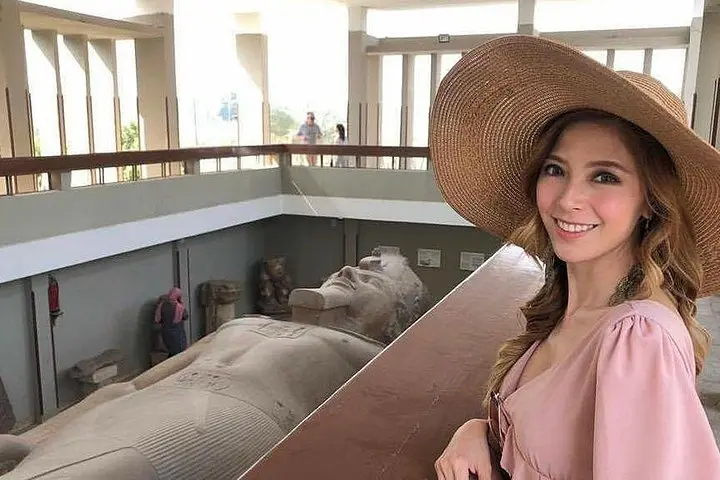
This full‑day route threads together Egypt’s formative monuments. Giza’s Great Pyramid (Khufu) dominates the skyline; Saqqara’s Step Pyramid, earlier and rawer, reveals the experiment of stacked mastabas that birthed true pyramid architecture. Memphis, once the nation’s administrative heart, yields colossal statuary and the polished alabaster sphinx; Dahshur presents the Bent and Red Pyramids—structural experiments showing builders adapting to settlement stresses and Nile‑fed economies.
Geology here is as much actor as backdrop: Eocene limestone and compacted sands preserve both tombs and footprints of human ambition. Local guides link inscriptions to dynastic shifts, explain burial chemistry, and point to artisan neighborhoods that still craft alabaster and papyrus.
Practical guidance: plan for an eight‑hour day with long periods of standing and uneven surfaces. Early starts or late afternoons thin the crowds and ease heat stress. Bring sun protection, a refillable water bottle, and shoes with good traction: some pathways are loose sand mixed with ancient stone. Expect basic restaurant lunch, accessible restrooms at major sites, and a private vehicle for transfers—handy for covering the 40 km stretch to Dahshur.
This itinerary is immersive history with practical logistics—ideal for travelers who want the monuments without guesswork.