THE ADVENTURE COLLECTIVE® · Independent discovery and booking for outdoor travel

Fly from Hurghada to Cairo for a packed, 12-hour cultural circuit that includes the Giza pyramids, the Great Sphinx, and the Grand Egyptian Museum. This day trip pairs quick transfers with expert guiding to maximize time at Egypt’s headline antiquities.
Fly from Hurghada to Cairo for a packed, 12-hour cultural circuit that includes the Giza pyramids, the Great Sphinx, and the Grand Egyptian Museum. This day trip pairs quick transfers with expert guiding to maximize time at Egypt’s headline antiquities.
The plane descends and the city of Cairo opens like a dry, sunlit map — honey-colored buildings, the slow ribbon of the Nile daring you to follow it toward 4,500 years of stone. On this full-day flight from Hurghada, travelers land, trade the Red Sea air for Cairo dust, and move quickly from modern tarmac to the shadow of the Giza plateau, where the pyramids and the Sphinx loom with quiet insistence.
Verified experiences and guided adventures in the surrounding area.
Operated by Hurghada Reisen · Cairo, Cairo Governorate
The plane descends and the city of Cairo opens like a dry, sunlit map — honey-colored buildings, the slow ribbon of the Nile daring you to follow it toward 4,500 years of stone. On this full-day flight from Hurghada, travelers land, trade the Red Sea air for Cairo dust, and move quickly from modern tarmac to the shadow of the Giza plateau, where the pyramids and the Sphinx loom with quiet insistence.
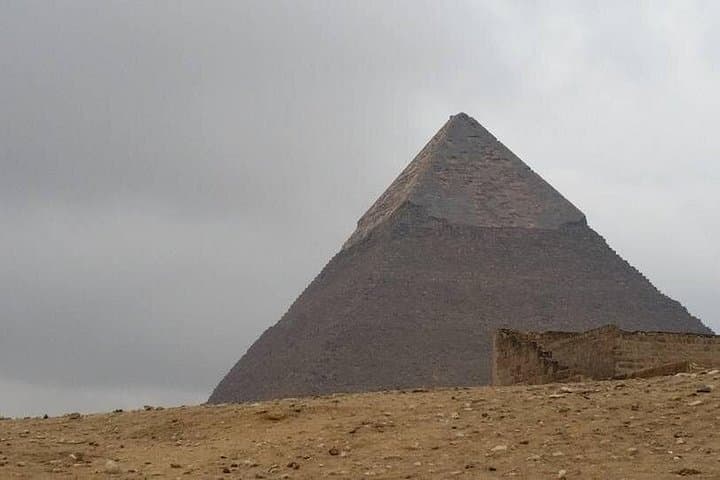
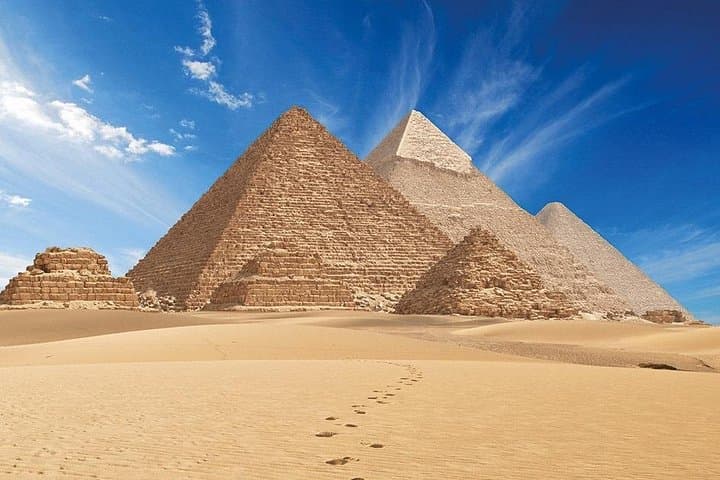
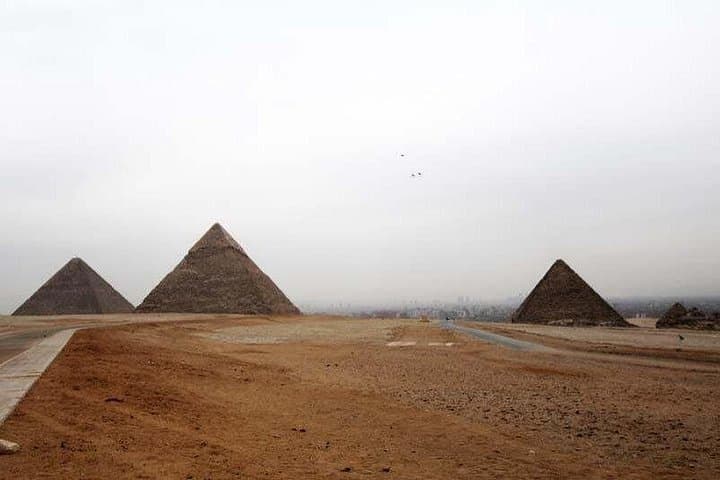
The Great Pyramid — built for Pharaoh Khufu around 2560 BC — still dominates the skyline, a geometric eruption of limestone blocks that once gleamed in white casing. The nearby Sphinx, carved from bedrock, keeps a patient watch over the valley temple and the desert approaches. At the Grand Egyptian Museum (GEM), recent conservation work and climate-controlled galleries reunite fragile funerary objects with the public, including major Tutankhamun pieces newly displayed outside the old museum.
Cairo’s geology is simple: Nile silt and limestone bedrock converging where the river has long supported dense human settlement. Culturally, the day stacks Pharaonic spectacle and modern bustle — a guide’s voice, merchants’ calls in Khan el-Khalili, and the steady flow of local life.
Practical guidance: expect a 12-hour day with airport transfers and guided walking at multiple sites. Wear sturdy shoes for uneven stone and sand, carry water and sun protection, and keep passport and travel documents accessible for flight check-in. Allow time for security and photography queues; tipping small teams helps the local guides and drivers. For a compact, high-impact introduction to ancient Egypt, this itinerary is efficient — bring curiosity and basic stamina for walking and heat.
Yes — a current valid passport is required for the domestic flight and must be provided at booking.
The tour includes museum access and walking at archaeological sites; while transfers are wheelchair-accessible, some uneven ground at Giza may be challenging—check with the operator ahead of booking.
Yes — the itinerary includes lunch, typically at a local restaurant between site visits.
There is usually a short window for shopping; expect 30–60 minutes depending on traffic and timing, so prioritize what you want to see.
Hurghada Reisen operates guided outdoor trips and adventures with an emphasis on safety, stewardship, and memorable experiences.
The plane descends and the city of Cairo opens like a dry, sunlit map — honey-colored buildings, the slow ribbon of the Nile daring you to follow it toward 4,500 years of stone. On this full-day flight from Hurghada, travelers land, trade the Red Sea air for Cairo dust, and move quickly from modern tarmac to the shadow of the Giza plateau, where the pyramids and the Sphinx loom with quiet insistence.
The plane descends and the city of Cairo opens like a dry, sunlit map — honey-colored buildings, the slow ribbon of the Nile daring you to follow it toward 4,500 years of stone. On this full-day flight from Hurghada, travelers land, trade the Red Sea air for Cairo dust, and move quickly from modern tarmac to the shadow of the Giza plateau, where the pyramids and the Sphinx loom with quiet insistence.
The Great Pyramid — built for Pharaoh Khufu around 2560 BC — still dominates the skyline, a geometric eruption of limestone blocks that once gleamed in white casing. The nearby Sphinx, carved from bedrock, keeps a patient watch over the valley temple and the desert approaches. At the Grand Egyptian Museum (GEM), recent conservation work and climate-controlled galleries reunite fragile funerary objects with the public, including major Tutankhamun pieces newly displayed outside the old museum.
Cairo’s geology is simple: Nile silt and limestone bedrock converging where the river has long supported dense human settlement. Culturally, the day stacks Pharaonic spectacle and modern bustle — a guide’s voice, merchants’ calls in Khan el-Khalili, and the steady flow of local life.
Practical guidance: expect a 12-hour day with airport transfers and guided walking at multiple sites. Wear sturdy shoes for uneven stone and sand, carry water and sun protection, and keep passport and travel documents accessible for flight check-in. Allow time for security and photography queues; tipping small teams helps the local guides and drivers. For a compact, high-impact introduction to ancient Egypt, this itinerary is efficient — bring curiosity and basic stamina for walking and heat.