THE ADVENTURE COLLECTIVE® · Independent discovery and booking for outdoor travel

A single-day guided loop through Cairo’s core: world-class antiquities at the Egyptian Museum, the hilltop Citadel and Alabaster Mosque, and the bustling alleys of Khan el-Khalili. This practical guide prepares you for what to expect—terrain, timing, and local tips to get the most from the day.
A single-day guided loop through Cairo’s core: world-class antiquities at the Egyptian Museum, the hilltop Citadel and Alabaster Mosque, and the bustling alleys of Khan el-Khalili. This practical guide prepares you for what to expect—terrain, timing, and local tips to get the most from the day.
You step out into Tahrir Square and the city hits you at once: honking taxis, the heat rising off sandstone façades, and a stray breeze from the Nile that seems to nudge you toward history. This full-day circuit threads indoor treasures and open-air ramparts—first through glass cases heavy with gold, then up to a hilltop Ottoman mosque overlooking sprawl, finishing amid the maze of spices and brass of Khan el-Khalili.
Verified experiences and guided adventures in the surrounding area.
Operated by Egyptravel Tours · Cairo, Cairo Governorate
You step out into Tahrir Square and the city hits you at once: honking taxis, the heat rising off sandstone façades, and a stray breeze from the Nile that seems to nudge you toward history. This full-day circuit threads indoor treasures and open-air ramparts—first through glass cases heavy with gold, then up to a hilltop Ottoman mosque overlooking sprawl, finishing amid the maze of spices and brass of Khan el-Khalili.
The Egyptian Museum at Tahrir houses Pharaonic collections that map millennia of Nile civilization; its galleries trace funerary practice and royal pageantry, most famously the treasures of Tutankhamun. The Citadel of Saladin occupies a strategic rise in the Mokattam hills—its fortifications and terraces were designed to command the city. Khan el-Khalili, founded in the Mamluk era, remains a commercial artery where artisans and traders keep traditional crafts alive.
Expect a mix of interiors and stepped outdoor walking, stair climbs to viewpoints, and narrow, crowded lanes in the bazaar. Guided interpretation will explain archaeological context and Ottoman-era urbanism while pointing out quieter lanes for ceramics and copperwork.
Practical guidance: wear sturdy walking shoes, modest clothing for mosque entry, and carry a reusable water bottle—Cairo sun is direct and unrelenting. Start early to beat afternoon traffic and the hottest hours; lunch is included so plan for a midday pause. Keep small notes for bargaining in Khan el-Khalili and allow time for photography at the Citadel viewpoint—the city’s layers are best read with a steady pace and an alert curiosity.
Yes—entrance fees for the Egyptian Museum, the Citadel, and Muhammad Ali Mosque are included in the tour price.
Yes, non-Muslim visitors may enter the Muhammad Ali Mosque outside prayer times; modest dress and respectful behavior are required.
The tour notes wheelchair accessibility for transportation and many surfaces, but some areas—especially Citadel terraces and bazaar alleys—have steps or uneven ground; check specifics with the operator if mobility is limited.
Tipping is customary in Egypt; budgets of about 50–100 EGP for the guide and 20–50 EGP for the driver per day are common, adjusted for service level.
Egyptravel Tours operates guided outdoor trips and adventures with an emphasis on safety, stewardship, and memorable experiences.
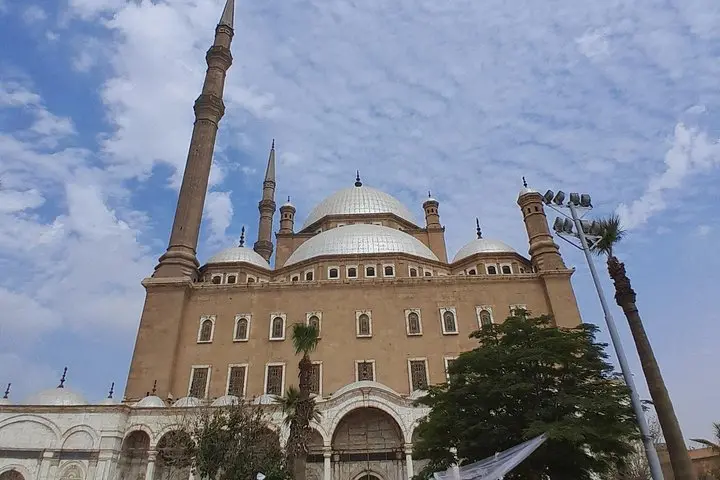
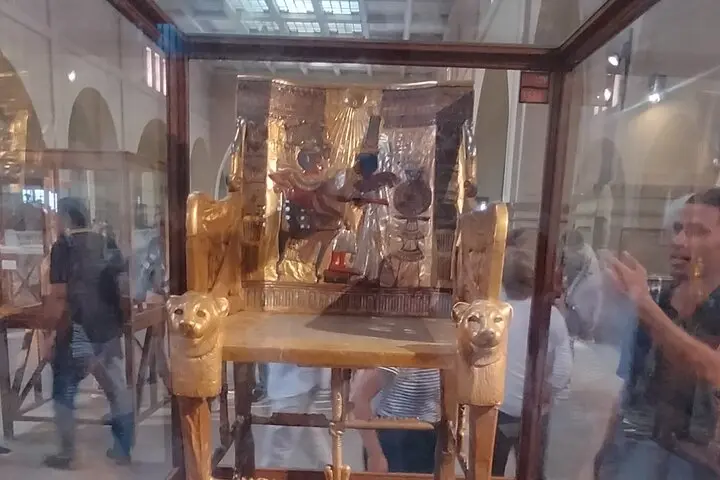
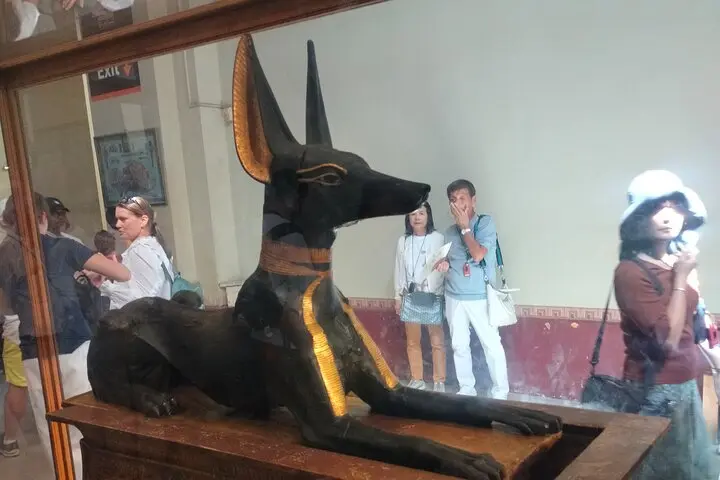
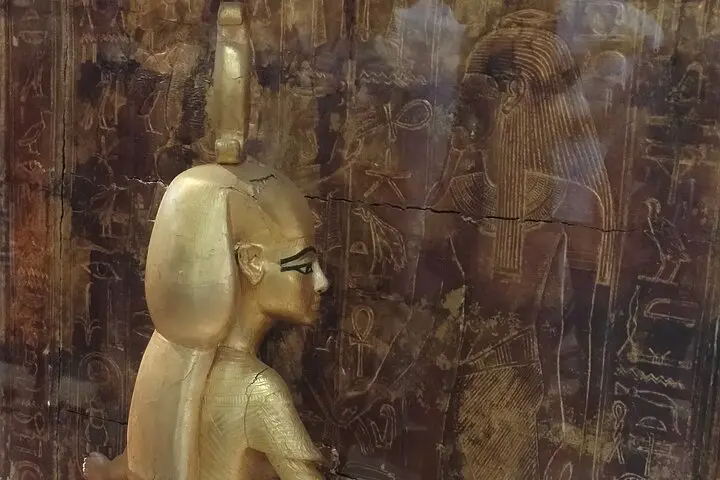
You step out into Tahrir Square and the city hits you at once: honking taxis, the heat rising off sandstone façades, and a stray breeze from the Nile that seems to nudge you toward history. This full-day circuit threads indoor treasures and open-air ramparts—first through glass cases heavy with gold, then up to a hilltop Ottoman mosque overlooking sprawl, finishing amid the maze of spices and brass of Khan el-Khalili.
You step out into Tahrir Square and the city hits you at once: honking taxis, the heat rising off sandstone façades, and a stray breeze from the Nile that seems to nudge you toward history. This full-day circuit threads indoor treasures and open-air ramparts—first through glass cases heavy with gold, then up to a hilltop Ottoman mosque overlooking sprawl, finishing amid the maze of spices and brass of Khan el-Khalili.
The Egyptian Museum at Tahrir houses Pharaonic collections that map millennia of Nile civilization; its galleries trace funerary practice and royal pageantry, most famously the treasures of Tutankhamun. The Citadel of Saladin occupies a strategic rise in the Mokattam hills—its fortifications and terraces were designed to command the city. Khan el-Khalili, founded in the Mamluk era, remains a commercial artery where artisans and traders keep traditional crafts alive.
Expect a mix of interiors and stepped outdoor walking, stair climbs to viewpoints, and narrow, crowded lanes in the bazaar. Guided interpretation will explain archaeological context and Ottoman-era urbanism while pointing out quieter lanes for ceramics and copperwork.
Practical guidance: wear sturdy walking shoes, modest clothing for mosque entry, and carry a reusable water bottle—Cairo sun is direct and unrelenting. Start early to beat afternoon traffic and the hottest hours; lunch is included so plan for a midday pause. Keep small notes for bargaining in Khan el-Khalili and allow time for photography at the Citadel viewpoint—the city’s layers are best read with a steady pace and an alert curiosity.