THE ADVENTURE COLLECTIVE® · Independent discovery and booking for outdoor travel

Spend a full day with a private guide exploring the Giza Plateau’s pyramids and Sphinx, touring the Egyptian Museum’s ancient treasures, and haggling for keepsakes in Khan El Khalili. This practical guide prepares you for terrain, timing, and local customs.
Spend a full day with a private guide exploring the Giza Plateau’s pyramids and Sphinx, touring the Egyptian Museum’s ancient treasures, and haggling for keepsakes in Khan El Khalili. This practical guide prepares you for terrain, timing, and local customs.
You step out of your Cairo hotel before dawn and the city’s flat light gives way to the warm, papery glow of the desert. The driver threads through traffic toward the Giza Plateau; when the pyramids appear on the horizon they feel less like monuments and more like ancient machines holding the memory of a civilization.
Verified experiences and guided adventures in the surrounding area.
Operated by Emo Tours Egypt · Cairo, Cairo Governorate
You step out of your Cairo hotel before dawn and the city’s flat light gives way to the warm, papery glow of the desert. The driver threads through traffic toward the Giza Plateau; when the pyramids appear on the horizon they feel less like monuments and more like ancient machines holding the memory of a civilization.
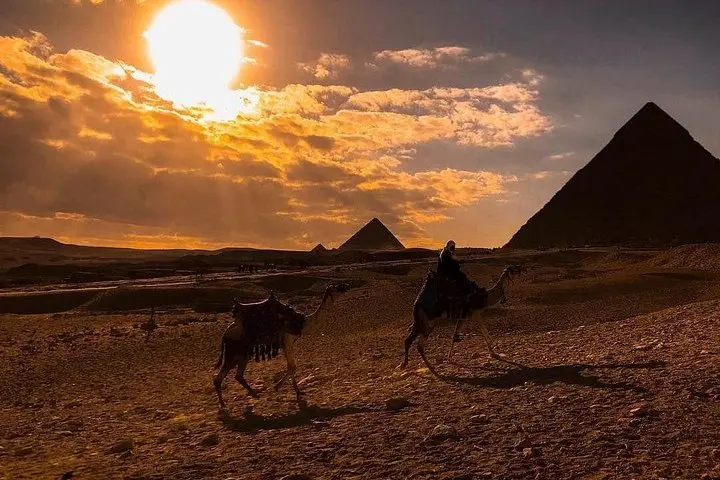
Built during the Old Kingdom (around 2600–2500 BCE), the Great Pyramids—Khufu, Khafre and Menkaure—sit on a limestone platform shaped by the Nile’s long history. The stone faces, worn by sand and time, still read as precise geometry: angled ramps, burial chambers and causeways that connected river and desert life. Nearby the Sphinx watches with a weathered gaze, its missing nose a small human drama against millennia.
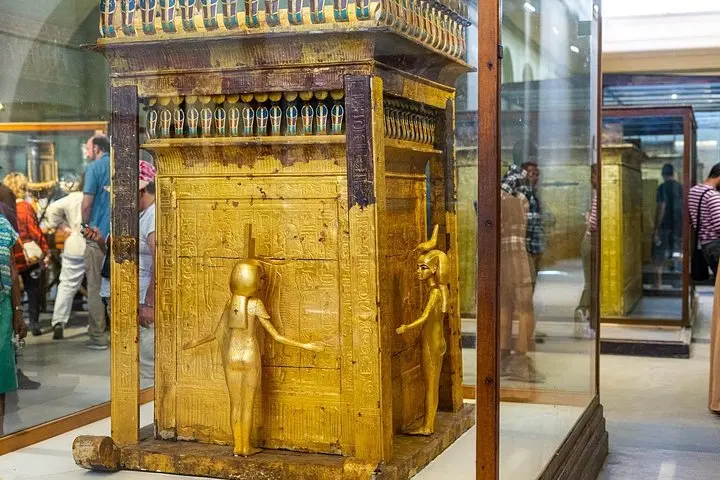
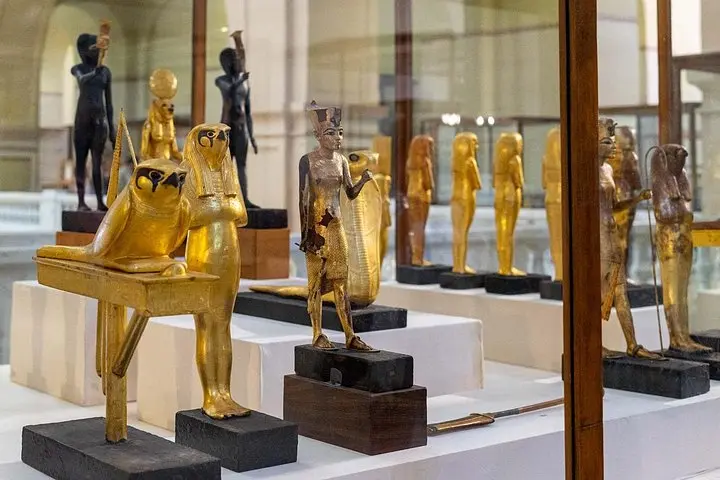
After the plateau, the Egyptian Museum in Tahrir offers a tighter, indoor narrative: gold funerary masks, statuary and artifacts spanning five millennia, including treasures from Tutankhamun’s tomb. The day finishes in Khan El Khalili, Cairo’s working bazaar—spice aromas, brassware and practiced bargaining that reveal living customs more than souvenirs.
Practicalities: expect an 8‑hour day with hotel pickup, roughly 30–60 minutes’ driving depending on traffic. Surfaces at Giza are uneven sand and stone; moderate walking and some climbing over low walls are required. Carry sunscreen, a refillable water bottle, comfortable closed-toe shoes and modest clothing for museum and mosque visits. Allow extra time for traffic and security lines; bring small bills for vendors and tips. This private itinerary balances close-up archaeology with cultural immersion, leaving room for questions to a knowledgeable guide and pauses to absorb the scale of human ambition etched in stone.
This private full-day tour runs about 8 hours and typically includes hotel pickup/drop-off, private A/C transport, bottled water, and the guide; admissions and lunch depend on the option selected.
Entrance to interior chambers varies and may require an additional ticket or timed access; check options when booking and be prepared for low, narrow passages if you go inside.
Children can enjoy the day but supervision is required near ledges and animals; the tour involves uneven walking and some steps, so it’s not recommended for those with significant mobility limitations without prior arrangements.
October–April offers milder temperatures; summers are hot and very sunny—early starts help avoid midday heat and crowds year-round.
Emo Tours Egypt operates guided outdoor trips and adventures with an emphasis on safety, stewardship, and memorable experiences.

You step out of your Cairo hotel before dawn and the city’s flat light gives way to the warm, papery glow of the desert. The driver threads through traffic toward the Giza Plateau; when the pyramids appear on the horizon they feel less like monuments and more like ancient machines holding the memory of a civilization.
You step out of your Cairo hotel before dawn and the city’s flat light gives way to the warm, papery glow of the desert. The driver threads through traffic toward the Giza Plateau; when the pyramids appear on the horizon they feel less like monuments and more like ancient machines holding the memory of a civilization.
Built during the Old Kingdom (around 2600–2500 BCE), the Great Pyramids—Khufu, Khafre and Menkaure—sit on a limestone platform shaped by the Nile’s long history. The stone faces, worn by sand and time, still read as precise geometry: angled ramps, burial chambers and causeways that connected river and desert life. Nearby the Sphinx watches with a weathered gaze, its missing nose a small human drama against millennia.
After the plateau, the Egyptian Museum in Tahrir offers a tighter, indoor narrative: gold funerary masks, statuary and artifacts spanning five millennia, including treasures from Tutankhamun’s tomb. The day finishes in Khan El Khalili, Cairo’s working bazaar—spice aromas, brassware and practiced bargaining that reveal living customs more than souvenirs.
Practicalities: expect an 8‑hour day with hotel pickup, roughly 30–60 minutes’ driving depending on traffic. Surfaces at Giza are uneven sand and stone; moderate walking and some climbing over low walls are required. Carry sunscreen, a refillable water bottle, comfortable closed-toe shoes and modest clothing for museum and mosque visits. Allow extra time for traffic and security lines; bring small bills for vendors and tips. This private itinerary balances close-up archaeology with cultural immersion, leaving room for questions to a knowledgeable guide and pauses to absorb the scale of human ambition etched in stone.