THE ADVENTURE COLLECTIVE® · Independent discovery and booking for outdoor travel

This half‑day Cairo circuit pairs the Egyptian Museum’s ancient treasures with the hilltop Citadel and the bustling Khan al‑Khalili bazaar. Expect 4–4.5 hours of walking, history and market bargains, with practical tips for timing, dress and local etiquette.
This half‑day Cairo circuit pairs the Egyptian Museum’s ancient treasures with the hilltop Citadel and the bustling Khan al‑Khalili bazaar. Expect 4–4.5 hours of walking, history and market bargains, with practical tips for timing, dress and local etiquette.
You step out of the car onto Tahrir Square and the city reasserts itself: honking traffic, vendors calling out, the Nile a low ribbon to the east that seems to pull the neighborhood toward its banks.
Verified experiences and guided adventures in the surrounding area.
Operated by nonaegypt · Cairo, Cairo Governorate
You step out of the car onto Tahrir Square and the city reasserts itself: honking traffic, vendors calling out, the Nile a low ribbon to the east that seems to pull the neighborhood toward its banks.
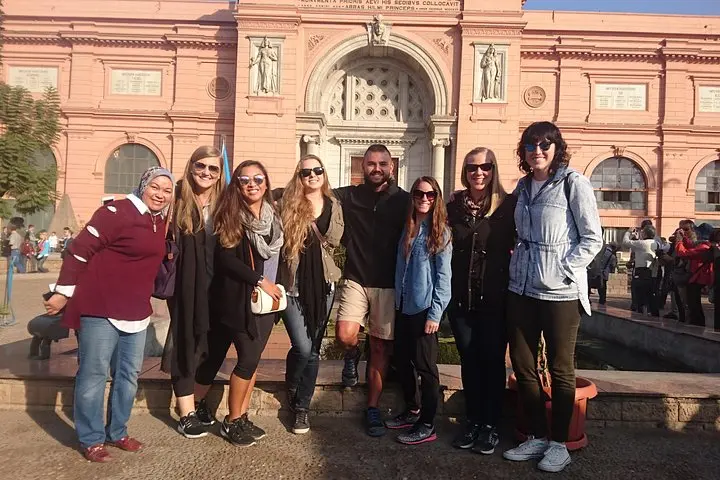
Inside the Egyptian Museum the air cools and time stacks. Cases of gilded funerary masks, the packed geometry of statuary and the famous cache of Tutankhamun artifacts—jewelry, chariots, a gold death mask—translate ancient power into a human scale. The museum holds roughly 120,000 objects; you’ll walk past lives and crafts that predate the concept of the modern map.
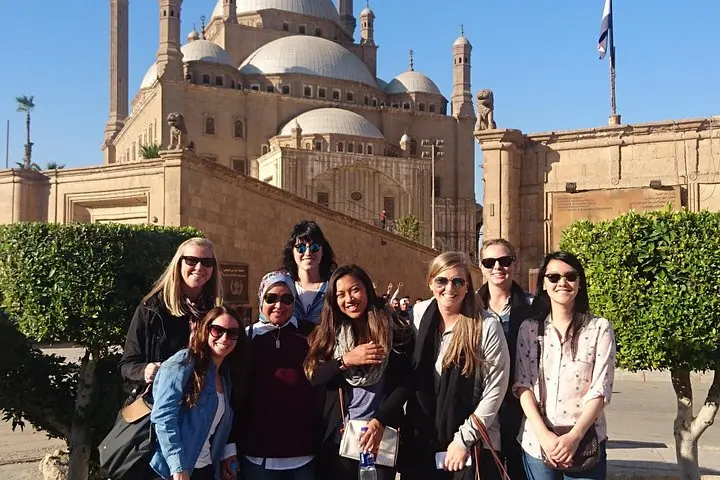
From there the Citadel climbs: a military stronghold raised by Salah al‑Din in the 12th century, later a seat of Ottoman‑era governors. The Mohammed Ali Mosque crowns the ridge, its domes and minarets pushing Cairo’s skyline like a declaration. Wind off the plateau can feel like an invitation to look out and measure the city’s expanse.
Khan al‑Khalili drops the tempo to market noise and copper clatter. Founded in the 14th century, it still trades in spices, lamps and hand‑made brass—bargaining and conversation are part of the currency.
Practical edge: this itinerary is about 4–4.5 hours and mixes indoor walking with uneven outdoor steps. Carry water, wear sturdy shoes for cobbled alleys and dress modestly for mosque sites. Go early to avoid heat and crowds; if you plan a felucca short trip on the Nile, add time. Keep cash for small purchases and practice polite haggling—expect to leave with a story as much as a souvenir.
About 4 to 4.5 hours (255 minutes) including transfers between sites.
General photography is permitted in many galleries but flash and tripods may be restricted; always check signage and staff instructions.
Entry fees vary; confirm when booking—this itinerary notes inclusions like private transport and bottled water but check ticket policies for museum admissions.
Yes—rated physically easy—but expect some walking and stairs; request a comfortable pace and accessible pickup if needed.
nonaegypt operates guided outdoor trips and adventures with an emphasis on safety, stewardship, and memorable experiences.
You step out of the car onto Tahrir Square and the city reasserts itself: honking traffic, vendors calling out, the Nile a low ribbon to the east that seems to pull the neighborhood toward its banks.
You step out of the car onto Tahrir Square and the city reasserts itself: honking traffic, vendors calling out, the Nile a low ribbon to the east that seems to pull the neighborhood toward its banks.
Inside the Egyptian Museum the air cools and time stacks. Cases of gilded funerary masks, the packed geometry of statuary and the famous cache of Tutankhamun artifacts—jewelry, chariots, a gold death mask—translate ancient power into a human scale. The museum holds roughly 120,000 objects; you’ll walk past lives and crafts that predate the concept of the modern map.
From there the Citadel climbs: a military stronghold raised by Salah al‑Din in the 12th century, later a seat of Ottoman‑era governors. The Mohammed Ali Mosque crowns the ridge, its domes and minarets pushing Cairo’s skyline like a declaration. Wind off the plateau can feel like an invitation to look out and measure the city’s expanse.
Khan al‑Khalili drops the tempo to market noise and copper clatter. Founded in the 14th century, it still trades in spices, lamps and hand‑made brass—bargaining and conversation are part of the currency.
Practical edge: this itinerary is about 4–4.5 hours and mixes indoor walking with uneven outdoor steps. Carry water, wear sturdy shoes for cobbled alleys and dress modestly for mosque sites. Go early to avoid heat and crowds; if you plan a felucca short trip on the Nile, add time. Keep cash for small purchases and practice polite haggling—expect to leave with a story as much as a souvenir.