THE ADVENTURE COLLECTIVE® · Independent discovery and booking for outdoor travel

Ride out from a Cairo rescue stable across the Abu Sir desert and Giza plateau for a two-hour horseback experience that pairs accessible riding with close-up views of ancient pyramids. Guided, helmeted, and aimed at improving animal welfare, this tour suits beginners and confident riders alike.
Ride out from a Cairo rescue stable across the Abu Sir desert and Giza plateau for a two-hour horseback experience that pairs accessible riding with close-up views of ancient pyramids. Guided, helmeted, and aimed at improving animal welfare, this tour suits beginners and confident riders alike.
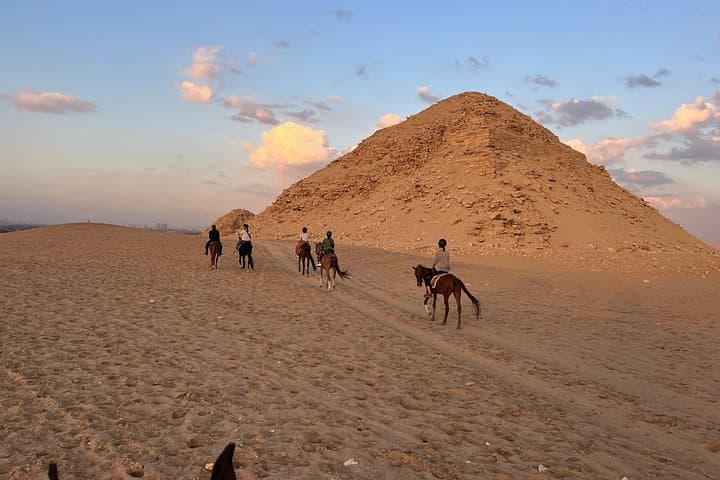
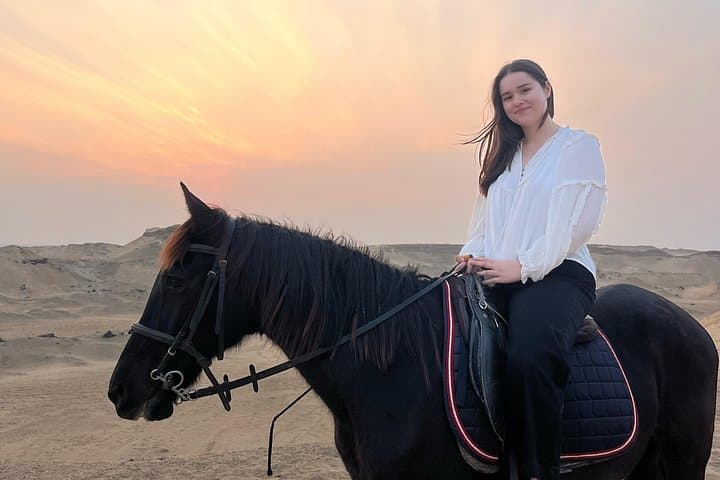
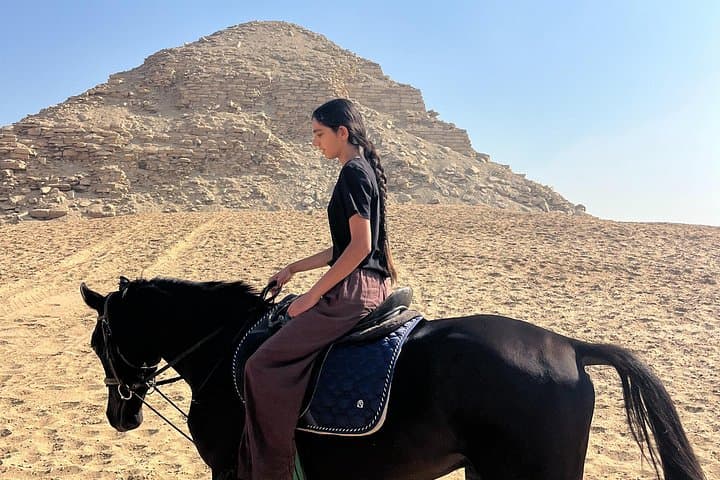
You climb into the saddle as the city’s heat softens and the desert takes a long, slow breath. Sand shifts under hoof; the horses pick their way through low scrub toward silhouettes that have watched millennia—pyramids rising from the haze like patient sentries. The guide sizes your pace, the animal answers, and for two hours Cairo’s noise becomes a distant thrum.
Verified experiences and guided adventures in the surrounding area.
Operated by Cairo Horse Riding School · Cairo, Cairo
You climb into the saddle as the city’s heat softens and the desert takes a long, slow breath. Sand shifts under hoof; the horses pick their way through low scrub toward silhouettes that have watched millennia—pyramids rising from the haze like patient sentries. The guide sizes your pace, the animal answers, and for two hours Cairo’s noise becomes a distant thrum.
This is riding on the edge of an ancient landscape. The route can pass the Giza plateau, Abu Sir field, or the Dahshour necropolis—areas of Old Kingdom tombs and pyramids where limestone beds tilt and reveal Egypt’s layered geology. Local equestrian culture mixes Bedouin desert knowledge with modern rescue-stable care; this stable operates as a rescue and focuses on improving animal welfare and riding standards in greater Cairo.
Expect open desert tracks, short arena drills for beginners, and quiet moments at viewpoints where the wind seems to push you toward the past. Guides supply helmets, bottled water, and snacks; they also match mounts to rider ability before departure.
Practical notes: arrive with closed-toe shoes and long trousers; the sun is strong and shade scarce, so sunscreen and a brimmed hat matter. Moderate fitness and basic balance make the experience comfortable—novices can be introduced slowly in the arena. Weather influences operations, and cancellations are common in extreme heat or sandstorms. Respect the animals: follow mount handling instructions, keep a steady pace, and avoid sudden movements. After the ride visitors often relax at the farm and meet rehabilitated horses—an easy way to close the loop between adventure and stewardship.
No—novices are welcome and usually start in the arena before heading into open terrain; guides match you with an appropriate horse.
Limits vary by operator for safety—booking questions request age, height and weight; contact the provider if you’re unsure about eligibility.
Yes, helmets are provided and are required; you may bring your own if preferred.
High heat, strong winds or sandstorms can cancel tours; the operator typically offers a full refund if canceled for safety reasons.
Cairo Horse Riding School operates guided outdoor trips and adventures with an emphasis on safety, stewardship, and memorable experiences.

You climb into the saddle as the city’s heat softens and the desert takes a long, slow breath. Sand shifts under hoof; the horses pick their way through low scrub toward silhouettes that have watched millennia—pyramids rising from the haze like patient sentries. The guide sizes your pace, the animal answers, and for two hours Cairo’s noise becomes a distant thrum.
You climb into the saddle as the city’s heat softens and the desert takes a long, slow breath. Sand shifts under hoof; the horses pick their way through low scrub toward silhouettes that have watched millennia—pyramids rising from the haze like patient sentries. The guide sizes your pace, the animal answers, and for two hours Cairo’s noise becomes a distant thrum.
This is riding on the edge of an ancient landscape. The route can pass the Giza plateau, Abu Sir field, or the Dahshour necropolis—areas of Old Kingdom tombs and pyramids where limestone beds tilt and reveal Egypt’s layered geology. Local equestrian culture mixes Bedouin desert knowledge with modern rescue-stable care; this stable operates as a rescue and focuses on improving animal welfare and riding standards in greater Cairo.
Expect open desert tracks, short arena drills for beginners, and quiet moments at viewpoints where the wind seems to push you toward the past. Guides supply helmets, bottled water, and snacks; they also match mounts to rider ability before departure.
Practical notes: arrive with closed-toe shoes and long trousers; the sun is strong and shade scarce, so sunscreen and a brimmed hat matter. Moderate fitness and basic balance make the experience comfortable—novices can be introduced slowly in the arena. Weather influences operations, and cancellations are common in extreme heat or sandstorms. Respect the animals: follow mount handling instructions, keep a steady pace, and avoid sudden movements. After the ride visitors often relax at the farm and meet rehabilitated horses—an easy way to close the loop between adventure and stewardship.