
Cairo in a Day: Hurghada Full-Day Flight to Giza, Egyptian Museum & Khan el-Khalili
See the Giza pyramids, the Sphinx and the treasures of the Egyptian Museum in a single full-day flight from Hurghada. This guided tour pairs guided archaeology at Giza with the lively lanes of Khan el-Khalili for a brisk, manageable Cairo primer.
An Adventure In Hurghada.
See the Giza pyramids, the Sphinx and the treasures of the Egyptian Museum in a single full-day flight from Hurghada. This guided tour pairs guided archaeology at Giza with the lively lanes of Khan el-Khalili for a brisk, manageable Cairo primer.
Read the full experience
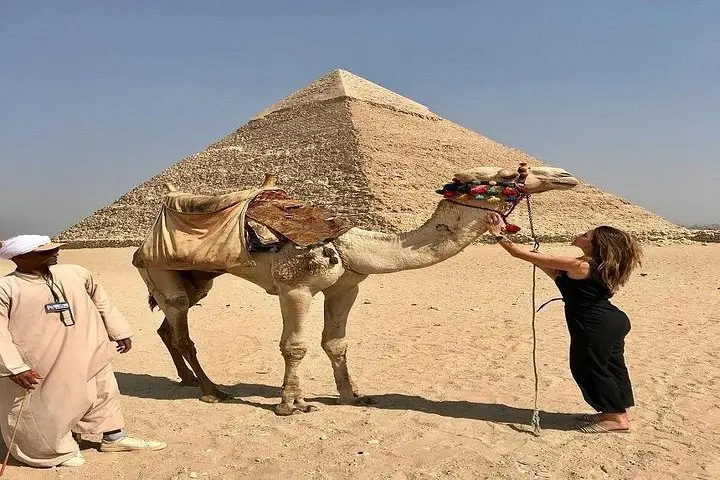
You step off the morning flight and the desert opens like a low-slung plain, the Giza plateau rising ahead with the pyramids puncturing the sky. The air tastes faintly of dust and diesel; the limestone faces of Cheops, Chephren and Mykerinos throw hard shadows that reveal their blockwork and age.
You step off the morning flight and the desert opens like a low-slung plain, the Giza plateau rising ahead with the pyramids puncturing the sky. The air tastes faintly of dust and diesel; the limestone faces of Cheops, Chephren and Mykerinos throw hard shadows that reveal their blockwork and age.
This is a condensed sweep through layers of Egyptian history: the 4,500-year-old pyramids and the adjacent Valley Temple where stone work and ritual geometry meet the Nile’s ancient economy. The Egyptian Museum in Tahrir holds Pharaonic accumulation — Tutankhamun’s gold and everyday objects that track millennia of craftsmanship. Khan el-Khalili’s alleys preserve Ottoman-era markets, artisans and coffeehouses where spices and conversation are on open display.
Geologically, the plateau is a raised limestone bench carved by wind and time; artifacts here owe their preservation to dry heat and centuries of human care and neglect. Culturally, expect layered Arabic and Coptic influences in Cairo’s street life and markets.
Practical guidance: this full-day tour is long but not technically demanding. Wear sturdy, closed-toe shoes for sandy, uneven ground at Giza, and bring sun protection and a refillable bottle. Carry passport and a small amount of local cash for market purchases. Plan for roughly 10–12 hours door-to-door including domestic flights and transfers; mobility is generally easy but expect walking and standing at archaeological sites.
The pace of the day moves from monumental silence at the pyramids to the crowded rhythm of the city markets; timing, hydration and sensible footwear keep the experience memorable and manageable.
Frequently asked questions
You must carry your passport for the domestic flight; visa requirements depend on your nationality—check Egyptian entry rules before travel.
Expect about 10–12 hours including flights and transfers; the tour includes domestic flights, an Egyptologist guide, lunch, entrance fees and air-conditioned transfers as listed.
Children can participate, and the tour is rated easy, but uneven ground at Giza and some walking in the museum and market may challenge limited mobility—ask about pickup accessibility and infant seats when booking.
Photography for personal use is generally allowed at Giza and the museum, but drone use is heavily restricted—follow guide and site rules and obtain permits if required.
About This Experience
Sheba Tour company operates guided outdoor trips and adventures with an emphasis on safety, stewardship, and memorable experiences.
Adventure tips
Recommended gear
- Passport and photocopy: Required for domestic flight check-in, museum entry and ID at transfers.
- Refillable water bottle: Keeps you hydrated through long outdoor stretches on the plateau and in Cairo heat.
- Sun hat & sunscreen: Protects against strong sun exposure during pyramid visits and walking in open areas.
- Comfortable closed-toe shoes: Useful for sand, limestone blocks, and city streets—offers stability and dust protection.
Photos of the experience
Related adventures & guides
Read the full experience
You step off the morning flight and the desert opens like a low-slung plain, the Giza plateau rising ahead with the pyramids puncturing the sky. The air tastes faintly of dust and diesel; the limestone faces of Cheops, Chephren and Mykerinos throw hard shadows that reveal their blockwork and age.
You step off the morning flight and the desert opens like a low-slung plain, the Giza plateau rising ahead with the pyramids puncturing the sky. The air tastes faintly of dust and diesel; the limestone faces of Cheops, Chephren and Mykerinos throw hard shadows that reveal their blockwork and age.
This is a condensed sweep through layers of Egyptian history: the 4,500-year-old pyramids and the adjacent Valley Temple where stone work and ritual geometry meet the Nile’s ancient economy. The Egyptian Museum in Tahrir holds Pharaonic accumulation — Tutankhamun’s gold and everyday objects that track millennia of craftsmanship. Khan el-Khalili’s alleys preserve Ottoman-era markets, artisans and coffeehouses where spices and conversation are on open display.
Geologically, the plateau is a raised limestone bench carved by wind and time; artifacts here owe their preservation to dry heat and centuries of human care and neglect. Culturally, expect layered Arabic and Coptic influences in Cairo’s street life and markets.
Practical guidance: this full-day tour is long but not technically demanding. Wear sturdy, closed-toe shoes for sandy, uneven ground at Giza, and bring sun protection and a refillable bottle. Carry passport and a small amount of local cash for market purchases. Plan for roughly 10–12 hours door-to-door including domestic flights and transfers; mobility is generally easy but expect walking and standing at archaeological sites.
The pace of the day moves from monumental silence at the pyramids to the crowded rhythm of the city markets; timing, hydration and sensible footwear keep the experience memorable and manageable.
Make a day of it nearby.
Verified experiences and guided adventures in the surrounding area.