THE ADVENTURE COLLECTIVE® · Independent discovery and booking for outdoor travel

Explore Cairo’s storied souqs on a private four‑hour shopping tour through Gamalia, El Mosky and the iconic Khan el‑Khalili. Expect crowded lanes, traditional crafts and local cuisine with pickup and lunch included.
Explore Cairo’s storied souqs on a private four‑hour shopping tour through Gamalia, El Mosky and the iconic Khan el‑Khalili. Expect crowded lanes, traditional crafts and local cuisine with pickup and lunch included.
The alleys squeeze you forward: vendors call out over copper lamps, sacks of spice powders fan a scent that dares you to follow, and sunlight slices through a lattice of balconies onto narrow stone streets. This four-hour private shopping tour moves through Fatimid Cairo’s oldest lanes — Gamalia Street, El Ghorya, Bab Zuwayla and the crowded stalls of El Mosky — before threading into the ornate canopies of Khan el-Khalili.
Verified experiences and guided adventures in the surrounding area.
Operated by Emo Tours Egypt · Cairo, Cairo Governorate
The alleys squeeze you forward: vendors call out over copper lamps, sacks of spice powders fan a scent that dares you to follow, and sunlight slices through a lattice of balconies onto narrow stone streets. This four-hour private shopping tour moves through Fatimid Cairo’s oldest lanes — Gamalia Street, El Ghorya, Bab Zuwayla and the crowded stalls of El Mosky — before threading into the ornate canopies of Khan el-Khalili.
Khan el-Khalili dates to the Mamluk era and sits where Fatimid Cairo once clustered around mosques and madrasas. The markets grew where caravan routes met the Nile’s corridors, and the neighborhood still bears architectural elements — oriels, public copper fountains and carved woodwork — that mark centuries of trade and craftsmanship. Expect a tactile culture: copperware, hand-blown glass, spices, textiles and wooden inlays alongside everyday retail stalls.
Practically: the route is flat but intensely pedestrian and crowded; plan for 2–3 miles of walking broken into short stops. The operator provides hotel pickup/drop-off in a private A/C vehicle, bottled water, lunch at a local restaurant and covers entry fees. Bargaining is normal but polite; keep small bills and use a locked crossbody bag. Midday heat in summer can make the markets fatiguing — mornings or late afternoons are best for cooler light and friendlier crowds.
Bring comfortable, closed-toe shoes for uneven paving, a lightweight hat, and patience — the rhythm of the souq rewards those who move slowly. The tour is private and flexible, so mention particular interests (spices, textiles, antiques) when booking to tailor your route.
Yes—haggling is a normal part of buying. Start lower than your target price, remain polite, and be prepared to walk away.
Most stalls take cash only; the tour covers transfers and entry fees by card, but bring local currency for purchases and tips.
The markets contain narrow, uneven lanes and steps; accessibility varies and some areas may be difficult for wheelchairs—check with the operator about pickup/drop-off accessibility.
Lunch at a local restaurant is included; notify the operator of dietary restrictions when booking so they can arrange options.
Emo Tours Egypt operates guided outdoor trips and adventures with an emphasis on safety, stewardship, and memorable experiences.


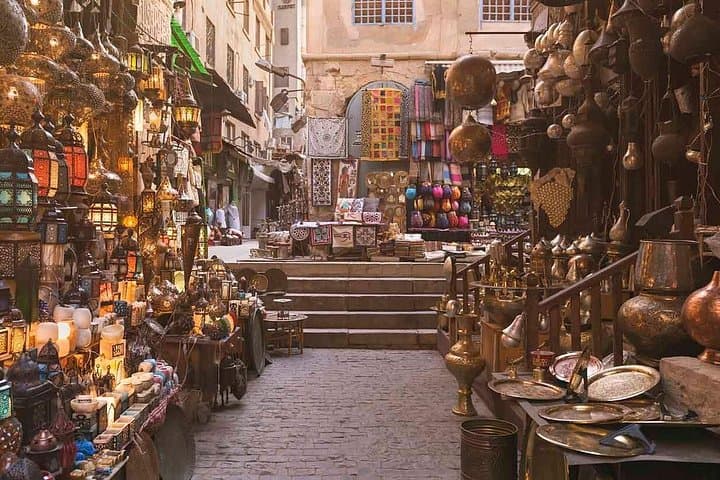
The alleys squeeze you forward: vendors call out over copper lamps, sacks of spice powders fan a scent that dares you to follow, and sunlight slices through a lattice of balconies onto narrow stone streets. This four-hour private shopping tour moves through Fatimid Cairo’s oldest lanes — Gamalia Street, El Ghorya, Bab Zuwayla and the crowded stalls of El Mosky — before threading into the ornate canopies of Khan el-Khalili.
The alleys squeeze you forward: vendors call out over copper lamps, sacks of spice powders fan a scent that dares you to follow, and sunlight slices through a lattice of balconies onto narrow stone streets. This four-hour private shopping tour moves through Fatimid Cairo’s oldest lanes — Gamalia Street, El Ghorya, Bab Zuwayla and the crowded stalls of El Mosky — before threading into the ornate canopies of Khan el-Khalili.
Khan el-Khalili dates to the Mamluk era and sits where Fatimid Cairo once clustered around mosques and madrasas. The markets grew where caravan routes met the Nile’s corridors, and the neighborhood still bears architectural elements — oriels, public copper fountains and carved woodwork — that mark centuries of trade and craftsmanship. Expect a tactile culture: copperware, hand-blown glass, spices, textiles and wooden inlays alongside everyday retail stalls.
Practically: the route is flat but intensely pedestrian and crowded; plan for 2–3 miles of walking broken into short stops. The operator provides hotel pickup/drop-off in a private A/C vehicle, bottled water, lunch at a local restaurant and covers entry fees. Bargaining is normal but polite; keep small bills and use a locked crossbody bag. Midday heat in summer can make the markets fatiguing — mornings or late afternoons are best for cooler light and friendlier crowds.
Bring comfortable, closed-toe shoes for uneven paving, a lightweight hat, and patience — the rhythm of the souq rewards those who move slowly. The tour is private and flexible, so mention particular interests (spices, textiles, antiques) when booking to tailor your route.