THE ADVENTURE COLLECTIVE® · Independent discovery and booking for outdoor travel

A long day of off-road discovery from Cairo: a private 4x4 takes you from palm-lined Bahariya Oasis to the volcanic Black Desert and the surreal chalk spires of the White Desert. Expect dramatic geology, a refreshing oasis dip and a full day on desert roads.
A long day of off-road discovery from Cairo: a private 4x4 takes you from palm-lined Bahariya Oasis to the volcanic Black Desert and the surreal chalk spires of the White Desert. Expect dramatic geology, a refreshing oasis dip and a full day on desert roads.
You step out of an air-conditioned car and the desert greets you with a surprising hush — wind like a slow sculptor nudging sand and stone. The drive from Cairo opens into a broader sky; after roughly four hours on paved road the palms of El-Bahariya appear, green islands ringed by ochre. A 4x4 takes over, tires crunching toward the volcanic ridges of the Black Desert and the chalk sculptures of the White Desert.
Verified experiences and guided adventures in the surrounding area.
Operated by Mummies Tours · Bahariya Oasis, Giza Governorate
You step out of an air-conditioned car and the desert greets you with a surprising hush — wind like a slow sculptor nudging sand and stone. The drive from Cairo opens into a broader sky; after roughly four hours on paved road the palms of El-Bahariya appear, green islands ringed by ochre. A 4x4 takes over, tires crunching toward the volcanic ridges of the Black Desert and the chalk sculptures of the White Desert.
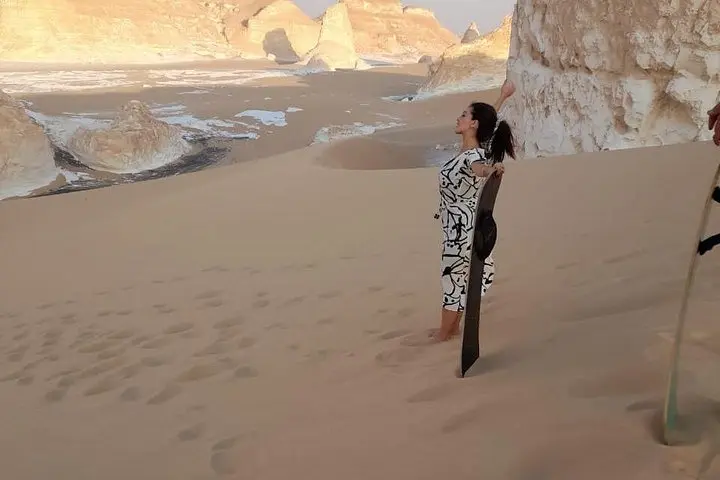
The region has layers of human history and deep time: Pharaonic caravan routes and Roman-era settlements used Bahariya’s groundwater, while the landscape itself carries volcanic basalt fields and wind-carved Eocene chalk. Black Desert hills wear dark, iron-rich rock; the White Desert’s milky formations are soft chalk shaped by storms into mushrooms, birds and abstract faces that seem to watch travelers pass.
Local life in the oasis centers on date palms, spring-fed pools and a hospitality shaped by long trans-Sahara tradition. Guides explain how seasonal rains feed the groundwater and how nomadic trade routes threaded these plains.
Practical guidance: this is a long day (expect 12–15 hours total) with multiple short walks across sand and rock rather than sustained hiking. Bring sun protection, at least 3 liters of water, and footwear that grips loose sand and crumbly chalk. Mornings and late afternoons are best for photography and cooler light; midday is hot and glare-heavy. Respect fragile desert crust and avoid climbing fragile formations — the wind does the sculpting here, not your footprints.
Expect about four hours by car to El-Bahariya oasis, with additional off-road transfers by 4x4 to the Black and White Deserts; total trip time is typically 12–15 hours.
No technical hiking is required; the day includes short walks across sand and rock. Good mobility and balance for uneven ground are helpful.
Yes, many tours include a short swim or a chance to cool off in the oasis pools — bring swimwear and a towel, though facilities may be basic.
Tour inclusions vary; this tour lists lunch, snacks, bottled water, private transport and taxes. Confirm with your operator if any park entrance fees are included or payable on-site.
Mummies Tours operates guided outdoor trips and adventures with an emphasis on safety, stewardship, and memorable experiences.
You step out of an air-conditioned car and the desert greets you with a surprising hush — wind like a slow sculptor nudging sand and stone. The drive from Cairo opens into a broader sky; after roughly four hours on paved road the palms of El-Bahariya appear, green islands ringed by ochre. A 4x4 takes over, tires crunching toward the volcanic ridges of the Black Desert and the chalk sculptures of the White Desert.
You step out of an air-conditioned car and the desert greets you with a surprising hush — wind like a slow sculptor nudging sand and stone. The drive from Cairo opens into a broader sky; after roughly four hours on paved road the palms of El-Bahariya appear, green islands ringed by ochre. A 4x4 takes over, tires crunching toward the volcanic ridges of the Black Desert and the chalk sculptures of the White Desert.
The region has layers of human history and deep time: Pharaonic caravan routes and Roman-era settlements used Bahariya’s groundwater, while the landscape itself carries volcanic basalt fields and wind-carved Eocene chalk. Black Desert hills wear dark, iron-rich rock; the White Desert’s milky formations are soft chalk shaped by storms into mushrooms, birds and abstract faces that seem to watch travelers pass.
Local life in the oasis centers on date palms, spring-fed pools and a hospitality shaped by long trans-Sahara tradition. Guides explain how seasonal rains feed the groundwater and how nomadic trade routes threaded these plains.
Practical guidance: this is a long day (expect 12–15 hours total) with multiple short walks across sand and rock rather than sustained hiking. Bring sun protection, at least 3 liters of water, and footwear that grips loose sand and crumbly chalk. Mornings and late afternoons are best for photography and cooler light; midday is hot and glare-heavy. Respect fragile desert crust and avoid climbing fragile formations — the wind does the sculpting here, not your footprints.